Pulsed Magnetic Fields Explained
Introduction to Magnetic Fields
What is a Magnetic Field?
A magnetic field is an invisible field of force that surrounds magnets and moving electric charges. Think of it like the gravity around a planet, but for magnetism. It has both strength and direction, which means it's a vector field. At any point in the field, a magnetic object will feel a push or pull in a specific direction.
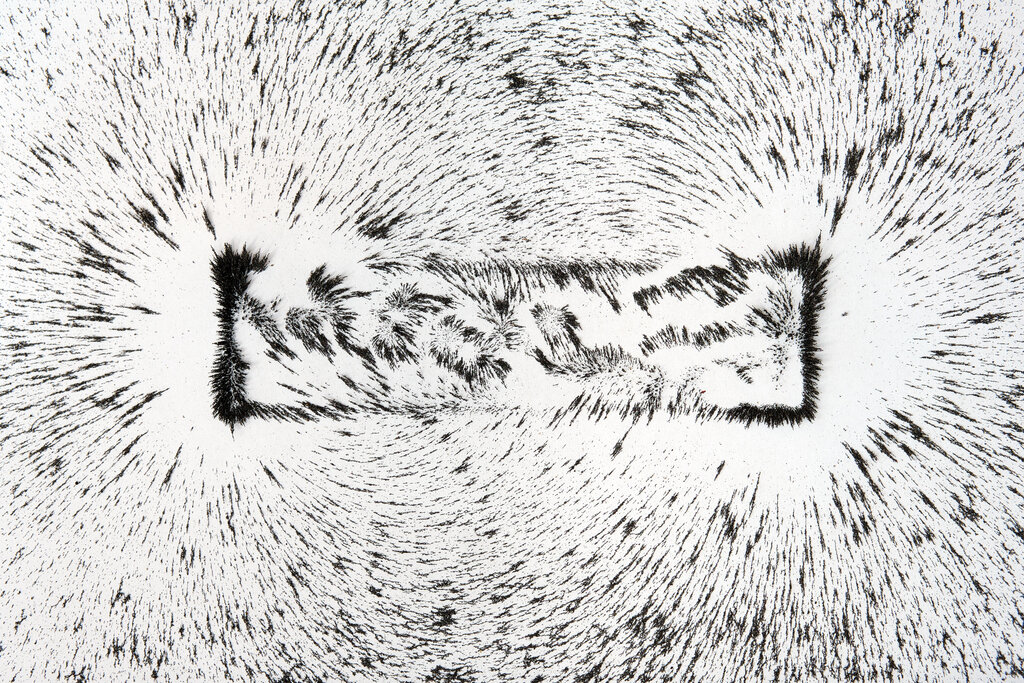
The strength of the field is strongest near its source and gets weaker as you move away. The direction is defined as the way the north pole of a compass needle would point if placed in the field. By convention, magnetic field lines are drawn from the north pole to the south pole of a magnet.
Sources of Magnetism
So where do these fields come from? There are two main sources: permanent magnets and electric currents.
Permanent magnets, like the one in your fridge, get their magnetism from the electrons within their atoms. Electrons have a property called spin, which makes them act like tiny magnets. In most materials, these electron spins point in random directions and cancel each other out. But in magnetic materials like iron, large numbers of these spins can align in the same direction, creating a strong, persistent magnetic field.
Electric currents are the other, more fundamental source. Whenever an electric charge moves, it creates a magnetic field. This was a groundbreaking discovery that connected electricity and magnetism. A simple wire carrying a current generates a circular magnetic field around it.
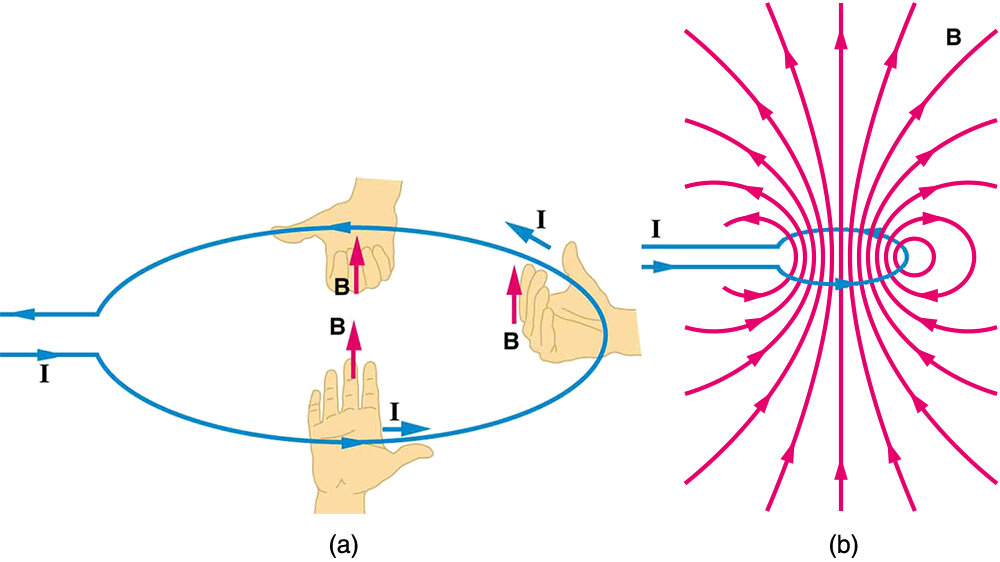
This principle applies everywhere. The aligned electron spins in a permanent magnet are, in essence, tiny circulating currents. So, at its core, all magnetism comes from moving charges.
Mapping the Field
Since we can't see magnetic fields directly, we use tools to visualize and measure them. Magnetic field lines are imaginary lines that show the direction of the field. Where the lines are close together, the field is strong. Where they are far apart, it's weak.
A key property of these lines is that they always form closed loops. They never start or end at a point. They emerge from the north pole of a magnet, loop around to the south pole, and continue through the magnet back to the north pole.
Flux
noun
A measure of the total number of magnetic field lines passing through a given surface area.
The concept of magnetic flux helps us quantify the field. It represents the total number of magnetic field lines passing through a certain area. Imagine holding a loop of wire in a magnetic field. The flux is the count of field lines that go through the loop. If you tilt the loop, fewer lines pass through, and the flux decreases.
The Rules of Magnetism
Physicists use a set of equations to describe how magnetic fields behave. Two of the most important are Gauss's law for magnetism and Ampère's law.
Gauss's law for magnetism is a formal way of stating that there are no magnetic monopoles. A magnetic monopole would be an isolated north or south pole, but these have never been found in nature. Magnets always come in pairs of north and south poles. Mathematically, this law says that the total magnetic flux out of any closed surface is always zero. Whatever field lines go into a closed surface must also come out.
In simple terms, you can't have a source or sink of magnetic field lines. They always loop back on themselves.
Ampère's law connects magnetism back to its source: electric current. It states that if you trace a closed loop path, the magnetic field summed up along that path is directly proportional to the total electric current passing through the inside of the loop.
This law is incredibly useful for calculating the magnetic field produced by simple current configurations, like a long, straight wire. It confirms that currents create circulating magnetic fields.
What is the fundamental source of all magnetic fields?
Gauss's law for magnetism states that the total magnetic flux out of any closed surface is zero. What is the direct physical implication of this law?