Public Health Informatics and Data Modernization
Public Health Architecture
From Silos to Systems
Public health information systems used to be like a collection of separate, unconnected libraries. The infectious disease department had its books, the chronic illness team had theirs, and the environmental health group had its own. Each system was a monolith, a single, self-contained unit. If you needed to connect information between them, say, to see if an environmental factor was linked to a disease outbreak, it was a manual, painstaking process. These legacy systems were stable but inflexible.
Today, the goal is to build a more integrated network. The modern approach is a modular architecture. Think of it like a set of building blocks, or microservices. Each module handles a specific task, like receiving lab reports, managing immunization records, or tracking disease surveillance. These modules are designed to communicate with each other seamlessly through standardized interfaces (APIs). This makes the entire system more flexible. If you need to update the immunization module, you can do so without disrupting the disease surveillance system. It also allows for new capabilities to be added easily, like plugging in a new block.
The Knowledge Architect
This shift in design philosophy creates a new role for the public health informatician: the knowledge architect. Their job isn't just to manage databases, but to design the entire information ecosystem. They create the blueprint that dictates how data is collected, transformed, and made available for specific public health actions.
A knowledge architect must balance competing demands. The system must deliver information quickly enough to be useful during an outbreak (timeliness). It needs to be efficient and not waste resources. It must also comply with a web of legal mandates governing patient privacy and data sharing, like HIPAA.
The knowledge architect's central task is to transform raw data into actionable intelligence for public health decision-makers.
The Data's Journey
Information for public health begins in clinical settings. When a doctor diagnoses a patient with a reportable disease like measles, or a hospital treats someone for lead poisoning, that event generates clinical data. This data is created for the purpose of treating one individual.
However, for that information to be useful to a jurisdictional health department, it must be securely transmitted and transformed. The flow usually involves electronic lab reporting (ELR) and electronic case reporting (eCR) systems that standardize the data from various sources. The focus shifts from the individual's care to the population's health. The health department isn't just interested in one case of measles; it needs to know if that one case is part of a larger outbreak.
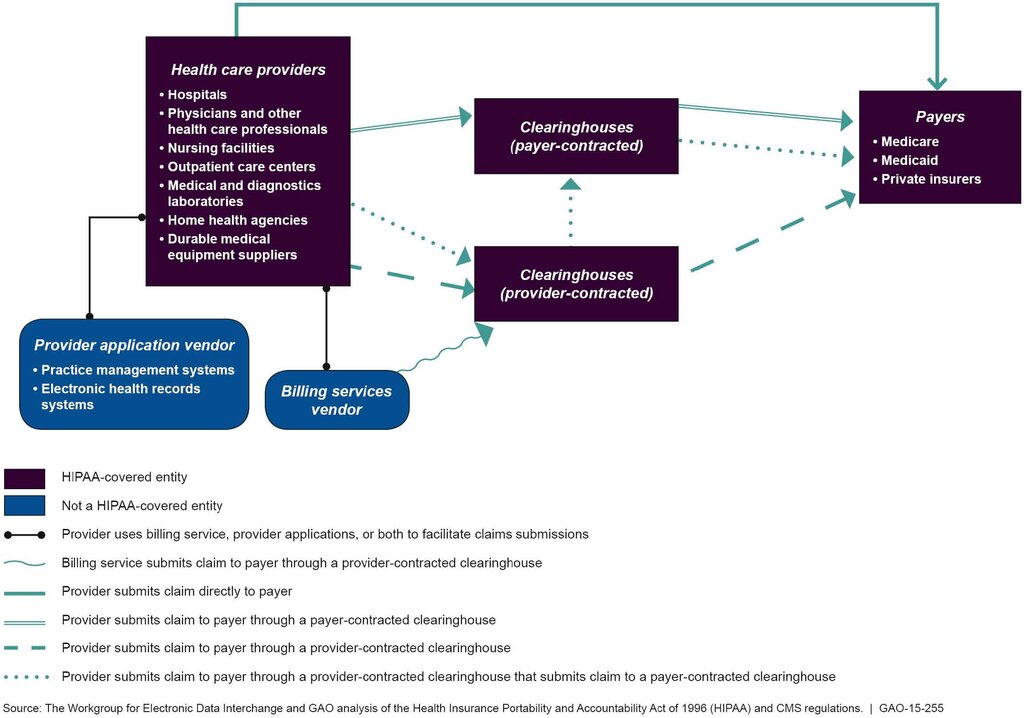
This incoming stream of data feeds into an Operational Data Store (ODS). An ODS is not a static data warehouse used for historical analysis. It's a live, dynamic database designed for the day-to-day work of the health department. It's where data is cleansed, duplicates are removed, and information is prepared for analysis. An epidemiologist investigating an outbreak will query the ODS, not a collection of raw, unprocessed reports.
Built for a Purpose
A public health information system isn't a one-size-fits-all solution. Its architecture must be tailored to support specific public health functions. The needs for investigating a fast-moving foodborne illness outbreak are very different from the needs of a program designed to track cancer rates over decades.
| Function | Key Architectural Requirements |
|---|---|
| Outbreak Investigation | Real-time data ingestion and processing. Geospatial analysis tools (mapping). Secure messaging for inter-agency communication. Strong contact tracing capabilities. |
| Chronic Disease Tracking | Support for longitudinal data (tracking over many years). Integration with multiple data sources (e.g., hospital records, surveys). Advanced statistical analysis tools. Robust reporting features for program evaluation. |
The knowledge architect must design a system that can serve both of these needs, often using a modular approach where specialized tools can be deployed as needed. The foundation remains the same—a reliable flow of clean, standardized data—but the applications built on top of it are highly specialized.
Let's review the core concepts we've covered.
Ready to test your understanding?
What is the primary advantage of a modern, modular architecture over a legacy monolithic system in public health informatics?
What is the main purpose of an Operational Data Store (ODS) in a public health information system?
Understanding this architecture is key. It's the framework that allows public health professionals to move from collecting data to protecting the health of entire communities.