Public Finances vs Household Budgets
Public vs Household Budgets
Not Your Kitchen Table Budget
We all know how a household budget works. You have income from a job, and you have expenses like rent, groceries, and utilities. If you spend more than you earn for too long, you end up in debt. It’s a simple balancing act: money in must equal or exceed money out.
It’s tempting to apply this same logic to a government. We hear talk of national debt and budget deficits and think, "Why don't they just tighten their belts like the rest of us?" But a government's budget is fundamentally different from a household's. The biggest difference? A government that issues its own currency can't run out of it in the same way you can.
Unlike a household, a government that controls its own currency can never go broke. It can, however, make choices that destabilize the economy.
Instead of just balancing a checkbook, a government manages the entire economic environment. Its financial tools are designed not just for spending, but for steering the country's economy as a whole.
The Government's Toolkit
A government has several powerful tools for managing the economy. The two most important are taxation and public spending. These aren't just for raising and spending money; they're for keeping the economy running smoothly.
Taxation does more than just fund public services like roads and schools. It plays a crucial role in giving value to the government's currency. Because citizens need the government's currency to pay their taxes, it creates a constant demand for that money, making it a stable medium of exchange.
Public spending is how the government invests in the economy. When it funds a new highway, it's not just a cost. It's an investment that creates jobs for construction workers and makes it easier for businesses to transport goods. Spending on education, healthcare, and technology boosts the long-term productive capacity of the entire country.
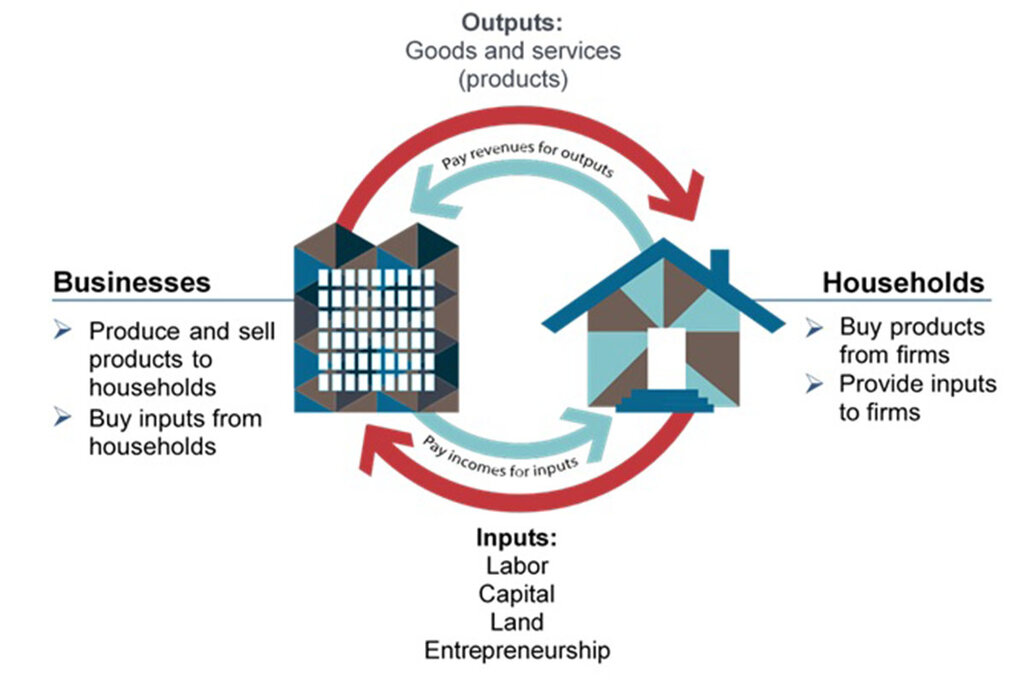
The government also uses monetary policy to influence the economy. This involves managing the supply of money and setting interest rates to control inflation and encourage stable growth. The goal is to create an environment where businesses can thrive and people can find jobs.
Why Not Just Print More Money?
If a government can issue its own currency, why not just print money to pay for everything? It seems like an easy solution to cover any expense, from healthcare to defense, without needing to collect taxes.
The problem is that printing money doesn't create more goods and services. It only adds more money into the system.
Imagine if everyone in your city woke up tomorrow with an extra $100,000 in their bank account. The amount of bread at the local bakery, the number of cars available at the dealership, and the number of houses for sale haven't changed. But now, everyone has much more money to spend on them.
With more money chasing the same amount of stuff, sellers will quickly raise their prices. That $5 loaf of bread might suddenly cost $50. This is inflation: a general increase in prices and a fall in the purchasing value of money. Creating money without a corresponding increase in economic output just makes the currency worth less.
Inflation
noun
The rate at which the general level of prices for goods and services is rising, and subsequently, purchasing power is falling.
So, while a government can't technically go bankrupt in its own currency, it can cause severe economic damage through reckless policy. Managing a public budget is about maintaining the delicate balance of the entire economy, not just making sure the bills are paid.
Let's check your understanding of these core concepts.
What is the most fundamental difference between a household budget and the budget of a government that issues its own currency?
Beyond funding public services, what is a crucial economic function of taxation?
The key takeaway is that government finances are a tool for managing a nation's economy. Unlike a household, a government's goal isn't just to balance its books, but to foster stability, growth, and public well-being.