Ptolemy's Handy Tables Demystified
Introduction to Ptolemy's Handy Tables
The Astronomer's Toolkit
Ptolemy's Almagest was a monumental achievement. It laid out a complete mathematical model of the cosmos, explaining the motions of the Sun, Moon, and planets. But it was also a dense, theoretical work. Imagine being an astronomer in ancient Alexandria. You've read the Almagest, you understand the epicycles and deferents, but now you have a practical question: where exactly will Mars be in the sky next Tuesday night?
Deriving the answer from the Almagest's first principles would be a long, painstaking process. It was like having a brilliant physics textbook but no calculator. For astronomy to be a practical science, used for everything from creating calendars to casting horoscopes, its practitioners needed a more efficient tool.
Calculation Made Easy
Ptolemy recognized this need. Sometime after completing the Almagest, he created a separate work known as the Handy Tables. This wasn't a book of theory; it was a pure computational tool, a set of pre-calculated astronomical tables designed for quick and easy use.
The goal was simple: take the complex geometry of the Almagest and distill it into tables of numbers. An astronomer could look up values for a specific date and planet, perform a few straightforward additions and subtractions, and arrive at a precise celestial position.
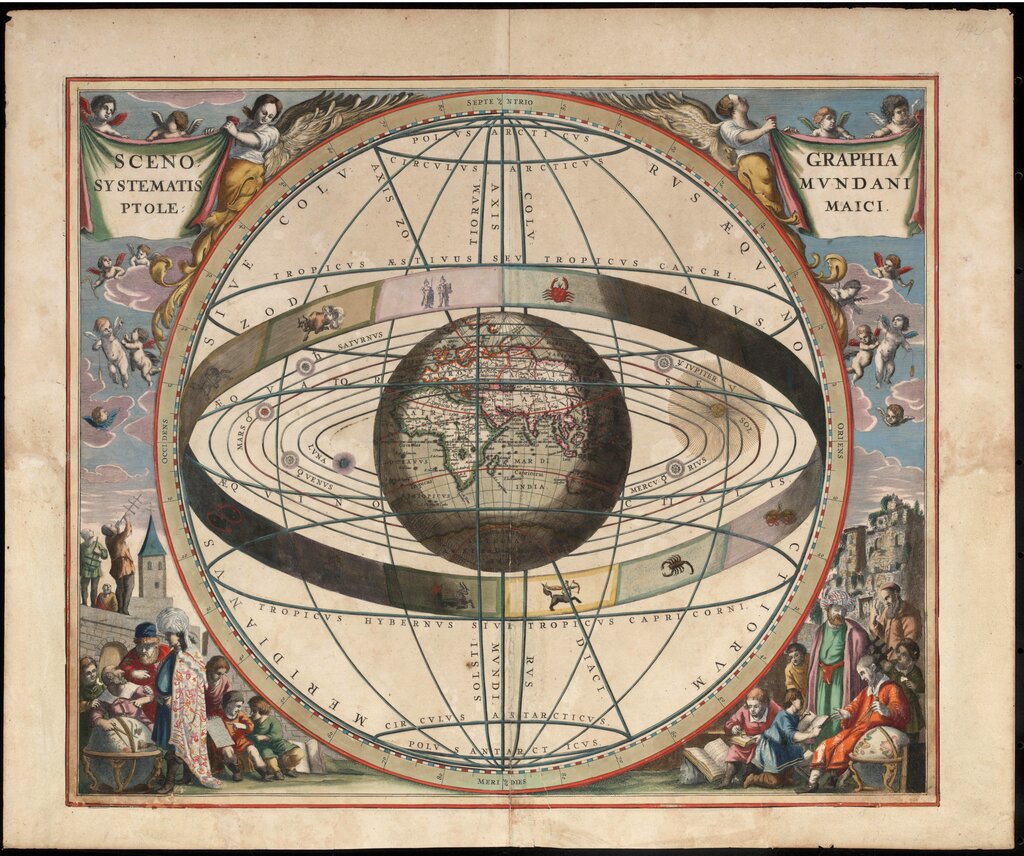
This approach fundamentally changed the daily work of astronomers. The Handy Tables became the essential reference manual for centuries, used across the Greek, Islamic, and medieval European worlds. They were translated, adapted, and updated, but the core structure Ptolemy created remained the standard for over a thousand years.
If the Almagest was the textbook explaining why the planets moved, the Handy Tables were the user's manual for predicting where they would be.
What Was Inside?
The Handy Tables were a comprehensive collection. They contained everything a practicing astronomer would need:
| Table Type | Purpose |
|---|---|
| Chronological Tables | Correlated different calendars (e.g., Egyptian, Roman) to a standard timeline. |
| Mean Motion Tables | Showed the average daily movement of the Sun, Moon, and each of the five planets. |
| Anomaly Tables | Provided correction values to account for the non-uniform speeds of celestial bodies. |
| Latitude Tables | Calculated how far a planet would be north or south of the ecliptic (the Sun's path). |
| Eclipse Tables | Helped predict the timing and visibility of solar and lunar eclipses. |
| Star Catalogue | A simplified list of star positions, adapted from the more detailed catalogue in the Almagest. |
Each table was organized by celestial body and phenomenon, allowing users to find the necessary data quickly. The numbers were presented in the sexagesimal (base-60) system inherited from the Babylonians, which was the standard for astronomical and mathematical calculation at the time.
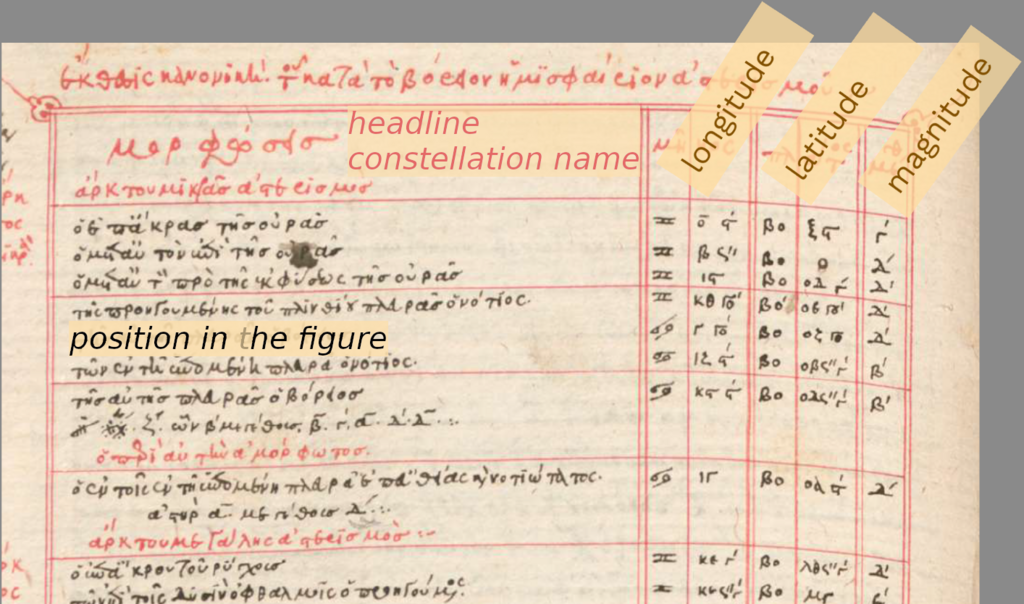
By making complex calculations accessible, the Handy Tables empowered generations of astronomers. They were not just a supplement to the Almagest; they were the engine that made Ptolemaic astronomy a living, practical science for well over a millennium.