Psychology of Gambling and Addiction Prevention
Introduction to Gambling Psychology
The Mind at Play
At its core, gambling is straightforward: you risk something of value on an event with an uncertain outcome, hoping to win something of greater value. This can range from a weekly lottery ticket or a fantasy football league with friends to high-stakes poker games in a casino. The common thread is the combination of risk and chance.
Every gambling game is built on a foundation of probability. Probability is just a way of measuring how likely an event is to happen. For a simple coin flip, the probability of getting heads is 1 out of 2, or 50%. This can be written as . Each flip is an independent event. The coin has no memory. Getting heads five times in a row doesn't make tails any more or less likely on the sixth flip. The odds remain 50/50.
While we might understand this logically, our brains often struggle to accept it, especially in the heat of the moment. This is where cognitive biases, or mental shortcuts that lead to errors in judgment, come into play.
When Your Brain Tricks You
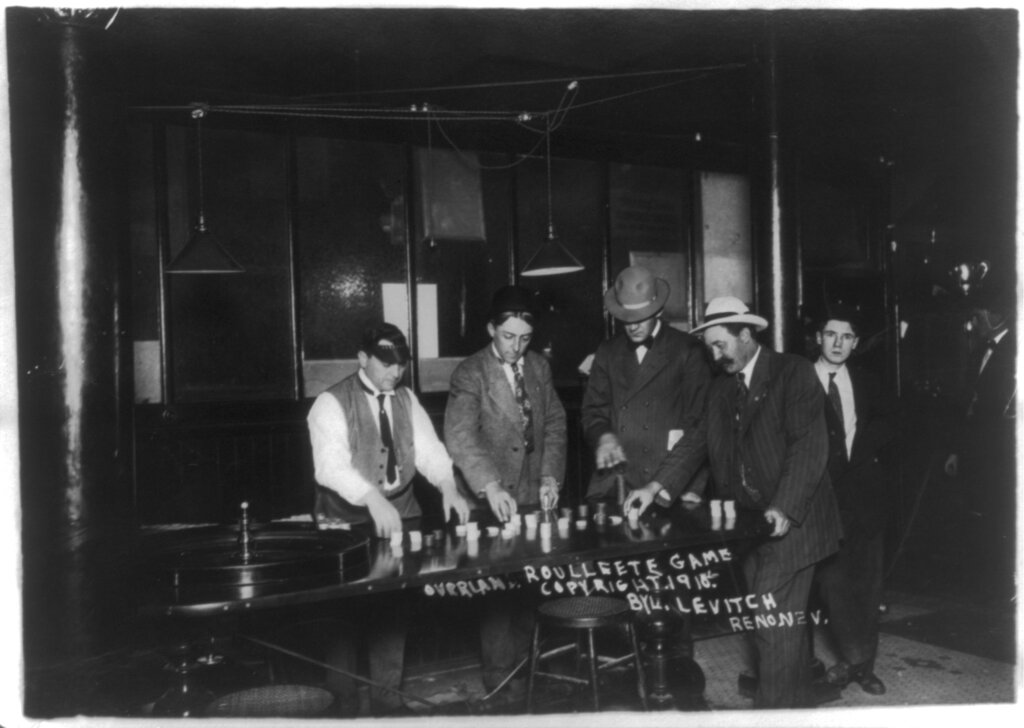
One of the most powerful biases in gambling is the gambler's fallacy. This is the mistaken belief that if a particular outcome happens frequently, it's less likely to happen in the future. Imagine a roulette wheel where the ball has landed on red for seven consecutive spins. The gambler's fallacy makes you think, "Black is due to hit." In reality, the probability of the ball landing on black is exactly the same as it was on every other spin. The wheel, like the coin, has no memory of past results.
The gambler's fallacy is believing that a string of random events somehow influences the next random event. They don't.
Another powerful psychological hook is the near-miss effect. Think of a slot machine. The reels spin, and you get two cherries and the third one stops just one position away from the payline. You didn't win, but for a moment, it felt like you almost did.
That feeling of being so close is surprisingly potent. Neurologically, a near miss activates the same reward pathways in the brain that a genuine win does. This creates a powerful urge to play again, because your brain is telling you that a win is just around the corner. Of course, each spin is still just another independent, random event.
Other biases, like the illusion of control, also play a role. This is the belief that we can influence outcomes that are purely random. Blowing on dice before a roll or wearing a lucky shirt to a poker game are classic examples. These rituals provide a sense of agency, but they have no actual effect on the outcome.
Simply learning to recognise these biases in your own gambling can help you make better decisions about whether to play on or walk away.
Understanding these psychological principles is the first step in seeing gambling not just as a game of chance, but as a complex interaction between probability and the quirks of human cognition. Let's see what you've learned.
What fundamental elements define an activity as gambling?
A standard six-sided die is rolled five times, and it lands on the number 6 each time. Believing that any number other than 6 is now more likely to appear on the next roll is an example of what?
Recognizing these mental shortcuts in ourselves is key. Our brains are wired to find patterns, even in randomness, which is what makes these games so compelling.