Psychology of Female Desire
Desire Neurobiology
The Engine of Desire
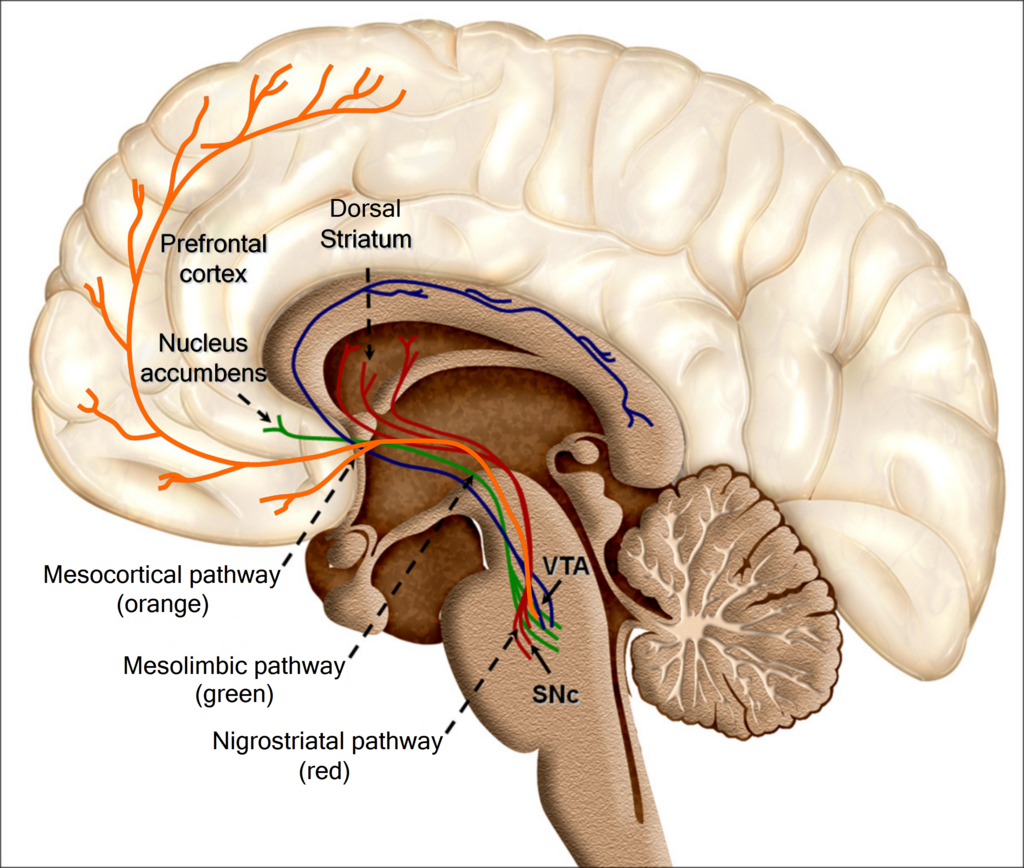
At the heart of wanting is a primal, neurological drive to explore and pursue. This isn't a conscious decision, but a deep-seated impulse known as the seeking system. Its central hub is a small cluster of neurons in the midbrain called the (VTA). When the VTA is activated, it floods a specific neural circuit, the mesolimbic pathway, with dopamine.
This dopamine surge isn't about pleasure itself. It's about anticipation. It’s the neurological basis of motivation, the force that propels us to seek out food, connection, and new experiences. This is 'anticipatory pleasure'—the excitement of the chase, not the satisfaction of the catch. The system creates a state of energized exploration, priming you to move toward a potential reward.
Safety First, Desire Second
The seeking system can't operate in a vacuum. Its activation is profoundly dependent on your autonomic state. As you know from Porges's work, the nervous system is constantly scanning for cues of danger. For the expansive, open-ended exploration of desire to feel possible, the body must first feel safe.
This is where the Social Engagement System comes in. When your ventral vagal circuit is active, it signals safety and connection. This state acts as a permission slip for the seeking system. It downregulates the defensive 'threat system'—the sympathetic fight-or-flight response and the dorsal vagal shutdown. Without that feeling of safety, the brain prioritizes survival. The seeking system is put on hold because exploration is too risky when a threat might be present. In a state of defense, the body is geared for protection and contraction, not expansion and connection.
Think of it this way: you can't be curious about what's over the hill if you're worried about a tiger behind the bushes. The Social Engagement System tells you there are no tigers.
The Brain's Brakes
Even with a green light from the safety system, desire isn't guaranteed. The brain has powerful inhibitory circuits that act as neurobiological 'brakes'. These circuits, often orchestrated by the prefrontal cortex, can evaluate the context and consequences of a desire and hit 'stop' before the 'go' signal from the VTA ever reaches conscious awareness.
For many women, these brakes can be particularly sensitive. Past negative experiences, stress, distraction, or self-consciousness can cause the prefrontal cortex to send inhibitory signals down to the VTA, effectively shutting down the seeking system before it even starts. This isn't a conscious choice to reject desire; it's a subconscious, pre-emptive stop. The impulse is extinguished before you even feel it as 'wanting'.
This leads to the crucial distinction between anticipatory pleasure and —the pleasure of 'wanting' versus the pleasure of 'having' or 'doing'. The seeking system drives the former. If the brakes are applied, you never get to the latter. The journey from anticipation to consummation requires both the 'go' signal of dopamine and the absence of a hard 'stop' from the brain's inhibitory controls.
Understanding these mechanisms reveals that desire is not a simple switch. It's a delicate negotiation between the expansive drive to seek and the powerful systems that ensure our safety and regulate our actions.