Psychology of Childhood Trauma
Introduction to Psychology
What Is Psychology?
Psychology is the scientific study of the mind and behavior. It asks big questions: Why do we feel the way we do? What motivates our actions? How do we learn and remember? The field is vast, covering everything from the firing of a single brain cell to the complex dynamics of a social group.
psychology
noun
The scientific study of the human mind and its functions, especially those affecting behavior in a given context.
At its core, psychology aims to describe, explain, predict, and sometimes change behavior and mental processes. It's a journey into what makes us human, blending biological science with social insight.
A Quick History
For centuries, questions about the mind belonged to philosophy. But in the late 19th century, things started to change. Psychology broke away and established itself as a distinct scientific discipline.
The turning point came in 1879, when Wilhelm Wundt opened the first-ever psychology laboratory in Leipzig, Germany. This marked the beginning of modern, experimental psychology.
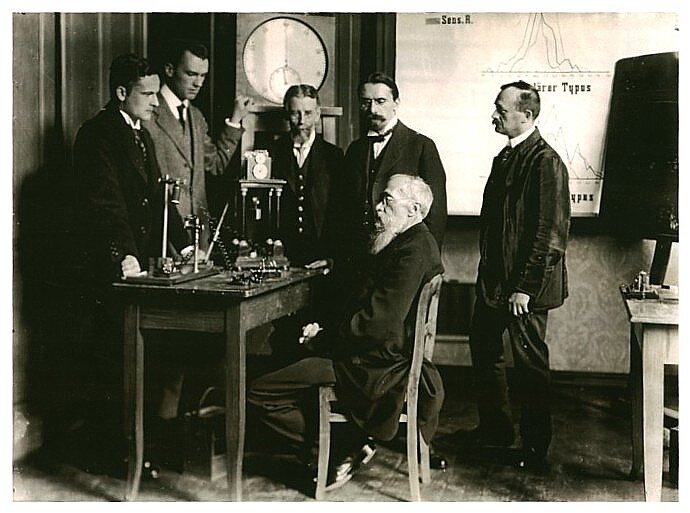
Soon after, different schools of thought began to emerge. One of the most famous figures was Sigmund Freud. He developed psychoanalysis, a theory that emphasized the power of the unconscious mind in shaping our feelings, thoughts, and behaviors. He believed that our past experiences, especially in childhood, hold the key to understanding our present selves.

While Freud's ideas were influential, many psychologists wanted to focus on more measurable phenomena. This led to new ways of thinking about the mind and behavior.
Major Perspectives
There is no single, right way to study psychology. Instead, the field uses several different perspectives, each offering a unique lens through which to view human behavior. Think of them as different tools in a toolbox, each suited for a different job.
Behaviorism rose in the early 20th century, shifting the focus to observable behavior. Behaviorists argued that internal mental states were too subjective to study scientifically. They explored how we learn through reinforcement and punishment, a process known as conditioning. For them, the environment was the key shaper of who we are.
By the mid-20th century, the Cognitive Revolution brought the mind back into focus. This perspective explores our mental processes—how we think, perceive, remember, and solve problems. It's like looking at the software that runs our brain's hardware.
Around the same time, the Humanistic Perspective emerged as a response to the perceived limitations of psychoanalysis and behaviorism. Humanistic psychologists emphasized personal growth, free will, and the drive to achieve one's full potential, or self-actualization.
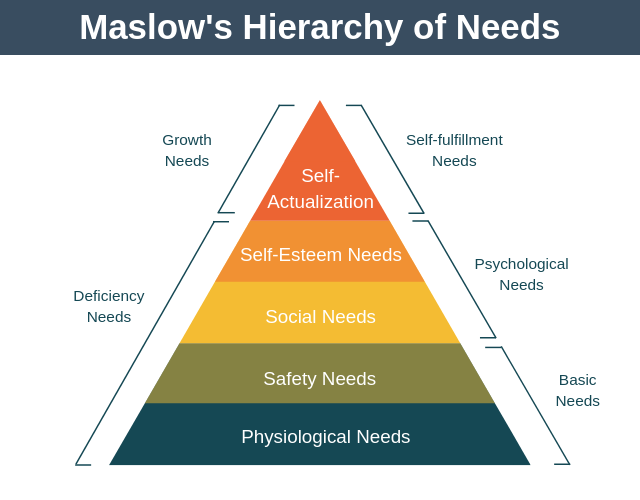
These are just a few of the major viewpoints. Others, like the biological perspective, look at the physical basis of behavior in the brain and nervous system, while the sociocultural perspective examines how our social and cultural environments influence us.
How Psychologists Know
Psychology is a science, which means it relies on evidence and systematic research, not just intuition. Psychologists use various methods to gather and analyze data.
The goal is to move beyond personal opinion to find objective answers to complex questions about human nature.
Here are a few common research methods:
-
Experiments: This is the gold standard for determining cause and effect. Researchers manipulate one variable (the independent variable) to see how it affects another (the dependent variable), while controlling for other factors. For example, an experiment might test whether a new therapy technique reduces symptoms of anxiety.
-
Correlational Studies: This method examines the relationship between two or more variables as they naturally occur. A correlation tells us if two things are related, but not if one causes the other. For instance, a study might find a correlation between hours of sleep and academic performance.
-
Observational Studies: Researchers watch and record behavior in its natural setting, without interference. This is great for getting a realistic picture of how people or animals behave. A developmental psychologist might observe children's play to understand social development.
-
Surveys and Questionnaires: These are used to collect data on people's attitudes, beliefs, or behaviors by asking them directly. They are a quick way to gather a lot of information from a large group of people.
Each method has its strengths and weaknesses, and researchers often use a combination to build a more complete understanding.
Time to check your understanding of these foundational concepts.
What is the primary focus of the scientific study of psychology?
Which psychological perspective, popular in the early 20th century, argued that psychology should only study observable behavior and not internal mental states?
This introduction provides the basic framework of psychology. Understanding these core principles, perspectives, and methods is the first step in exploring the complexities of the human experience.