Psychological Biases Explained
Introduction to Cognitive Biases
Your Brain's Shortcuts
Your brain processes an incredible amount of information every second. To keep up, it takes shortcuts. These mental shortcuts, often called heuristics, help you make quick judgments and decisions without having to analyze every single detail. Think about choosing a brand of cereal at the store. You probably don't spend an hour researching every option. You might grab the one you recognize or the one in the bright box. That's a shortcut in action.
Most of the time, these shortcuts work well. They save mental energy and allow us to navigate a complex world efficiently. But sometimes, these shortcuts lead to systematic errors in thinking. They cause us to misinterpret information, make inaccurate judgments, and reach irrational conclusions. These predictable patterns of error are known as cognitive biases.
Cognitive Bias
noun
A systematic pattern of deviation from norm or rationality in judgment, whereby inferences about other people and situations may be drawn in an illogical fashion.
Cognitive biases aren't a sign of low intelligence. They're a fundamental part of being human, affecting everyone from shoppers to scientists. They influence what we buy, who we trust, how we vote, and even how we remember our own past. Recognizing these biases is the first step toward improving our critical thinking and making more thoughtful decisions.
Where Did This Idea Come From?
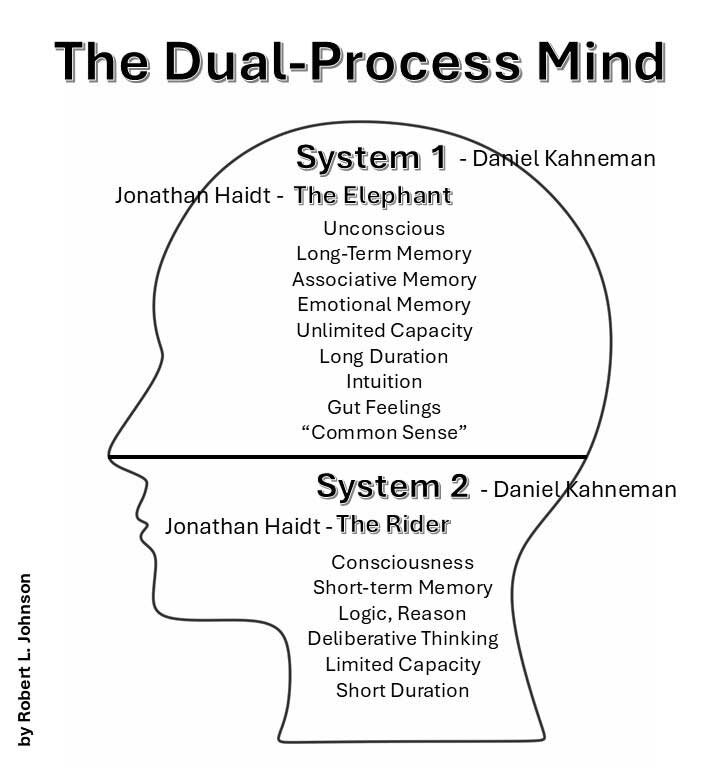
The study of cognitive biases gained significant ground in the 1970s with the work of psychologists Daniel Kahneman and Amos Tversky. They challenged the long-held view that humans are primarily rational decision-makers. Through a series of clever experiments, they showed that people consistently rely on mental shortcuts that lead to predictable errors.
Their research revealed that our thinking is often guided by intuition and emotion, not just logic. This insight was groundbreaking and eventually earned Kahneman a Nobel Prize in Economic Sciences, fundamentally changing our understanding of human judgment.
A Few Common Culprits
There are dozens of documented cognitive biases, each describing a different quirk in our thinking. Let's look at a few of the most common ones you're likely to encounter in daily life.
| Bias | Description |
|---|---|
| Confirmation Bias | The tendency to search for, interpret, and recall information that confirms your pre-existing beliefs. |
| Anchoring Bias | Relying too heavily on the first piece of information you receive when making decisions. |
| Availability Heuristic | Overestimating the importance of information that is easily recalled, such as recent or dramatic events. |
| Bandwagon Effect | The tendency to adopt certain behaviors or beliefs because many others are doing so. |
Take anchoring bias, for example. When you see a sweater with a tag that says "Original Price: $300, Now: $100," the $300 price acts as an anchor. It makes $100 seem like a fantastic deal, even if the sweater was never truly worth $300. The first number you saw influenced your perception of value.
Similarly, the availability heuristic explains why people might be more afraid of flying than driving, even though driving is statistically more dangerous. Dramatic plane crashes are widely reported and easy to recall, making the risk seem greater than it is.
Cognitive biases are predictable, systematic errors in human reasoning.
Understanding that these biases exist doesn't make you immune to them, but it is a crucial first step. Awareness allows you to pause, question your initial reactions, and consider whether a mental shortcut might be influencing your judgment.
What is the primary relationship between mental shortcuts (heuristics) and cognitive biases?
A real estate agent shows you a very expensive, rundown house first. Every subsequent house you see seems like a much better value in comparison, even if they are also overpriced. This is an example of which cognitive bias?