Proteins: Structure and Function
Amino Acids
The Building Blocks of Proteins
Proteins are the workhorses of the cell, carrying out a vast array of tasks. But what are they made of? The answer is amino acids. Think of them as the LEGO bricks that construct the complex machinery of life. Each protein is a long chain of these smaller molecules, arranged in a specific order.
All amino acids share a common backbone structure. At the center is a carbon atom, called the alpha-carbon (). Attached to it are four different groups:
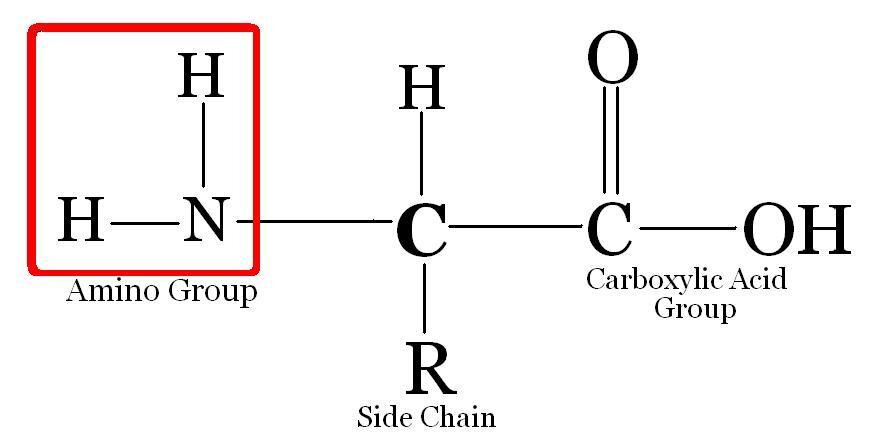
- An amino group (), which is basic.
- A carboxyl group (), which is acidic.
- A hydrogen atom ().
- A side chain, also known as an R group.
The first three components are the same for every amino acid. It's the R group that's different for each one, giving it a unique chemical personality.
The Standard Set
While hundreds of amino acids exist in nature, our bodies primarily use just 20 different types to build proteins. The specific sequence of these 20 amino acids in a chain determines the protein's final three-dimensional shape and, ultimately, its function. A slight change in the sequence can lead to a completely different structure and purpose.
The code specifies a sequence of amino acids; it is strings of these building blocks that make up protein sequences.
To understand how proteins work, we first need to understand the properties of their building blocks. The best way to do this is to group the 20 standard amino acids based on the characteristics of their side chains.
Four Groups of Personalities
The chemical properties of the R group determine how an amino acid will interact with its environment and with other amino acids in the protein chain. These interactions are what drive a protein to fold into its unique shape. We can classify the 20 amino acids into four main groups based on their side chains.
Nonpolar, Hydrophobic Amino Acids These amino acids have side chains that are repelled by water (hydrophobic). They are primarily composed of carbon and hydrogen. In a water-based environment like a cell, proteins fold so that these hydrophobic side chains are tucked away on the inside of the protein, shielded from the water. This hydrophobic effect is a major driving force in protein folding and stability. Examples include Valine and Leucine.
Polar, Uncharged Amino Acids These amino acids have side chains that like to interact with water (hydrophilic). They contain atoms like oxygen or nitrogen, which can form hydrogen bonds with water molecules. Because they are water-soluble, these amino acids are often found on the exterior surface of a protein. Serine and Glutamine are good examples.
Acidic (Negatively Charged) Amino Acids At the typical pH of a cell (around 7.4), the side chains of these amino acids lose a proton and become negatively charged. This is because they contain a second carboxyl group in their R group. The two acidic amino acids are Aspartic acid and Glutamic acid.
Basic (Positively Charged) Amino Acids These amino acids have side chains that gain a proton at cellular pH, giving them a positive charge. Their R groups contain nitrogen atoms that act as bases. The three basic amino acids are Lysine, Arginine, and Histidine.
The electrically charged acidic and basic amino acids are strongly hydrophilic and are almost always found on the surface of a protein, where they can interact with water and other molecules.
The properties of the R groups—size, shape, charge, and reactivity—are what give proteins their incredible functional diversity. From catalyzing reactions to providing structural support, it all starts with the chemistry of these 20 building blocks.
Time to review what you've learned about these fundamental components of proteins.
Let's check your understanding.
What is the fundamental building block of a protein?
What part of an amino acid is responsible for its unique chemical properties?
Understanding amino acids is the first step to understanding the complex world of proteins. Next, we'll see how these individual units link together to start forming larger structures.