Protein Folding Explained
Protein Structure
The Architecture of Proteins
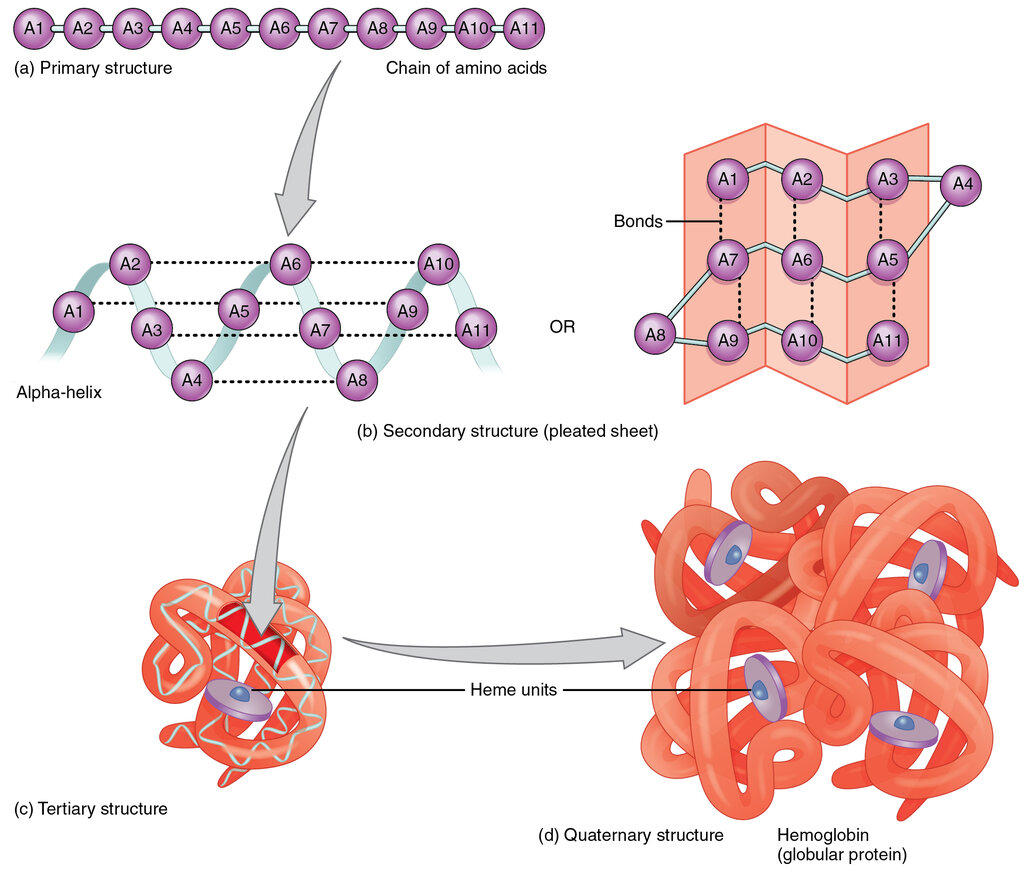
Proteins are the workhorses of the cell, carrying out a vast array of functions. Their ability to do so depends entirely on their intricate, three-dimensional shapes. This shape isn't random; it's built up in a hierarchical fashion, with four distinct levels of structure. Each level builds upon the one before it, starting from a simple chain of building blocks.
Primary Structure: The Sequence
The foundation of any protein is its primary structure. This is simply the linear sequence of amino acids linked together by peptide bonds, like beads on a string. There are 20 common types of amino acids, and the specific order they appear in defines the protein.
This sequence is determined by the genetic information in DNA. A change in just one amino acid can sometimes have drastic effects on the protein's final shape and function. The primary structure contains all the information necessary for the protein to fold into its correct shape.
The primary structure is the unique order of amino acids in a polypeptide chain.
Secondary Structure: Local Folds
The next level of organization is the secondary structure. As the polypeptide chain begins to fold, certain regular, repeating patterns emerge. These are formed by hydrogen bonds between the atoms of the polypeptide backbone, not the side chains (R-groups).
The two most common types of secondary structures are the alpha-helix and the beta-pleated sheet.
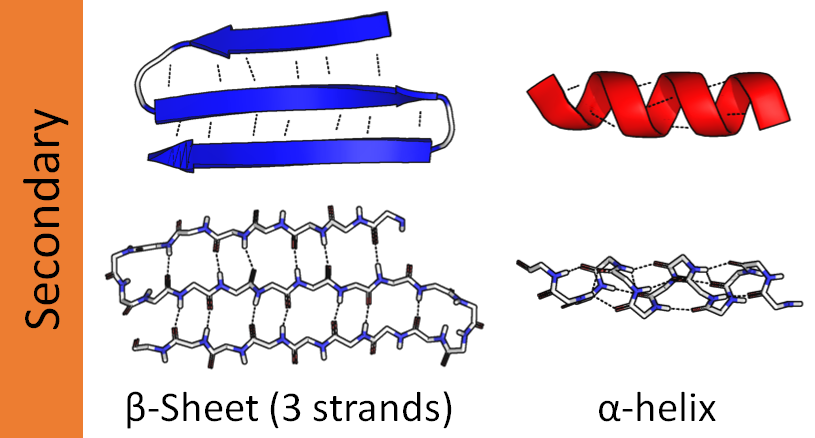
The alpha-helix is a right-handed coil, like a spring. Hydrogen bonds form between every fourth amino acid, pulling the backbone into this helical shape.
The beta-pleated sheet is formed when different sections of the polypeptide chain lie side by side. Hydrogen bonds between these parallel or anti-parallel strands create a folded, sheet-like structure. Many proteins contain a mix of both alpha-helices and beta-sheets.
Tertiary and Quaternary Structures
The overall, three-dimensional shape of a single polypeptide chain is its tertiary structure. This complex folding is driven by interactions between the various amino acid side chains (R-groups). These interactions are what truly stabilize the protein's final, functional shape.
Several types of bonds and forces are at play:
- Hydrophobic interactions: Nonpolar side chains tend to cluster together on the inside of the protein, away from the surrounding water.
- Hydrogen bonds: These can form between polar side chains.
- Ionic bonds: These occur between positively and negatively charged side chains.
- Disulfide bridges: A strong covalent bond that can form between the side chains of two cysteine amino acids.
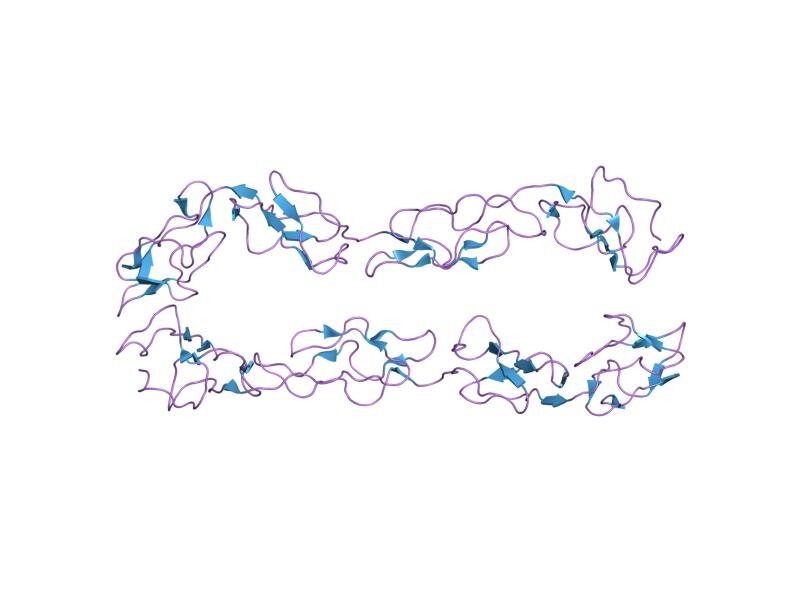
Finally, some proteins are made of more than one polypeptide chain, also known as subunits. The arrangement of these subunits to form a larger, functional protein complex is called the quaternary structure. The same types of interactions that stabilize the tertiary structure also hold these subunits together.
A classic example is hemoglobin, the protein in red blood cells that carries oxygen. It is composed of four separate polypeptide subunits that work together. Not all proteins have a quaternary structure; many are functional with just a single folded polypeptide chain (tertiary structure).
| Structure Level | Description | Stabilizing Bonds/Interactions |
|---|---|---|
| Primary | Linear sequence of amino acids | Peptide bonds |
| Secondary | Local coils (α-helix) and folds (β-sheet) | Hydrogen bonds (in the backbone) |
| Tertiary | Overall 3D shape of one polypeptide | Interactions between R-groups (hydrophobic, ionic, H-bonds, disulfide bridges) |
| Quaternary | Arrangement of multiple polypeptides | Same as tertiary structure |
These four levels of organization allow for the incredible diversity of protein shapes and functions we see in biology. Now, let's test your knowledge on these fundamental concepts.
The primary structure of a protein is determined by the...
Which type of bond is a strong covalent link that specifically stabilizes the tertiary and quaternary structure by joining two cysteine amino acids?
Understanding this structural hierarchy is the first step toward appreciating how proteins fold and carry out their vital roles in the cell.