Protein Design Fundamentals
Protein Structure Basics
From Chain to Shape
Proteins are the workhorses of the cell, carrying out a vast array of tasks. Their function is dictated by their intricate three-dimensional shape. But how do they get these shapes? It all starts with a simple chain.
Imagine a string of beads, where each bead is an amino acid. This chain is called a polypeptide. A protein can be one or more of these polypeptide chains, folded up into a specific, functional structure. This folding process isn't random; it's a carefully orchestrated sequence of events guided by the chemical properties of the amino acids themselves.
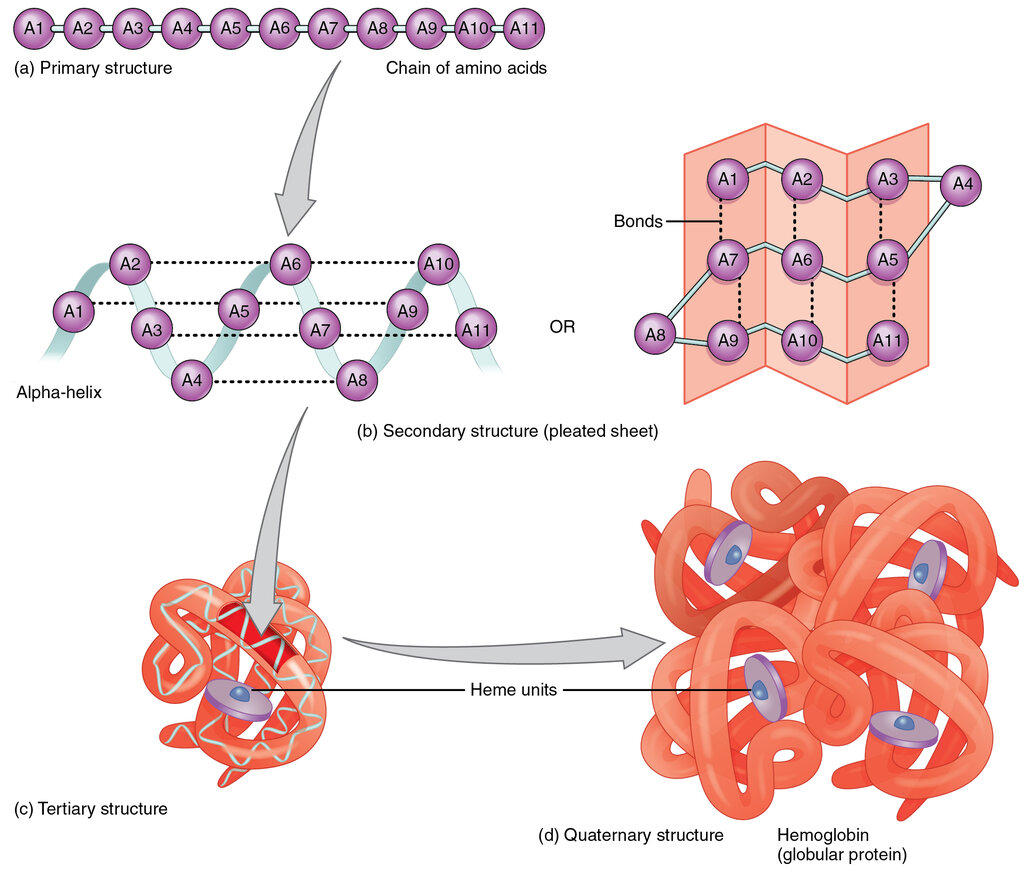
There are four distinct levels to a protein's structure, each building upon the last. Think of it like building with LEGOs: you start with individual bricks, connect them into a line, bend that line into sections, and finally assemble the whole creation.
The Four Levels of Structure
Primary structure is the simplest level. It's just the linear sequence of amino acids in the polypeptide chain. The order is critical—changing even one amino acid can sometimes dramatically alter the protein's final shape and function. It’s like spelling a word; the sequence of letters determines the word's meaning.
Primary Structure: The sequence of amino acids.
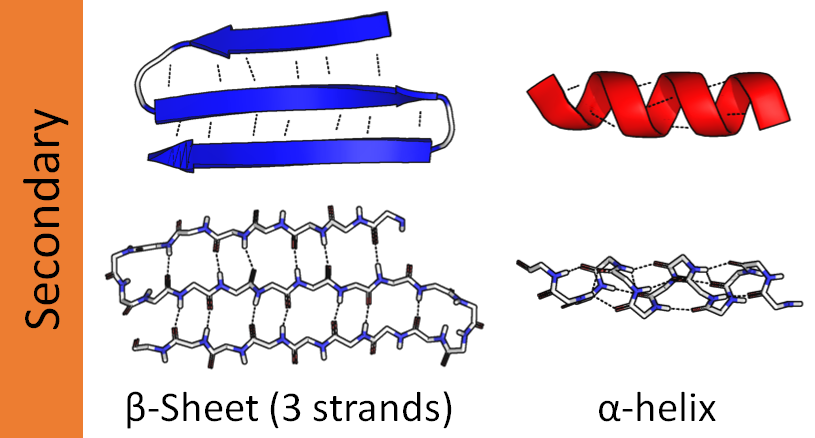
Secondary structure comes next. As the polypeptide chain grows, it begins to fold into regular, repeating patterns. These are stabilized by hydrogen bonds that form between atoms in the polypeptide's backbone, not the side chains.
The two most common types of secondary structures are the alpha-helix, a delicate coil like a spring, and the beta-sheet, where segments of the chain lie side-by-side, forming a pleated sheet.
Tertiary structure is the overall 3D shape of a single polypeptide chain. This is where the protein really takes on its functional form. It's the result of interactions between the R-groups (or side chains) of the various amino acids. Some side chains are attracted to each other, others are repelled, and some are drawn to or pushed away from the surrounding water. This complex tug-of-war folds the chain into its unique, compact shape.
Tertiary Structure: The final 3D shape of a single polypeptide.
Quaternary structure is a level that only some proteins have. It occurs when a protein is made up of more than one polypeptide chain, also known as subunits. These subunits assemble into a larger, functional complex. A classic example is hemoglobin, the protein that carries oxygen in your blood. It's composed of four separate polypeptide subunits that work together.
Forces at Play
What holds these complex structures together? It's a combination of different chemical forces and bonds. The most important driving force in protein folding is the hydrophobic effect.
Amino acids can be broadly sorted into two groups based on how their R-groups interact with water. Hydrophilic (water-loving) R-groups are happy to be exposed to the watery environment of the cell. Hydrophobic (water-fearing) R-groups are not. To escape the water, these hydrophobic R-groups tend to bury themselves in the center of the protein, creating a compact core. This is a major factor that determines the protein's final tertiary structure.
Other forces also play crucial roles:
-
Hydrogen Bonds: As mentioned, these stabilize secondary structures. They also form between polar R-groups and between R-groups and water, helping to fine-tune the tertiary structure.
-
Ionic Bonds: These can form between positively and negatively charged R-groups, acting like tiny magnets that pull parts of the chain together.
-
Disulfide Bonds: These are special, strong covalent bonds that can form between the R-groups of two cysteine amino acids. They act like molecular staples, covalently locking the polypeptide into place and adding significant stability.
Ready to check your understanding?
What defines the primary structure of a protein?
Which of the following is an example of a secondary structure in a protein?
Understanding these four levels of structure and the forces that create them is the foundation for understanding everything proteins do, from catalyzing reactions to building cellular architecture.