Properties and Classification of Pure Substances
Chemical Purity Principles
Beyond Physical Separation
You already know that we can separate mixtures using physical methods. Sand and water can be filtered. Salt can be recovered from water by evaporation. But what happens when a substance looks uniform? How do we know if it’s truly pure?
Consider a glass of highly filtered drinking water versus a flask of pure water from a chemistry lab. To the eye, they are identical. Both are clear liquids. But the drinking water, even after filtering, contains dissolved minerals and gases. It's a homogeneous mixture. The lab-grade water, however, is different. It is chemically pure—composed only of H₂O molecules and nothing else.
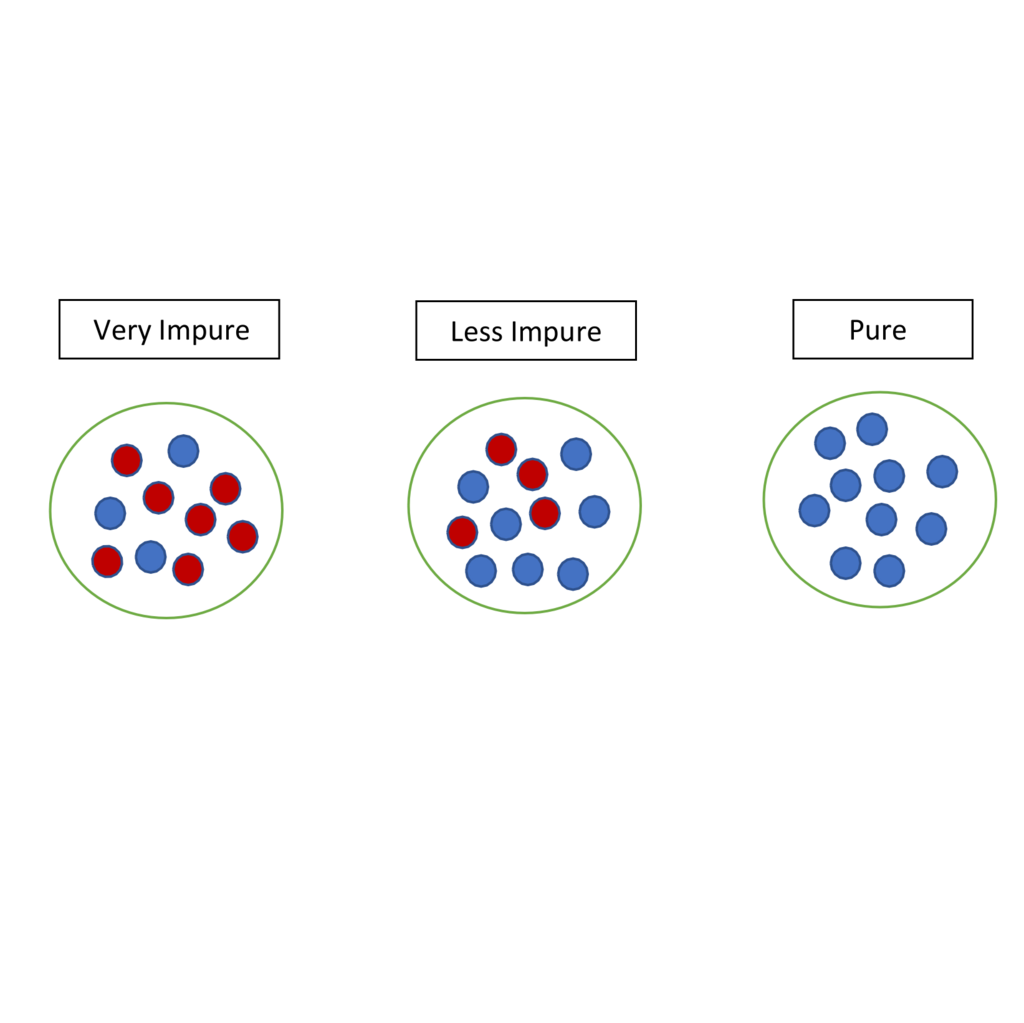
This is the core difference between physical refinement and chemical purity. Physical refinement removes visible or easily separated components, but chemical purity is an absolute standard. It means a substance consists of only one type of molecule or, for elements, one type of atom. This identity is locked in at the atomic level.
The Unchanging Recipe
The foundation for this concept is the Law of Constant Proportions, which states that a chemical compound always contains its elements in a fixed ratio by mass. This isn't just a guideline; it's a strict, unchangeable recipe. Water is always 88.8% oxygen and 11.2% hydrogen by mass. If you find a sample of clear liquid with a different ratio, it isn’t pure water. It’s something else entirely.
This principle of a fixed ratio is known as stoichiometry—the measure of elements within a compound. For a substance to be pure, its stoichiometry must be exact and unchanging. There is no such thing as “mostly” pure water from a chemical standpoint. Either the atomic recipe is perfect, or it's a mixture.
Think of it like baking. A recipe for a cake might call for two parts flour to one part sugar. If you use a different ratio, you might get something like a cake, but it's not the same recipe. For chemicals, this rule is absolute. A pure substance has a single, non-negotiable chemical formula.
Proving Purity
So how do chemists confirm this level of purity? In analytical chemistry, a substance is considered pure if it exhibits consistent, predictable physical and chemical properties. A truly pure substance will have a sharp, defined melting point and boiling point. Impurities disrupt the molecular structure, causing these transitions to occur over a range of temperatures instead of at a single point.
For example, pure water freezes at precisely 0°C (at standard pressure). But salt water freezes at a lower temperature, and the freezing happens over a range as ice crystals form and leave behind an ever-saltier brine.
Modern labs use more sophisticated techniques. One powerful method is chromatography, which separates components of a mixture by passing it through a medium where different substances travel at different speeds. If a sample is injected into a chromatograph and only one signal appears, it's a strong indicator of purity. Another technique, mass spectrometry, measures the exact mass of molecules. A pure sample will show a single, dominant mass corresponding to its chemical formula.
Ultimately, chemical purity is not about appearance. It’s a rigid definition based on composition. A substance is pure only if every single one of its constituent particles—whether atoms or molecules—is identical. This precise standard is what allows chemistry to be a predictable, quantitative science.
Ready to test your understanding of chemical purity?
What is the fundamental difference between highly filtered drinking water and chemically pure water?
The principle that a chemical compound always contains its elements in a fixed ratio by mass is known as the __________.