Prompt Engineering Essentials
Introduction to Large Language Models
What Are Large Language Models?
At its core, a large language model, or LLM, is an advanced AI designed to understand and generate human-like text. Think of it as a highly sophisticated version of the autocomplete on your phone. While your phone might suggest the next word in your sentence, an LLM can write entire essays, compose emails, answer complex questions, and even write computer code.
Large language models (LLMs) are AI systems that understand and create human language, doing tasks like summarizing articles, answering questions, writing code, and more.
The "large" in their name refers to two things: the enormous amount of text data they are trained on (often scraping a significant portion of the internet), and the massive number of parameters within the model itself. These parameters are like the knobs and dials of the system, adjusted during training to help the model make better predictions about language.
A Brief History
The idea of teaching machines to understand language isn't new. Early attempts in the mid-20th century relied on complex, hand-written rules. These systems were brittle and couldn't handle the vast nuance of human language. Over time, the approach shifted to statistical methods, where computers learned patterns from data rather than being explicitly programmed with grammatical rules.
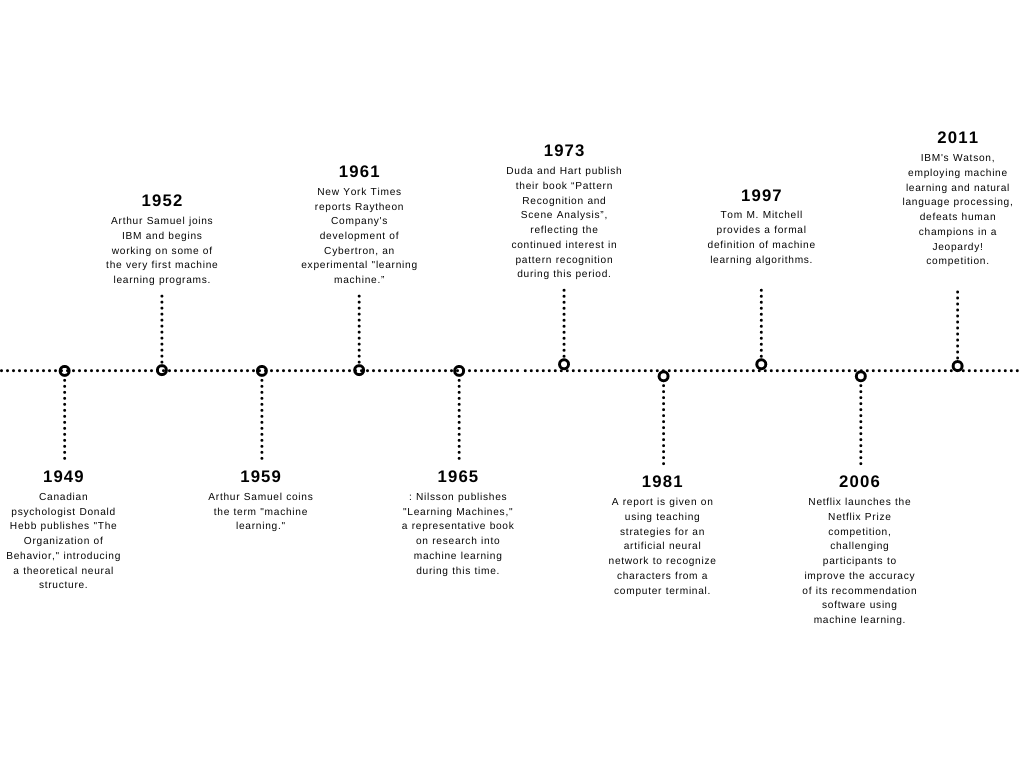
A major breakthrough came in 2017 with the introduction of the "transformer" architecture. This new design allowed models to weigh the importance of different words in a sentence, giving them a much better grasp of context. This innovation is the foundation for most modern LLMs, like those in the GPT series, and it enabled the massive leap in performance we see today.
How They Work
LLMs learn by being trained on vast datasets of text and code. During this training phase, the model's primary goal is simple: predict the next word in a sequence. It looks at a piece of text, makes a guess for what word comes next, and then compares its guess to the actual word. If it's wrong, it adjusts its internal parameters to make a better guess next time. This process is repeated billions upon billions of times.
Through this massive game of "guess the next word," the model builds an intricate statistical understanding of grammar, facts, reasoning abilities, and even different writing styles.
Once trained, the LLM can apply its knowledge to new text you provide, called a prompt. It takes your input, processes it through its complex network, and begins generating a response one word at a time, each time predicting the most probable next word based on the prompt and the text it has already generated.
Common Applications
The ability to process and generate text has unlocked a wide range of applications for LLMs. They are becoming integrated into many tools we use daily.
| Application Area | Example Use Case |
|---|---|
| Content Creation | Drafting emails, writing articles, generating marketing copy |
| Information Synthesis | Summarizing long documents, answering questions from a knowledge base |
| Software Development | Writing code snippets, debugging, explaining code |
| Customer Support | Powering chatbots to answer user questions 24/7 |
| Translation | Translating text between different languages with high accuracy |
This versatility is a key reason LLMs have become so prominent. They provide a flexible foundation for building all sorts of intelligent applications.
Ready to check your understanding? Let's see what you've learned about the fundamentals of large language models.
What does the 'large' in Large Language Model primarily refer to?
What is the fundamental task an LLM performs during its training process?
Understanding what LLMs are, where they came from, and how they function at a high level provides the necessary context for learning how to interact with them effectively.