Prompt Engineering Essentials
Introduction to Large Language Models
What Are Large Language Models?
A large language model, or LLM, is a type of artificial intelligence that can understand and generate human-like text. Think of it as a highly advanced version of the autocomplete on your phone. While your phone might suggest the next word in a sentence, an LLM can write entire paragraphs, answer complex questions, summarize long documents, and even write code.
These models are called "large" because they are built with a massive number of parameters—think of these as the knobs and dials the model uses to make decisions—and are trained on enormous amounts of text data. This extensive training allows them to learn the patterns, grammar, context, and even some reasoning abilities from the language they process.
Large language models (LLMs) are AI systems that understand and create human language, doing tasks like summarizing articles, answering questions, writing code, and more.
The goal is to create a tool that can interact with us in a natural way, making complex information more accessible and automating tasks that involve language.
A Quick Trip Through Time
The idea of teaching machines to understand language isn't new. Early attempts in the mid-20th century relied on hand-crafted rules. An expert would have to write down all the grammar rules for a language, which was incredibly difficult and brittle. If the model saw a sentence structure it didn't have a rule for, it would fail.
Later, statistical models took over. Instead of hard-coded rules, these models learned probabilities from text. They would calculate the likelihood of one word appearing after another. This was a big improvement, but they struggled to keep track of context over long sentences.
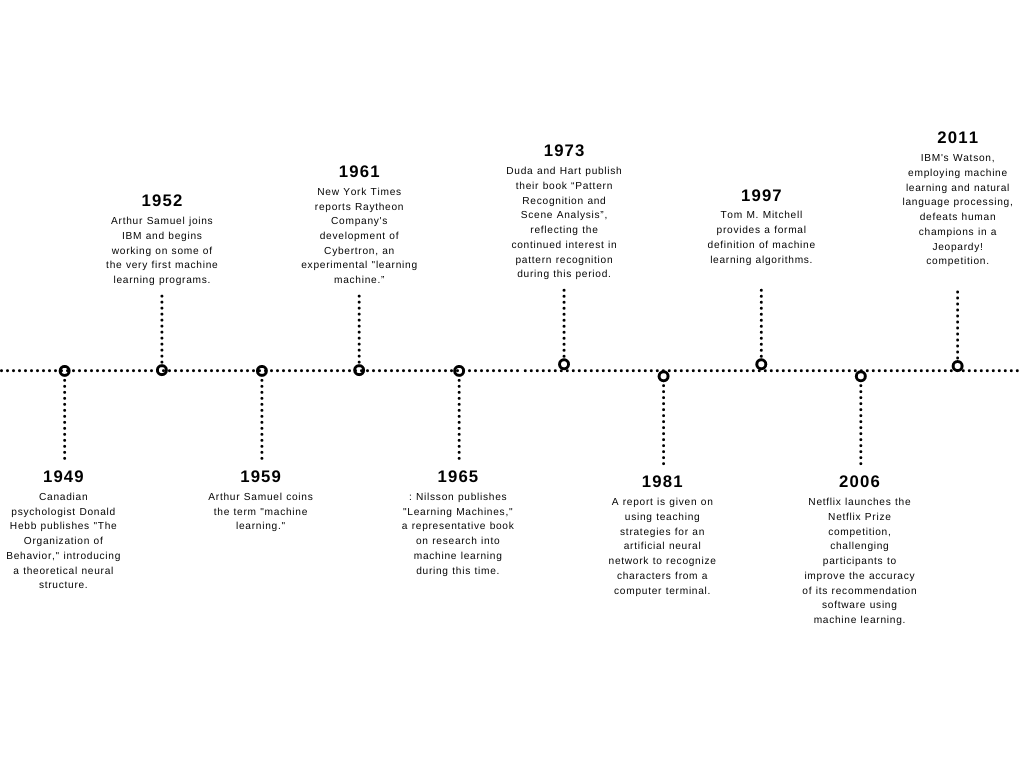
The real game-changer came in 2017 with the invention of the Transformer architecture. This new design allowed models to handle long-range dependencies in text—meaning they could finally understand how a word at the beginning of a paragraph might relate to a word at the end. This breakthrough paved the way for the powerful LLMs we see today, like those in the GPT series.
How LLMs Learn
Training an LLM is a multi-stage process that requires immense computational power and vast amounts of data. It generally starts with a phase called pre-training.
During pre-training, the model is fed a massive dataset composed of text from the internet, books, articles, and other sources. Its task is simple but powerful: predict the next word in a sequence. Given the text "The quick brown fox jumps over the," the model's job is to predict "lazy."
By repeating this prediction task billions of times, the model internalizes the rules of grammar, learns facts about the world, and develops a nuanced understanding of how words relate to each other.
After pre-training, the model is a generalist. It knows a lot but isn't specialized for any particular task, like having a conversation. The next step is often fine-tuning, where it's trained on a smaller, more curated dataset to align its behavior with human expectations. This helps ensure the model provides helpful, safe, and coherent responses when people interact with it.
The Transformer Architecture
The secret sauce behind modern LLMs is the Transformer architecture. Its key innovation is a mechanism called self-attention.
Imagine you're reading the sentence: "The robot picked up the ball, but it was too heavy." To understand what "it" refers to, you intuitively pay more attention to "robot" and "ball." The self-attention mechanism does something similar. As it processes each word, it looks at all the other words in the input and decides which ones are most important for understanding the current word's context. This allows the model to weigh the influence of different words, no matter how far apart they are in the text.
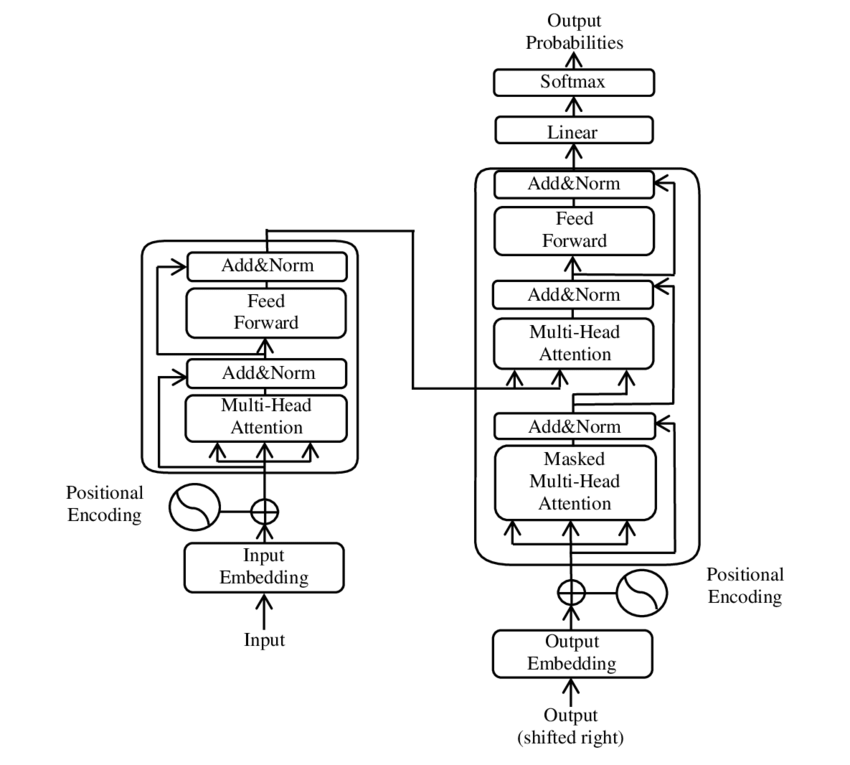
This ability to dynamically weigh the importance of words is what makes Transformers so effective at understanding complex language, from subtle literary nuances to dense technical documents. It also allows for parallelization, meaning different parts of the input can be processed simultaneously, which makes it possible to train these massive models in a reasonable amount of time.
What does the 'large' in 'large language model' primarily refer to?
What was the key innovation of the Transformer architecture that significantly advanced LLMs?
LLMs have a wide range of applications across many industries. They power chatbots and virtual assistants, translate languages in real time, help developers write and debug code, and even assist scientists in analyzing research papers. As the technology continues to evolve, we're likely to see them integrated into even more aspects of our daily lives.