Prompt Engineering Essentials
Introduction to Large Language Models
What Are Large Language Models?
At its core, a large language model (LLM) is an advanced AI program designed to understand and generate human language. Think of it as a super-powered autocomplete. While your phone's keyboard might suggest the next word in a sentence, an LLM can write entire paragraphs, answer complex questions, translate languages, and even write code.
They are called "large" for a reason. These models are built with neural networks containing billions of parameters, which are like adjustable knobs that are fine-tuned during training. This immense scale allows them to capture the intricate patterns, grammar, context, and nuances of human language.
A Large Language Model (LLM) is a type of artificial intelligence program designed to understand, generate, and work with human language.
The primary goal is to process an input, called a prompt, and predict what should come next. This could be the next word in a sentence, the answer to a question, or a summary of a long document. By repeatedly predicting the next piece of text, they can generate long, coherent, and contextually relevant responses.
The Engine Inside: Transformers
The breakthrough technology that powers modern LLMs is the transformer architecture, first introduced in a 2017 research paper. Before transformers, language models struggled with understanding long-range context. For example, in a long paragraph, a model might forget what the beginning of the paragraph was about.
Transformers solve this with a mechanism called attention. Attention allows the model to weigh the importance of different words in the input text when processing and generating language. When you read the sentence, "The cat, which had been sleeping on the warm rug all day, finally stretched," your brain pays more attention to "cat" to understand that it is the one stretching, not the rug. The attention mechanism works in a similar way, focusing on the most relevant parts of the input to create a better output.
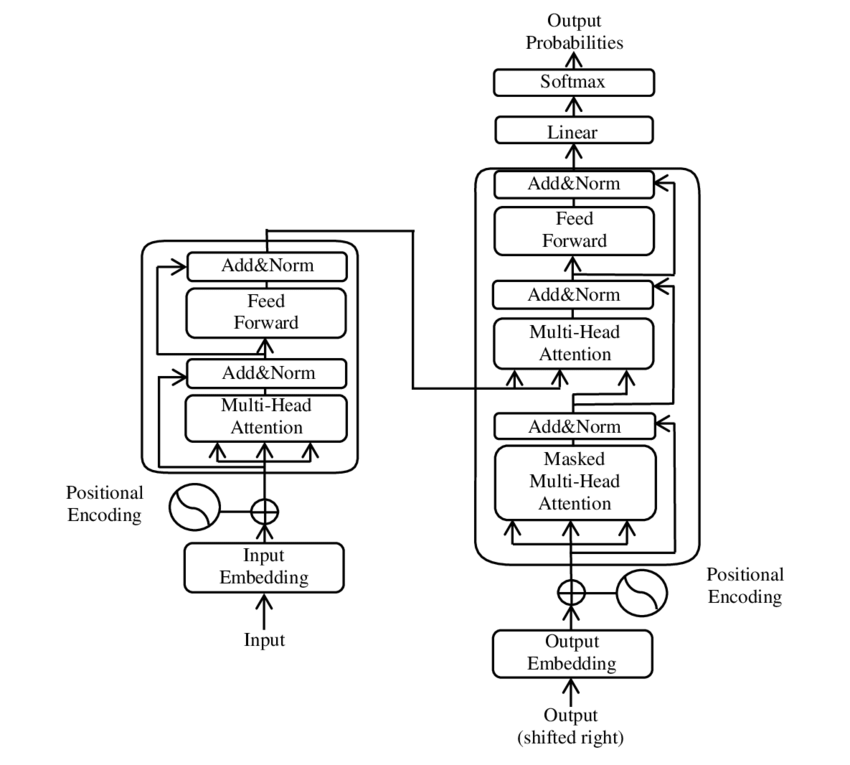
Most transformer models have two main parts: an encoder and a decoder. The encoder reads and processes the entire input text at once, building a numerical representation that captures its meaning and context. The decoder then takes this representation and generates the output, one word or token at a time, using the attention mechanism to focus on relevant parts of the input.
How LLMs Learn
Training an LLM is a massive undertaking. It happens in a few key stages.
The first stage is pre-training. In this phase, the model is fed an enormous dataset of text and code, often scraped from the internet, digital books, and other sources. The training is usually "self-supervised," meaning it learns from the data itself without needing humans to label it.
A common pre-training task is to predict a masked word. The model is given a sentence with a word hidden, and its job is to guess the missing word. For example:
The quick brown [MASK] jumps over the lazy dog.
The model predicts "fox." It makes a guess, compares it to the correct answer, and adjusts its internal parameters to get better. By doing this billions of times across a vast dataset, the model learns grammar, facts, reasoning abilities, and language patterns.
After pre-training, the model is a generalist. It knows a lot about language but isn't specialized for any particular task, like having a conversation.
The next stage is often fine-tuning. This is where the general model is trained on a smaller, more specific dataset to adapt it for a particular purpose. For example, to create a helpful chatbot, developers will fine-tune the pre-trained model on a dataset of high-quality conversations. This helps align the model's responses to be more useful, harmless, and conversational in tone.
What Can LLMs Do?
The capabilities of LLMs are broad and continue to expand. They are not just for chatbots. Their ability to process and generate language makes them useful in many fields.
| Application | Description |
|---|---|
| Content Creation | Writing articles, emails, marketing copy, and even creative stories or poems. |
| Summarization | Condensing long documents, articles, or research papers into key points. |
| Code Generation | Writing code snippets, debugging, and explaining what a piece of code does in plain English. |
| Translation | Translating text between different languages with improved accuracy and nuance. |
| Data Analysis | Extracting insights and trends from unstructured text data, like customer reviews or reports. |
| Education | Acting as a personal tutor by explaining complex topics and answering student questions. |
Understanding these core concepts—what LLMs are, the transformer architecture that powers them, how they're trained, and what they can do—is the first step to using them effectively. With this foundation, you can better understand how to craft prompts that get the most out of these powerful tools.