Project Management Fundamentals
Introduction to Project Management
Turning Ideas into Reality
Project management is the process of planning, executing, and overseeing the work of a team to achieve specific goals and meet specific success criteria within a defined timeframe. Think of it as the roadmap that guides a team from a starting point, like a new idea, to a destination, which is the finished product or result.
Essentially, it's the art and science of getting things done. It brings order to chaos and ensures that everyone is working towards the same objective, with the right resources, at the right time.
But what makes something a "project"? A project is different from day-to-day business operations. Operations are the ongoing, repetitive activities that keep a company running, like a car factory producing the same model every day. A project, on the other hand, is temporary and unique. It has a clear beginning and end, and it aims to create something new, whether that's designing a brand-new electric car, building a website, or organizing a one-time music festival. Once the goal is achieved, the project is complete.
The Core Players
Every project involves a cast of characters, each with a distinct role. Understanding who does what is crucial for success.
Project Manager
noun
The leader of the project. They are responsible for planning, executing, and closing the project, and are the main point of contact for everyone involved. They're like the captain of a ship, steering it through challenges to its destination.
The Project Team consists of the individuals who perform the work of the project. They are the designers, engineers, writers, and builders who use their skills to create the final product.
Finally, there are the Stakeholders. These are any people, groups, or organizations that could be affected by the project's outcome. This includes the customer, the project sponsor (who provides the funding), and even end-users. A good project manager keeps stakeholders informed and manages their expectations.
The Three Constraints
Every project is a balancing act. Project managers must juggle three primary constraints, often called the "Triple Constraint" or "Iron Triangle." A change in one constraint will almost always impact one or both of the others.
Here's what each constraint means:
-
Scope: This is what the project is supposed to accomplish. It defines the specific goals, features, and functions of the final product. Adding more features mid-project is called "scope creep" and can strain the other constraints.
-
Time: This is the project's schedule—the deadline for completion. It dictates how long the team has to finish the work.
-
Budget: This refers to the cost. It's the amount of money allocated to complete the project, covering everything from salaries to materials.
A project manager's job is to balance these three elements to deliver a high-quality result. If a client wants to add a new feature (increasing scope), the project manager might need to ask for more time or a bigger budget.
A Project's Journey
Projects don't happen all at once. They follow a structured path called the project lifecycle, which typically includes five distinct phases. This structure helps organize and manage the project from start to finish.
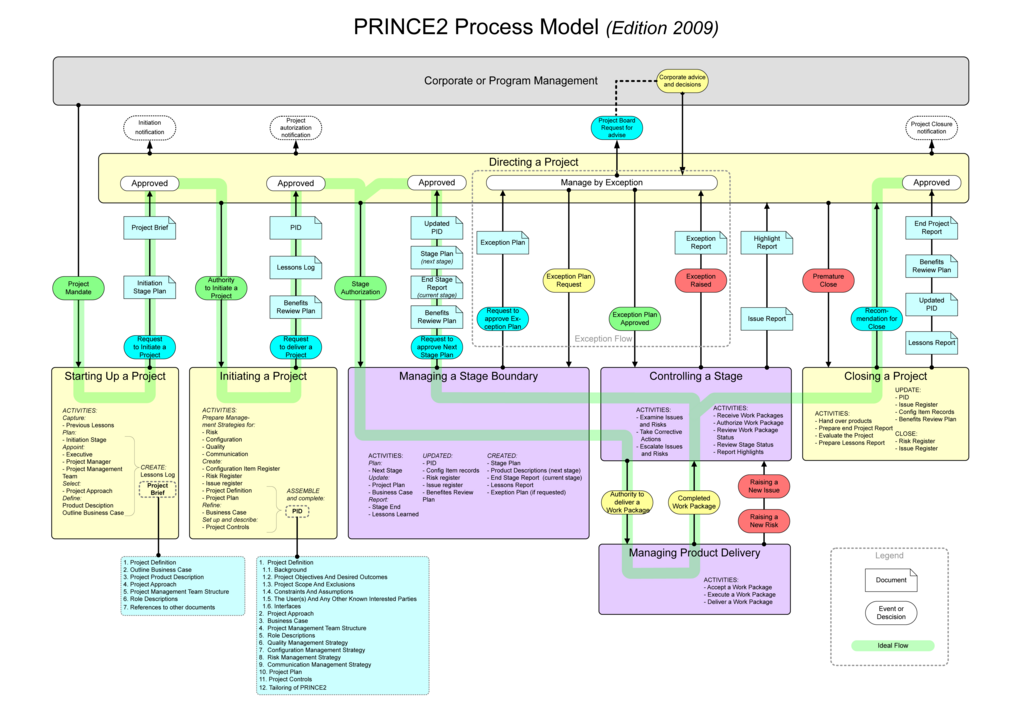
1. Initiation: This is where the project is born. The idea is evaluated for feasibility, and its value and goals are defined. If approved, a project charter is created, officially authorizing the project and giving the project manager the authority to begin.
2. Planning: This is the most intensive phase. The project manager and team create a detailed roadmap. They define the scope, set a budget, create a schedule, identify potential risks, and outline all the tasks needed to complete the project.
3. Execution: The plan is put into action. The project team starts doing the work, building the product or service. The project manager coordinates the team, manages resources, and keeps communication flowing.
4. Monitoring & Controlling: This phase happens at the same time as execution. The project manager tracks progress against the plan, measuring performance to make sure the project stays on schedule and within budget. If things go off track, they take corrective action.
5. Closing: The project is complete! The team delivers the final product to the client. This phase involves formally closing the project, releasing resources, and documenting lessons learned to help improve future projects.
These foundational concepts provide the framework for successfully managing any project, no matter how large or small.