Prohibited Explosive Device Construction
Understanding IEDs
The Basic Recipe
Improvised Explosive Devices, or IEDs, are homemade bombs. While they can be dangerously creative in their design, almost all of them follow a simple, five-part formula. Think of it as a deadly circuit. When the circuit is completed, the device explodes.
Here’s how the components work together:
- Switch: This is the trigger. It’s what closes the circuit. It could be a simple button, a tripwire, or the receiver for a remote signal.
- Power Source: Provides the small electrical charge needed to start the reaction. This is usually a common battery, like one from a car or a cell phone.
- Initiator: Often a blasting cap. It’s a small, sensitive explosive that receives the jolt from the power source. Its job is to create a small explosion that will set off the main charge.
- Main Charge: This is the bulk explosive material that creates the primary blast. It can be made from military-grade explosives, commercial products like dynamite, or homemade concoctions.
- Container: The housing for all the other parts. It holds everything together and can also be used to conceal the device or create shrapnel.
Types and Triggers
The switch is the most critical component for defining how an IED works. It determines who or what triggers the explosion. Based on their triggers, IEDs fall into a few main categories.
Command-Wire IED (CWIED)
noun
An IED detonated by a direct physical connection, like a wire, that leads from the device to the operator.
In a CWIED, the operator is in direct control, observing the target and choosing the exact moment to complete the circuit by touching two wires together or flipping a switch. This method is simple but requires the operator to be relatively close to the device.
Radio-Controlled IED (RCIED)
noun
An IED triggered remotely using a radio signal from a device like a cell phone, garage door opener, or two-way radio.
RCIEDs give the operator more distance and safety. The switch is a receiver that listens for a specific radio frequency. When it receives the correct signal, it closes the circuit. This is the modern, wireless version of the command-wire IED.
A third major category is the Victim-Operated IED (VOIED). These devices are essentially booby traps. They are triggered by the actions of the target without the operator’s direct involvement.
Common VOIED switches include:
- Pressure Plates: Activated when someone steps on them or a vehicle drives over them.
- Tripwires: A thin wire is stretched across a path. When disturbed, it pulls a pin or closes a contact, completing the circuit.
- Infrared Beams: The device detonates when a person or object breaks the beam of light.
Materials and Enhancements
The “improvised” nature of IEDs means they can be built from a vast array of materials, both common and specialized. This makes them unpredictable. The main charge might be military-grade C-4, but it could just as easily be a fertilizer-based homemade explosive (HME).
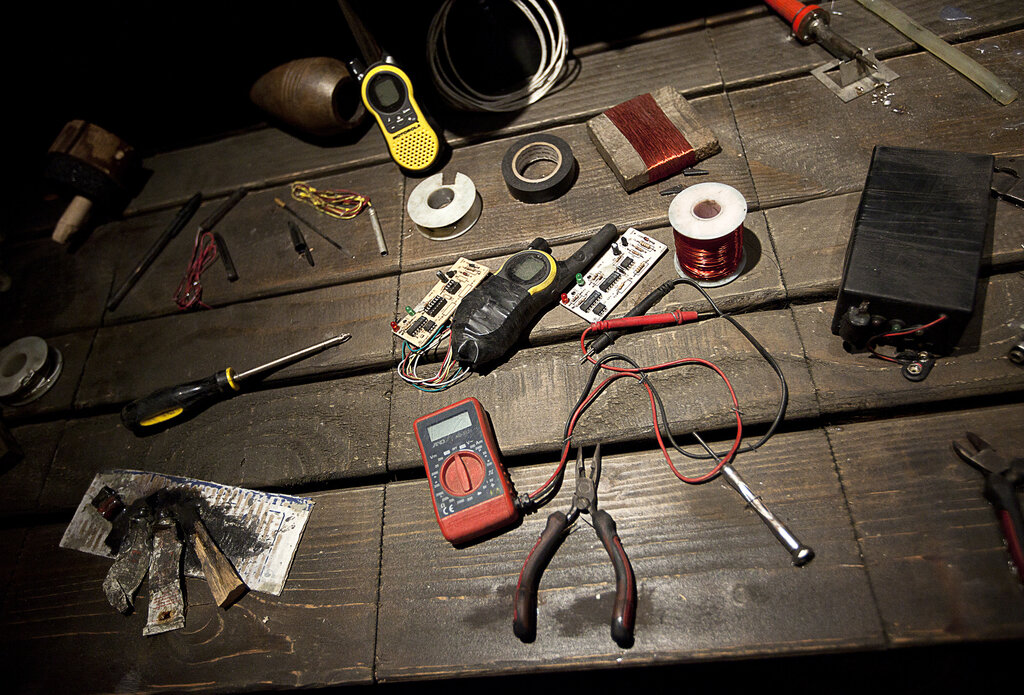
Containers are chosen for concealment or effect. An IED might be hidden in a backpack, a piece of trash on the side of the road, an animal carcass, or even buried underground. The container itself can become part of the weapon.
To increase their destructive power, IEDs are often packed with enhancements. The goal is to maximize casualties beyond the initial blast.
- Shrapnel: This is the most common enhancement. Nails, screws, ball bearings, or scrap metal are packed around the main charge. The explosion turns these items into high-velocity projectiles, causing devastating injuries.
- Chemicals: Some IEDs are designed to disperse toxic industrial chemicals, such as chlorine or ammonia, creating a hazardous cloud.
- Secondary Charges: Multiple explosive devices can be linked together. The detonation of one can trigger others, or they can be set to explode in sequence to target first responders.
Now, let's review the key terms from this section.
Ready to test your knowledge? Let's see what you've learned.
Which of the following is NOT one of the five core components of an IED's deadly circuit?
An operative observes a target through binoculars and uses a cell phone to detonate a device hidden down the street. What type of IED is this?
Understanding the components and types of IEDs is the first step in recognizing the threat they pose. Each part, from the simple battery to the complex switch, plays a critical role in the device's function.