Progressive Calisthenics Mastery
Biomechanical Leverage Principles
The Physics of Progression
In weightlifting, getting stronger is straightforward: you add more plates to the bar. But in calisthenics, the weight—your body—stays the same. So how do you progress? The answer isn’t about adding more, but about changing how you move. It’s a game of physics, and the main rule is leverage.
Every time you do an exercise, you're using your bones as levers, your joints as pivots (or fulcrums), and your muscles to create force. By consciously manipulating this system, you can make an exercise easy enough to learn or hard enough to challenge a seasoned athlete, all without touching a single weight.
Your Body, a System of Levers
Think about prying a lid off a paint can with a screwdriver. Pushing near the tip is hard. Pushing on the end of the handle is easy. That’s because the distance from the pivot point (the edge of the can) to where you apply force changes the difficulty. In biomechanics, this distance is called the a critical concept for calisthenics.
Your muscles pull on bones from a fixed point, creating an effort moment arm. The resistance—the weight of your limbs or your entire body—also has a moment arm relative to the joint. To make an exercise harder, you simply increase the resistance moment arm. You make the lever longer.
This creates what's known as a mechanical disadvantage for your muscles. While that sounds bad, in training, it's exactly what we want. By systematically increasing the mechanical disadvantage, we force our muscles to produce more force to accomplish the same movement. That, in essence, is progressive overload in calisthenics.
Progression isn't just doing more reps; it's about making each rep fundamentally harder through better physics.
Mastering Your Center of Mass
The key to manipulating lever length is understanding your (COM). This is the single point where the entire mass of your body can be considered to be concentrated. When you're standing straight, it’s around your navel. But when you move your limbs, your COM shifts.
Consider the progression for a front lever. You start with a tuck, pulling your knees to your chest. Your COM is very close to your hands, the pivot point. The resistance moment arm is short, and the exercise is manageable. As you extend your legs—first one leg, then into a straddle, then finally into a full straight body position—you are pushing your COM further and further away from your hands. The lever gets longer, the torque increases exponentially, and the exercise becomes dramatically harder.
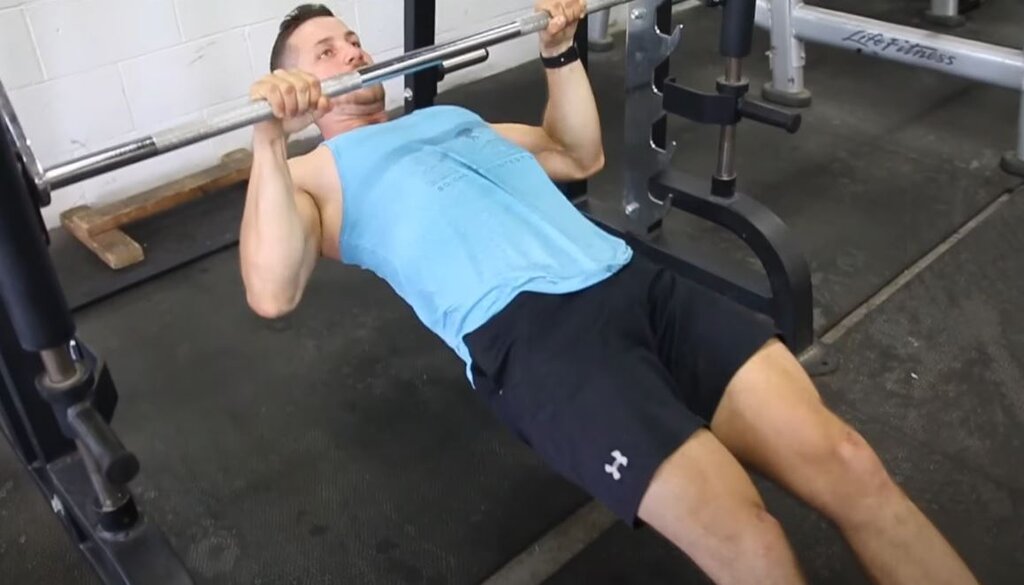
This principle of progression (lengthening the lever) and regression (shortening it) applies to nearly every calisthenics exercise. A planche is made possible by first mastering it in a tucked position. A pistol squat is harder than a regular squat because you extend a leg forward, shifting your COM and forcing the single supporting leg to manage balance and a tougher load.
By viewing your body through the lens of physics, you unlock a systematic way to progress. You stop seeing exercises as isolated movements and start seeing them as expressions of leverage. Master the levers, and you'll master your own strength.
What is the primary method described for making a calisthenics exercise more difficult?
In the context of calisthenics, creating a "mechanical disadvantage" for your muscles is a bad thing and should be avoided.