Programming Syntax Essentials
Introduction to Programming
Giving the Computer Instructions
At its heart, programming is simply the act of giving a computer a set of instructions to follow. Think of it like writing a recipe. A recipe lists specific steps in a precise order to achieve a goal, like baking a cake. If you miss a step or get the order wrong, you won't get the cake you wanted.
Programming works the same way. We write instructions, called code, that tell a computer exactly what to do, from displaying text on a screen to calculating complex equations. This process allows us to solve problems, automate tasks, and create everything from websites and mobile apps to video games.
Programming turns a problem into a series of logical steps that a computer can execute.
Speaking the Language
Computers don't understand human languages like English or Spanish. Their native tongue is binary, a language of just ones and zeros. Writing instructions directly in binary would be incredibly difficult for people.
That's where programming languages come in. They act as a bridge, allowing us to write instructions in a way that's much closer to human language. A special program called a compiler or interpreter then translates our code into the binary instructions the computer can understand and execute.
There are hundreds of programming languages, each with its own strengths. Some are great for building websites, others are used for scientific computing, and some are designed for creating mobile apps.
The Rules of the Road
Every programming language has a strict set of rules, much like the grammar and punctuation rules of a spoken language. This set of rules is called syntax. Syntax dictates how code must be written to be considered valid.
For a computer, there's no room for interpretation. A single misplaced comma or a misspelled command can prevent the entire program from running. Following the syntax correctly is critical because it ensures the computer can understand your instructions without any ambiguity.
Think of syntax as the grammar of programming. If the grammar is wrong, the message doesn't get through.
Choosing Your First Language
With so many options, choosing a first language can seem daunting. For beginners, it's best to start with a language known for its simplicity and readability. Python is a popular choice for this reason. Its syntax is clean and straightforward, which means you can focus more on learning programming concepts and less on wrestling with complex rules.
Many of the core ideas you learn in one language, like how to store information or make decisions in your code, are transferable to other languages. Starting with a friendly language like Python builds a strong foundation.
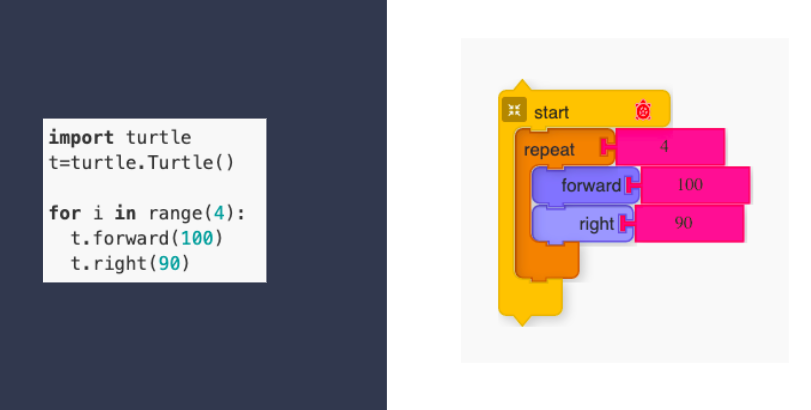
Let's test your understanding of these core ideas.
What is the primary purpose of a programming language?
The analogy of a recipe is used to describe programming because both involve:
Now that you understand what programming is, you're ready to start exploring how it works in practice.