Programming Fundamentals
Introduction to Programming
What Is Programming?
At its heart, programming is simply the art of giving instructions. Imagine you're telling a friend how to make a sandwich. You wouldn't just say, "Make a sandwich." You'd break it down into small, specific steps: get two slices of bread, open the jar of peanut butter, spread it on one slice, and so on.
Programming is a lot like that, but your friend is a computer. A computer is incredibly fast and powerful, but it can't think for itself. It needs a detailed, step-by-step list of instructions to accomplish any task, from displaying a button on a screen to calculating a rocket's trajectory. These instructions are what we call a program.
Programming is the process of writing instructions that a computer can understand and execute to perform a specific task.
The key is precision. Unlike a human, a computer can't guess your intentions. If you forget a step or give a vague command, it won't know what to do. The goal of a programmer is to create instructions that are perfectly clear and logically sound.
Speaking the Computer's Language
How do we give these instructions to a computer? We can't just speak to it in English. Computers have their own native tongue, called machine code, which is a stream of ones and zeros. Trying to write in machine code would be incredibly difficult and slow for humans.
This is where programming languages come in. They act as a bridge, allowing us to write instructions in a way that's much closer to human language. A special program called a compiler or interpreter then translates our code into the ones and zeros the computer can execute.
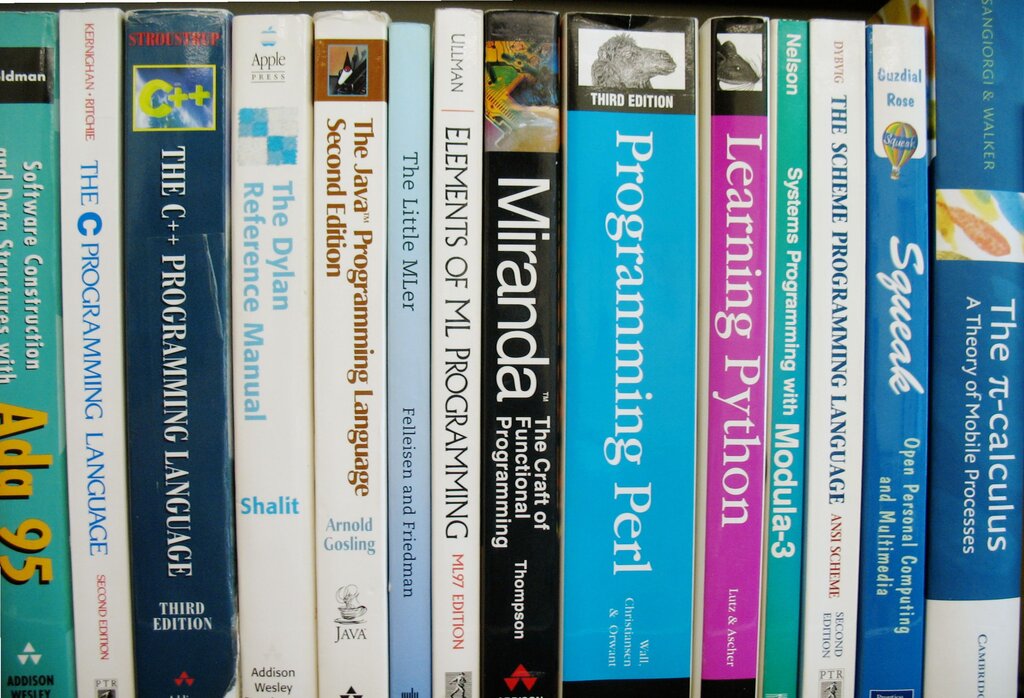
There are hundreds of programming languages, like Python, Java, and C++. Each has its own rules, or syntax, and is suited for different kinds of tasks. Some are great for building websites, others for analyzing data, and still others for creating video games. The fundamental concepts, however, are similar across most languages.
The Structure of a Program
While every programming language looks different, most programs share a basic structure. They have a starting point, a sequence of commands, and often an endpoint. Think of it like a story with a beginning, a middle, and an end.
A common tradition for beginners is to write a program that simply displays the phrase "Hello, World!" on the screen. It's a simple way to confirm that everything is set up correctly. Here's what that looks like in the C programming language:
#include <stdio.h>

int main(void) {
    printf("Hello, World!\n");
    return 0;
}
Don't worry about understanding every piece of this code. The key takeaway is the structure. The program starts at main, executes the instruction to printf (print) the message, and then ends. Every program, no matter how complex, is built from sequences of simple instructions like this.
The Recipe for Solving Problems
Algorithm
noun
A finite sequence of well-defined, computer-implementable instructions, typically to solve a class of specific problems or to perform a computation.
Before you write a single line of code, you need a plan. In programming, that plan is called an algorithm. An algorithm is the step-by-step recipe for solving a particular problem. It's the logic behind the program.
Let's go back to our sandwich example. The algorithm would be:
- Take two slices of bread.
- Get a knife and a jar of peanut butter.
- Open the jar.
- Use the knife to scoop out some peanut butter.
- Spread the peanut butter on one slice of bread.
- Put the second slice of bread on top.
This is a simple, clear, and complete set of instructions. It's a perfect algorithm for making a sandwich. Once you have the algorithm, turning it into code is just a matter of translation.
Programming isn't just about learning a language; it's about learning how to think logically and solve problems by breaking them down into smaller, manageable steps.
You use algorithms all the time without even thinking about it, from following a recipe to giving someone directions. Becoming a good programmer means getting good at creating and defining these logical plans before you start writing code.
What is programming at its most fundamental level?
Why are programming languages like Python and C++ necessary?
You've just taken your first step into the world of programming. You now know what programming is, why we need programming languages, and how algorithms form the blueprint for any program.