Programming AI Agents
Introduction to AI Agents
What Is an AI Agent?
An AI agent is a program that can operate on its own to achieve a specific goal. Think of it like a self-sufficient digital worker. It observes its environment, makes decisions, and takes actions.
This simple loop—perceive, think, act—is the core of every agent, from a smart thermostat to a sophisticated customer service bot. The thermostat perceives the room's temperature with a sensor. It thinks by comparing that temperature to your setting. If it's too cold, it acts by turning on the furnace.
agent
noun
An autonomous entity that perceives its environment through sensors and acts upon that environment through actuators to achieve goals.
Types of Agents
Not all agents operate the same way. Their complexity depends on the job they're built for. We can group them into a few main categories based on how they 'think'.
Simple Reflex Agents: These are the most basic. They work on a simple if-then rule. If a self-driving car's sensor sees brake lights on the car ahead, then it hits the brakes. It doesn't think about what happened before or what might happen next. It just reacts to the current situation.
This is great for speed, but it's limited. What if the brake lights are flashing for another reason? The simple reflex agent can't handle that kind of uncertainty.
Model-Based Reflex Agents: These are a step up. They maintain an internal 'model' or understanding of how the world works. A self-driving car using this approach doesn't just see brake lights; it understands that the car in front is slowing down. It uses its internal model to predict what might happen next, like other cars also braking. This allows for smarter, more context-aware decisions than a simple reflex.
Even smarter agents can plan further ahead.
Goal-Based Agents: These agents have a specific goal to achieve. A navigation app is a perfect example. Its goal is to get you to your destination. It considers different routes, traffic, and road closures to find the best path. Its actions are chosen to bring it closer to its goal.
Utility-Based Agents: These agents are similar to goal-based agents, but they also care about how they achieve the goal. They aim for the best possible outcome. For a navigation app, the goal is the destination, but the utility might be the fastest route, the most fuel-efficient one, or the one with the fewest tolls. It weighs these options to maximize its 'utility' or happiness.
Learning Agents: This is where things get really interesting. A learning agent can improve its own performance over time. It starts with some basic knowledge and learns from its experiences. A spam filter is a learning agent. When you mark an email as spam, it learns what spam looks like and gets better at catching it in the future.
Agents in the Wild
AI agents aren't just theoretical concepts; they're already part of our daily lives, working behind the scenes in many different fields.
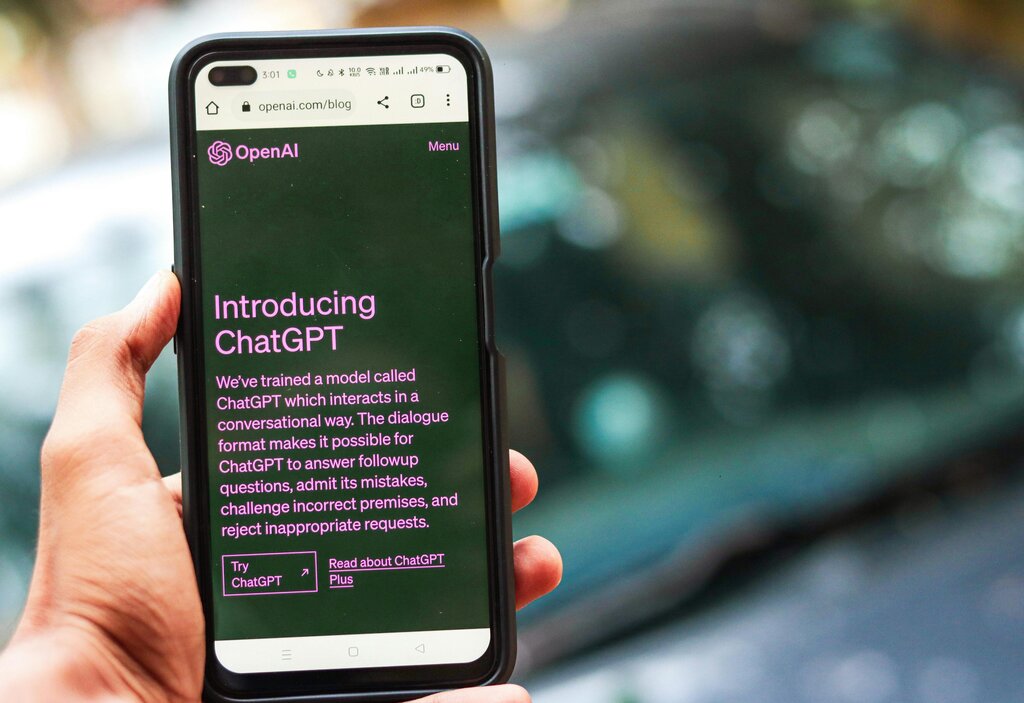
In customer service, chatbots handle common questions, freeing up human agents for more complex issues. These agents perceive customer queries, access a knowledge base, and provide answers.
In finance, agents analyze market data to identify trading opportunities or detect fraudulent transactions. They can process vast amounts of information far faster than any human.
In healthcare, agents can help doctors diagnose diseases by analyzing medical images or patient data. They can also manage patient schedules or remind people to take their medication.
And in entertainment, the non-player characters (NPCs) in video games are agents. Simple ones might just patrol a set path (reflex), while more advanced ones might work together to achieve a goal, like surrounding the player (goal-based).
Now, let's test your understanding of these core concepts.
What is the core operational cycle of every AI agent?
In the context of entertainment, what role do AI agents often play in video games?
Understanding these basic agent types is the first step. It provides the foundation for building and interacting with the more complex AI systems that are becoming more common every day.