Programmatic Text Analysis and Visualization
Introduction to Text Processing
Making Sense of Words
Computers are great with numbers, but human language is a different beast. It's messy, full of context, and often ambiguous. Text processing is the first step in teaching a computer how to read and understand language, much like how a person learns. It involves breaking down text into smaller, more manageable pieces that a machine can analyze.
Think of it as preparing ingredients before you start cooking. Before a program can figure out if a review is positive or negative, or translate a sentence from Spanish to English, it first needs to chop up the raw text into a structured format. This foundational process is crucial for almost every application that deals with language, from search engines to chatbots.
Breaking Text Apart
The most fundamental task in text processing is splitting a chunk of text into individual units. This isn't as simple as just looking for spaces. Punctuation, hyphens, and other symbols all need to be handled correctly. This splitting process is called tokenization.
Tokenization
noun
The process of breaking down a stream of text into smaller units called tokens, which can be words, characters, or subwords.
For example, the sentence "She runs fast!" would be tokenized into four tokens: "She", "runs", "fast", and "!".
Each token becomes a useful piece of data. Once we have these individual units, we can start to analyze them, count them, and figure out how they relate to one another. It's the essential first step for any deeper analysis.
Labeling the Pieces
After breaking text into tokens, the next step is often to figure out what each token is. We're not talking about its meaning yet, but its grammatical role in the sentence. Is it a noun, a verb, an adjective? This process is called part-of-speech tagging, or POS tagging.
| Word | Part of Speech |
|---|---|
| The | Determiner |
| quick | Adjective |
| brown | Adjective |
| fox | Noun |
| jumps | Verb |
Understanding the part of speech helps a computer grasp the basic structure of a sentence. It can distinguish between "the book" (noun) and to "book a flight" (verb). This grammatical context is vital for tasks like translation, question answering, and information extraction.
Finding the Root
Languages have many variations of the same word. Think about "run," "running," and "ran." They all refer to the same basic action. To analyze text effectively, we often want to group these variations together. Lemmatization is the process of reducing a word to its base or dictionary form, known as its lemma.
Lemmatization
noun
The algorithmic process of determining the lemma of a word based on its intended meaning. It reduces a word to its dictionary form.
For example, the lemma for "studies" and "studying" is "study." For "better," the lemma is "good." By converting words to their lemmas, a program can understand that "I am studying" and "He studies" are about the same concept. This helps in applications like search engines, allowing them to find documents about "studying" even if you search for the word "study."
Python for Text
So, how do we actually perform these tasks? Programmers need a tool, and one of the most popular and powerful tools for text processing is the Python programming language.
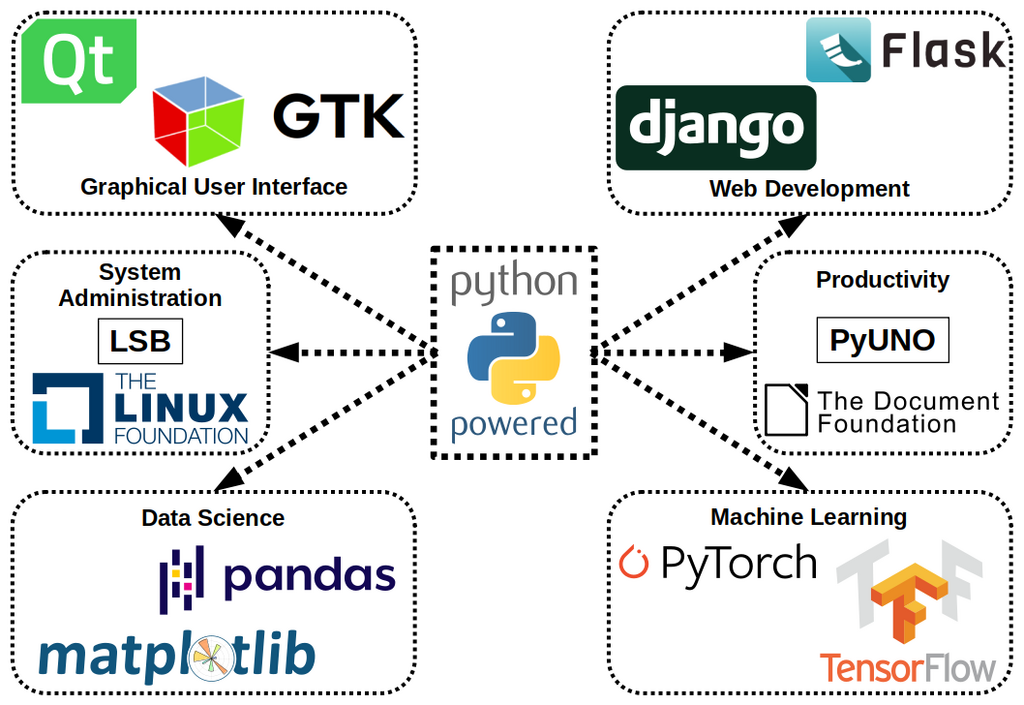
Python has a simple, readable syntax that makes it easy to work with text. More importantly, it has a massive community that has built a rich ecosystem of libraries specifically for natural language processing. These libraries provide pre-built functions for tokenization, POS tagging, lemmatization, and much more, allowing developers to build sophisticated language applications without starting from scratch.
While we won't dive into specific libraries just yet, it's important to know that Python is the go-to language for anyone looking to work with textual data programmatically.
Let's test your knowledge of these fundamental concepts.
What is the primary goal of text processing in the context of natural language applications?
The process of breaking down a sentence into individual words and punctuation marks is known as:
Understanding these core ideas—tokenization, part-of-speech tagging, and lemmatization—is the first step into the wider world of natural language processing.