Profitable Stock Trading Strategies
Stock Market Basics
What Is the Stock Market?
The stock market is essentially a large, organized marketplace. But instead of selling fruits or antiques, it's where people buy and sell tiny pieces of ownership in public companies. These pieces are called stocks or shares.
Why does it exist? For companies, it's a way to raise money to grow their business, fund new projects, or hire more people. Instead of taking out a giant loan, they sell off small fractions of the company to the public. For investors, it’s an opportunity to own a piece of these companies and potentially grow their money as the companies succeed.
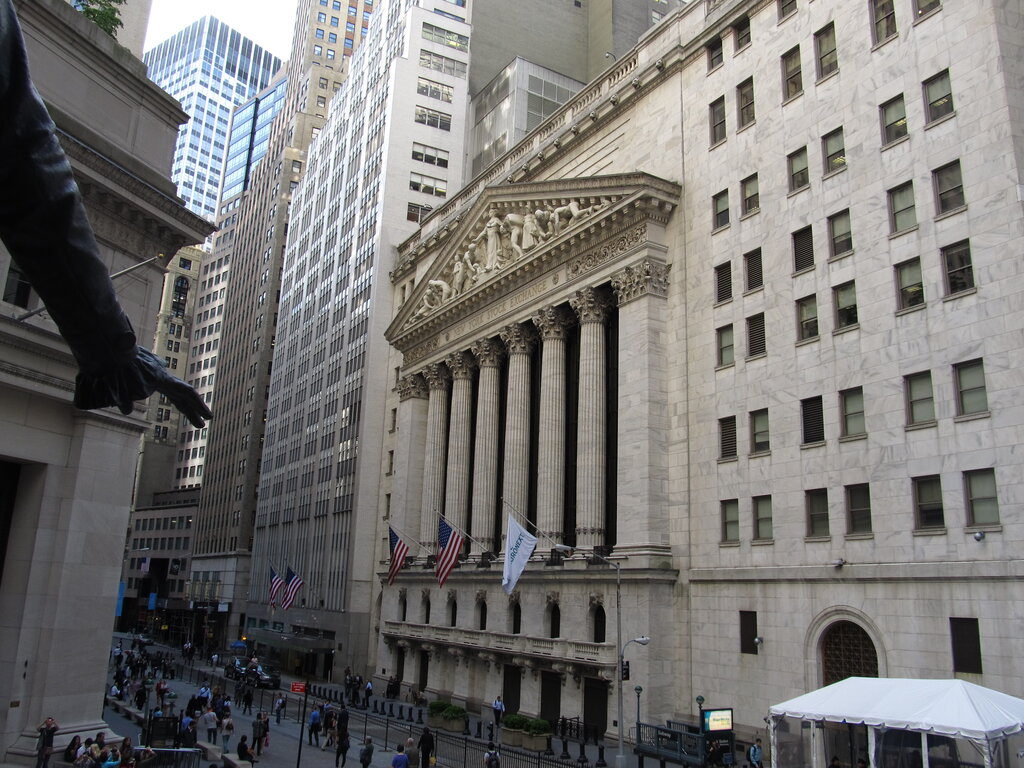
This buying and selling doesn't happen on a street corner. It takes place on specialized platforms called stock exchanges.
Where Stocks Are Traded
Stock exchanges are the official venues that facilitate trading. Think of them as the infrastructure that makes the market work. While there are exchanges all over the world, two of the biggest are in the United States: the New York Stock Exchange (NYSE) and the Nasdaq.
The NYSE, often pictured with a chaotic trading floor, has a long history of brokers physically meeting to trade. While much of this is electronic now, it still maintains its physical trading floor. The Nasdaq, on the other hand, was born digital. It has always been a fully electronic marketplace, connecting buyers and sellers through a network of computers.
Every transaction needs a buyer and a seller. The exchange is simply the go-between that ensures the process is fair, orderly, and transparent.
When you buy a stock, you're not just getting a digital receipt. You're buying a specific type of ownership in the company.
| Stock Type | Key Feature | Voting Rights |
|---|---|---|
| Common | Represents ownership and a claim on profits. | Yes |
| Preferred | Usually guarantees a fixed dividend payment. | No |
Most investors deal with common stock. It gives you the right to vote on company matters, like electing the board of directors. If the company does well, the value of your common stock can go up significantly. Preferred stockholders typically don't get a vote, but they have a higher claim on the company's assets. This means if the company goes bankrupt, they get paid before common stockholders. They also usually receive a fixed dividend payment, which is like a regular share of the profits.
The People in the Market
The market is made up of different types of participants, each with a different role.
-
Retail Investors: This is probably you. It’s any individual buying and selling stocks for their personal account. Thanks to online brokerages, it's easier than ever for everyday people to participate.
-
Institutional Investors: These are the big players. Think mutual funds, pension funds, and insurance companies. They manage huge pools of money and trade in much larger volumes than retail investors.
-
Market Makers: These are firms that stand ready to buy or sell a particular stock at any time. They provide liquidity to the market, ensuring you can always find someone to trade with. They make money on the small difference between their buying price (the bid) and their selling price (the ask).
Prices and Orders
So what makes a stock's price go up or down? It's the simple, classic principle of supply and demand. If more people want to buy a stock (demand) than sell it (supply), the price goes up. If more people are selling than buying, the price goes down.
This collective sentiment is influenced by many factors: company earnings, news about the industry, or even the overall health of the economy. The price you see quoted is simply the price of the last trade that occurred.
When you decide to buy or sell a stock, you have to place an order through a brokerage. There are two basic types of orders you'll use most often.
Market Order
noun
An instruction to buy or sell a stock immediately at the best available current price.
A market order is fast and guarantees your trade will be executed. However, it doesn't guarantee the price. In a fast-moving market, the price you actually pay might be slightly different from the last price you saw.
Limit Order
noun
An instruction to buy or sell a stock at a specific price or better.
A limit order gives you control over the price. For a buy order, your trade will only go through if the stock's price is at or below your limit. For a sell order, it must be at or above your limit. The trade-off is that your order might never be executed if the stock doesn't reach your specified price.
Time to test your knowledge of these fundamental concepts.
What is the primary reason a company offers its stock to the public on an exchange?
The Nasdaq stock exchange has always operated as a fully electronic marketplace, without a physical trading floor.
Understanding these core elements is the first step. You now have a framework for how the stock market operates, who the players are, and how transactions are made.