Professional Video Editing Mastery
Professional Workflow and Ingest
The Professional Post-Production Mindset
Moving from casual editing to a professional workflow isn't about learning secret keyboard shortcuts. It's about changing your mindset. Professionals build systems that can handle complexity, scale, and collaboration. The foundation of any serious project isn't the first edit—it's the organization you establish before you even touch the timeline.
A well-organized project is predictable and efficient. Team members can find what they need without asking, and handing off a project is straightforward. It all starts with a standardized folder structure.
PROJECT_NAME/
├── 01_PROJECT_FILES
│   ├── PROJECT_NAME_v01.prproj
│   └── PROJECT_NAME_v02.prproj
├── 02_FOOTAGE
│   ├── CAM_A
│   │   ├── CARD_01
│   │   └── CARD_02
│   └── CAM_B
│       └── CARD_01
├── 03_AUDIO
│   ├── VOICEOVER
│   └── MUSIC
├── 04_GRAPHICS
│   ├── LOGOS
│   └── LOWER_THIRDS
└── 05_EXPORTS
    ├── REVIEW_v1
    └── FINAL_DELIVERY
This hierarchy separates different asset types, making everything easy to locate. The numbering ensures the folders stay in a logical order. Inside these folders, naming conventions are just as important. Instead of Clip_01.mov, a professional filename provides immediate context.
A good convention might look like this: [Scene]_[Shot]_[Take]_[CameraAngle]. For example, 01A_02_T03_CU.mxf tells an editor this is from Scene 1A, Shot 2, Take 3, and it's a close-up. This removes guesswork and speeds up the entire editing process.
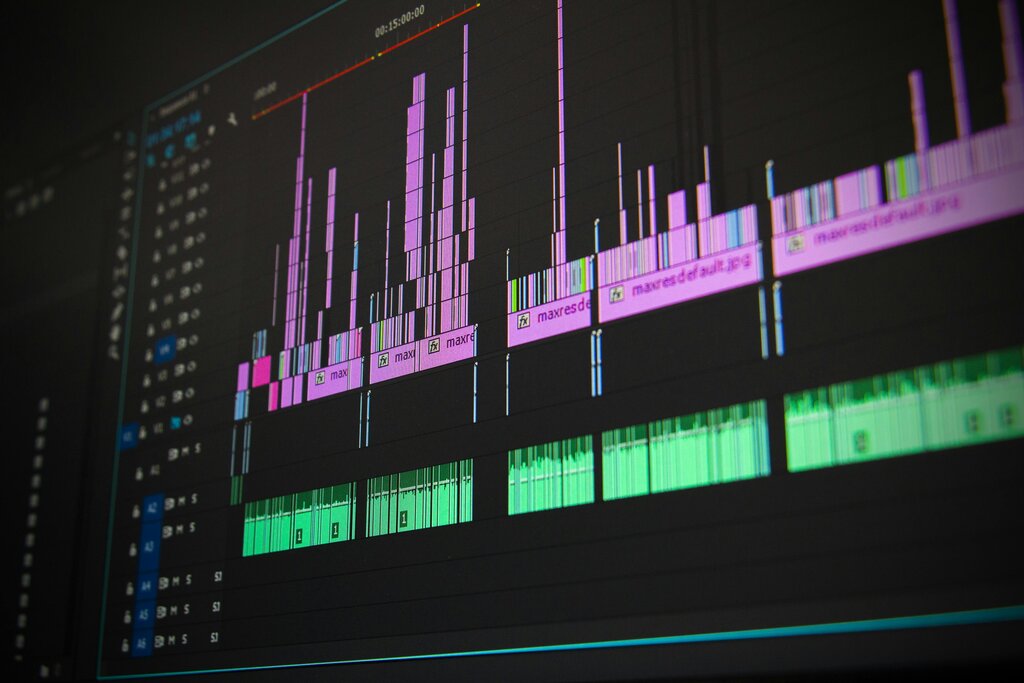
Organization is crucial for efficient professional video editing.
Working Smarter with Proxies
Modern cameras shoot in high resolutions like 4K, 6K, or even higher. These files, often called Original Camera Files (OCF), contain immense detail but are computationally demanding. Editing with them directly can cause laggy playback and slow performance, even on powerful machines.
The professional solution is a proxy workflow. This involves creating low-resolution, lightweight copies of your OCF. You edit with these smooth, responsive proxy files, and then, at the very end of the process, you switch back to the high-quality originals for color grading and exporting. This process is non-destructive; your original footage is never altered.
The codec you choose for your proxies matters significantly. The two most common options are ProRes Proxy and H.264. While H.264 files are smaller, they are highly compressed and require more processing power to decode during playback. This can defeat the purpose of using proxies.
ProRes Proxy files are larger but are designed for editing. They use intra-frame compression, meaning each frame is compressed individually. Your computer doesn't have to work as hard to play them back, resulting in a much smoother, more responsive editing experience.
| Feature | ProRes Proxy | H.264 |
|---|---|---|
| Editing Performance | Excellent, very smooth playback | Can be choppy, CPU-intensive |
| File Size | Larger | Smaller |
| Quality | Good, retains timecode & metadata | Lower, can lose data |
| Primary Use Case | Professional editing workflow | Delivery, streaming, final export |
Once your edit is locked, it's time to finish the project. This is where you conform the sequence. Conforming is the process of relinking the clips in your timeline from the low-resolution proxies back to the high-resolution Original Camera Files. With a single click, your timeline is now populated with the full-quality footage, ready for final color grading, effects, and export.
Finding Footage Fast
In a project with hundreds or thousands of clips, folder structures and naming conventions are only the first step. Inside your editing software, bins and metadata are your primary tools for retrieval.
Think of bins as more than just folders. They are organizational tools. You can create bins for different scenes, characters, interview subjects, or shot types like A-Roll, B-Roll, and Archival. This allows you to quickly isolate the exact type of footage you need.
Metadata takes organization a step further. You can tag clips with keywords, ratings, or comments. For example, in a documentary, you could log an interview clip by tagging the specific topics being discussed. Later, you can simply search for a keyword like "workflow" and instantly see every clip where that topic is mentioned.
By combining a logical folder structure, descriptive filenames, and detailed metadata within your editing software, you build a robust system that can handle any project's complexity. This structured approach is what separates amateurs from professionals—it saves time, reduces errors, and ultimately enables more creative freedom.
What is the foundational first step in a professional video editing workflow, even before the first edit is made?
What is the primary purpose of a proxy workflow?