Professional VFX Pipeline and Digital Compositing
Professional Roto Pipelines
Beyond Frame-by-Frame
Basic rotoscoping gets the job done, but it's slow and prone to error. Professional pipelines are built for efficiency and precision, moving beyond the brute-force approach of tracing every single frame. The goal is to work smarter, not harder, by breaking down complex problems and leveraging powerful tools.
The first step is to rethink how you see the subject. Instead of tracing a person as one giant, complex outline, use a strategy called articulated roto This involves deconstructing the subject into a series of smaller, simpler, and often overlapping shapes. For a person walking, you might create separate masks for the torso, the head, the upper arm, the forearm, and the hand. These shapes are then parented to each other in a logical hierarchy. For instance, the hand's mask is parented to the forearm's, which is parented to the upper arm's. When the upper arm moves, the rest of the limb follows automatically. This simplifies adjustments immensely. Instead of wrestling with dozens of points on a single complex mask, you're just tweaking a few points on a simple shape as it moves.
Let the Machine Do the Work
Once you've broken down the shapes, the next step is to minimize manual keyframing by using trackers. Point tracking is the simplest form. You can lock a tracker onto a high-contrast area, like a button on a shirt or a mole, and the software will follow its position, scale, and rotation automatically. You can then link your mask's transform properties to this tracking data.
For more complex situations, planar tracking is the industry standard. Tools like Mocha Pro excel at this. Instead of tracking a single point, a planar tracker analyzes a whole surface, like the side of a bus or a person's face. It looks for textures and patterns within a defined plane. This makes it incredibly robust, as it can maintain a solid track even when the object goes out of focus, is partially obscured, or experiences motion blur. The resulting tracking data can drive your mask shapes with remarkable accuracy, handling perspective shifts, rotation, and scaling automatically.
The Art of the Keyframe
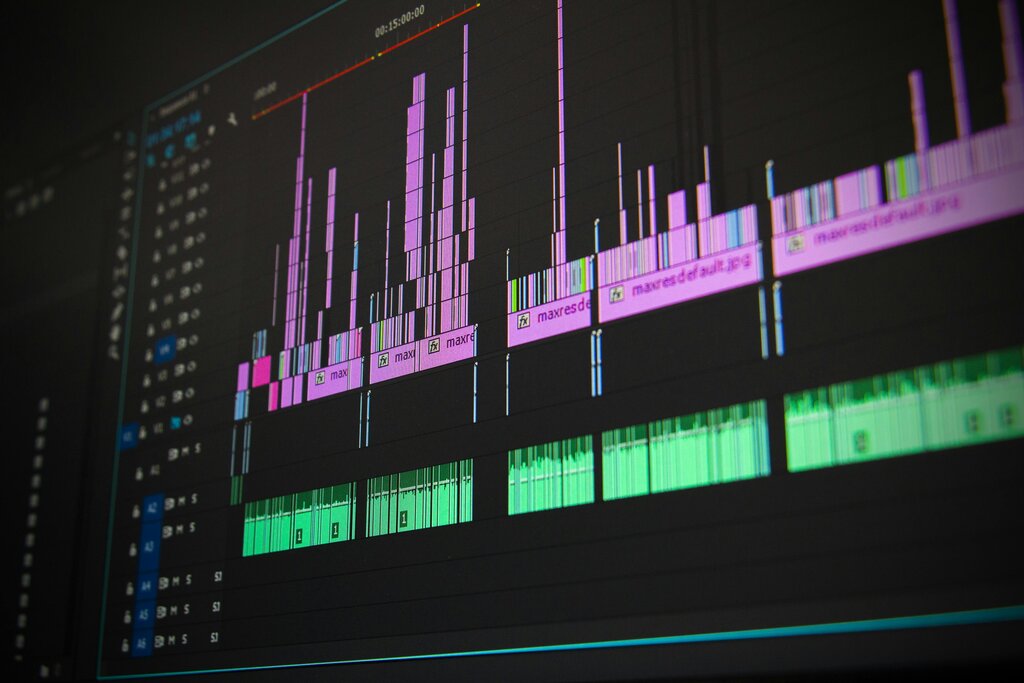
Even with powerful tracking, some manual keyframing is always necessary. The secret is the 'least-keyframe' philosophy. The goal is not to add a keyframe on every frame. Over-keying creates stiff, jittery motion and is a massive time sink. Instead, you should rely on the software's algorithms to generate the motion between your keyframes.
Set keyframes only at the natural peaks of the action. This is typically where a movement changes direction or velocity.
For an arm swinging, you would set a keyframe at the highest point of the backswing and another at the furthest point of the forward swing. Let the computer handle the smooth arc in between. You only add another keyframe mid-swing if the interpolation is inaccurate. This approach produces smoother results and dramatically cuts down on manual labor.
Finally, proper preparation of the footage, or 'plate', can save you hours of frustration. If the original shot is shaky, the roto artist has to fight the camera movement in addition to the subject's movement. A common professional step is to apply stabilization to the shot before starting to rotoscope. You track a stable point in the background and stabilize the entire shot around it. This lets you focus solely on the subject's motion. Once the roto is complete, you can re-introduce the original camera shake to the final composite, ensuring the effect feels grounded in the scene.
Consistency is also crucial. As you work, frequently check your mask's edge quality by flipping back and forth between frames. You're looking for 'edge jitter' or 'boiling,' where the mask edge seems to crawl or vibrate unnaturally. Using softer, feathered edges and maintaining a consistent number of control points on your shapes can help minimize this. These refined techniques are what separate amateur roto from seamless, professional visual effects.
When rotoscoping a person, what is the core principle of the "articulated roto" strategy?
Under which of the following conditions would a planar tracker be significantly more effective than a point tracker?