Professional UI and UX Design
Strategic User Research
From Data to Direction
You know how to gather user data, but the real challenge is turning that mountain of interviews and observations into a clear strategic direction. This is where we move from simply collecting facts to generating insights that drive product and business goals. The process isn't random; it follows a structured path. A useful way to visualise this is with the Double Diamond model of design.
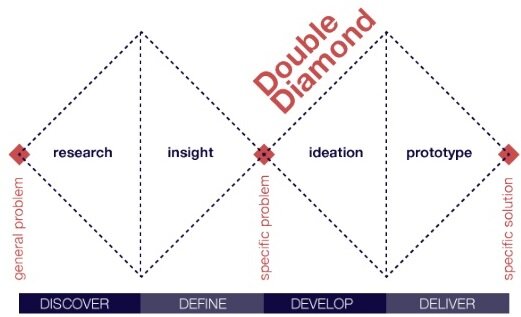
The first half of this model involves two phases: Discover and Define. The Discover phase is all about divergence. Your goal is to explore the problem space as widely as possible, challenging assumptions and uncovering the unknown. You're not looking for solutions yet. You're trying to deeply understand the context, behaviours, and needs of your users.
Choosing the right research method is critical here and depends on your project's constraints, like time and budget. For deep contextual understanding, an ethnographic study where you observe users in their natural environment is invaluable, but it's also time-consuming and expensive. offers a faster, more affordable way to gather behavioural data, though you might miss some of the environmental nuance. For understanding how behaviours and attitudes change over time, a longitudinal study is ideal, but it requires a significant long-term commitment.
Making Sense of the Mess
After a thorough discovery phase, you’ll have a huge amount of raw, unstructured data. This can feel overwhelming. The next step is the 'Define' phase, where you converge. The goal is to analyse your findings and synthesise them into a clear problem statement that your team can act on.
A powerful technique for this is affinity mapping. You and your team write individual observations, quotes, and data points onto sticky notes. Then, you work together to group these notes into related themes. This collaborative process helps the team see patterns and relationships in the data that wouldn't be obvious otherwise.
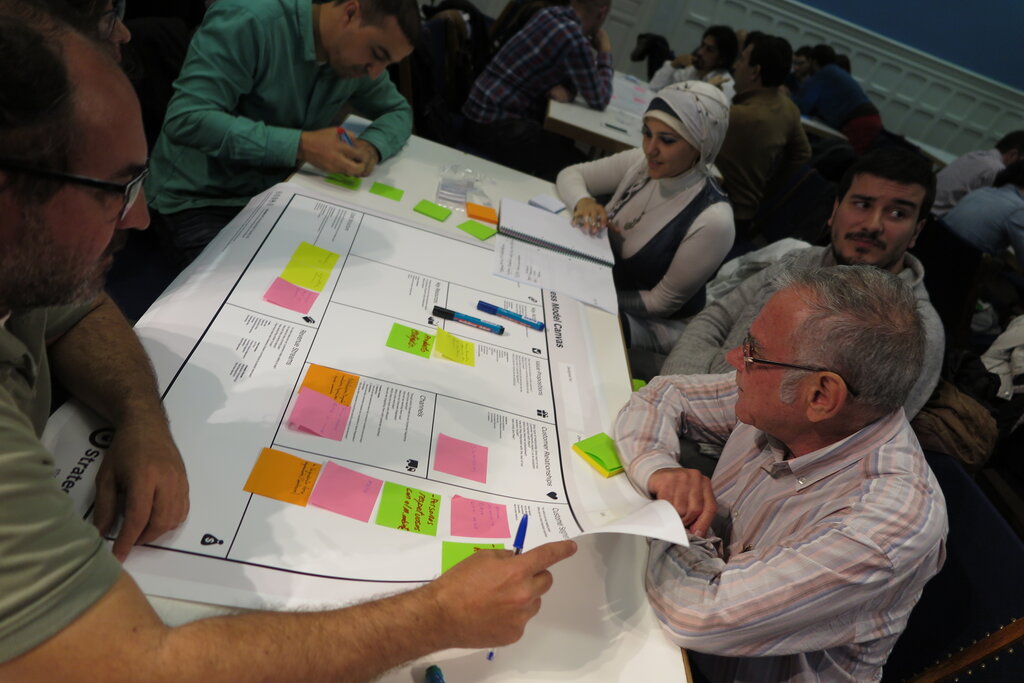
As clusters form, you give them descriptive names. These thematic clusters are the building blocks of your insights. They move you from a collection of individual data points to a cohesive understanding of the user's world, their pain points, and their motivations. This is the crucial translation from 'what users said' to 'what it means'.
From Insight to Hypothesis
Insights are great, but they aren't actionable on their own. To bridge the gap between research and product strategy, you must turn your insights into testable hypotheses. A strong hypothesis connects a user problem to a potential solution and a measurable business outcome.
It often follows a simple structure:
- We believe that [doing this action/building this feature]
- for [these users]
- will result in [this outcome].
- We will know this is true when we see [this measurable signal].
For example: "We believe that creating a one-click 'reorder' button for returning customers will result in increased purchase frequency. We will know this is true when we see a 15% increase in repeat orders within 90 days."
This format forces you to connect user needs (a faster way to reorder) with business feasibility and goals (increased revenue). It creates a clear, falsifiable statement that can guide your design and development efforts.
Start with the User: Successful enterprise projects invest time in understanding end-users (through research and personas) before designing solutions, ensuring the product truly meets user needs.
Developing strong hypotheses is also a core part of stakeholder management. Instead of presenting a vague problem, you can present a clear, data-backed strategy for how to address it. It shifts the conversation from opinions to evidence, aligning everyone around a shared vision and a clear path forward. This turns your research from a report on a shelf into the engine of your product strategy.
Now, let's test your knowledge on strategic research.
What is the primary goal of the 'Discover' phase in the Double Diamond model of design?
Your team has just completed numerous user interviews and is faced with a large amount of raw, unstructured data. What is the most effective technique mentioned for synthesising this data into themes?
By moving through discovery and definition with intent, you transform user research from an information-gathering exercise into a strategic tool that provides clarity, alignment, and direction.