Professional Time Management for Civil Engineers
Engineering Prioritization Frameworks
Sorting Chaos on Site and in the Office
In civil engineering, a simple to-do list won't cut it. Prioritization isn't just about getting things done; it's about managing risk, ensuring safety, and protecting the project's bottom line. The daily flood of demands from the construction site and the long-term strategic needs of the office are often in direct conflict. A framework is needed to navigate these competing priorities without letting a critical task slip through the cracks.
The Eisenhower Matrix is a powerful tool for this. It forces you to categorize every task based on two questions: Is it urgent? And is it important? This creates four quadrants to guide your actions.
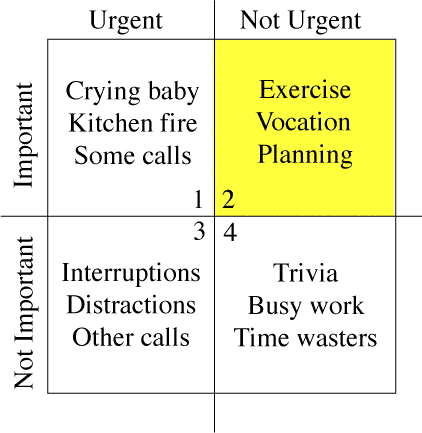
Here’s how it applies directly to a civil engineering project:
-
Urgent & Important (Do): These are fires that must be put out now. Think of a safety incident on site, a critical materials delivery that failed to arrive, or a sudden structural issue discovered during an inspection. These tasks demand your immediate, personal attention.
-
Not Urgent & Important (Decide/Schedule): This is where strategic work happens. This quadrant includes long-term project planning, reviewing and stamping design documents, conducting thorough site analyses, and building relationships with key stakeholders. These high-value activities are easily pushed aside by urgent tasks, so they must be intentionally scheduled.
-
Urgent & Not Important (Delegate): These tasks scream for attention but don't require your specific expertise. Examples include routine administrative paperwork, scheduling standard meetings, or responding to non-critical RFIs that a junior engineer can handle. Effective delegation here frees you up for the important work.
-
Not Urgent & Not Important (Delete): These are distractions. Time-wasting activities, unnecessary meetings, or sorting through irrelevant emails fall into this category. The goal is to eliminate them.
Using this matrix helps you consciously shift your focus from firefighting to strategic planning, which is essential for a project’s long-term success.
Finding the 20% That Matters
Not all work is created equal. Some decisions have a far greater impact on a project's outcome than others. This is the core idea behind the a concept stating that for many events, roughly 80% of the effects come from 20% of the causes.
In a design workflow, this means a small number of key variables often drive the majority of the project's cost, safety, and performance. Identifying this "vital 20%" is a critical skill.
Consider the design of a new bridge. Thousands of variables are involved, from the specific grade of bolts to the color of the paint. However, a few key decisions will have the biggest impact:
- The choice of structural system (e.g., suspension vs. beam).
- The foundation design based on geotechnical surveys.
- The primary materials used (steel vs. concrete).
Getting these few variables right is far more important than perfecting minor details in the early stages. An engineer who spends 40 hours debating the type of handrail before the foundation is finalized is misallocating their most valuable resource: focused attention.
By applying the 80/20 rule, you can strategically focus your energy. In the beginning of a project, concentrate on the high-impact engineering decisions. Defer the low-impact details. This ensures the core of the project is solid before time is spent on optimizations that yield diminishing returns.
Strategic Delegation
Delegation is more than just offloading work. It's a strategic tool for developing your team and maximizing your own effectiveness. Once you've used the Eisenhower Matrix to identify "Urgent but Not Important" tasks, the next step is to delegate them effectively.
Good candidates for delegation include:
- Routine Calculations: Standardized calculations that follow a clear methodology.
- Drafting and Modeling: Creating drawings or models based on established design parameters.
- Initial Document Review: A first pass on submittals or reports to check for completeness and basic compliance.
Effective delegation requires clear communication. Provide the person with all necessary context, define the expected outcome, and establish a deadline. Trust your team, but also implement a system for verification. A quick review of delegated work ensures quality without requiring you to do the task yourself.
Here's a quick quiz to check your understanding of these frameworks.
A project manager on a bridge construction site is faced with four tasks. According to the Eisenhower Matrix, which of these should be handled immediately and personally?
Which quadrant of the Eisenhower Matrix contains the most strategic, high-value work crucial for long-term project success, yet is most at risk of being neglected?
Mastering these prioritization frameworks allows you to move from being constantly reactive to strategically in command of your projects.