Professional Sous Vide Mastery
Introduction to Sous Vide
What is Sous Vide?
Sous vide is a cooking technique that relies on precise temperature control to achieve perfect, repeatable results. The method involves vacuum-sealing food in a bag and cooking it in a water bath held at a specific, consistent temperature.
under vacuum
Developed in France in the mid-1970s by chef Georges Pralus, it was initially used to cook foie gras with minimal fat loss. The technique quickly found a home in high-end restaurants because it removes the guesswork from cooking. Instead of blasting food with high heat and hoping to pull it at the right moment, sous vide gently brings the food to its target temperature and holds it there.
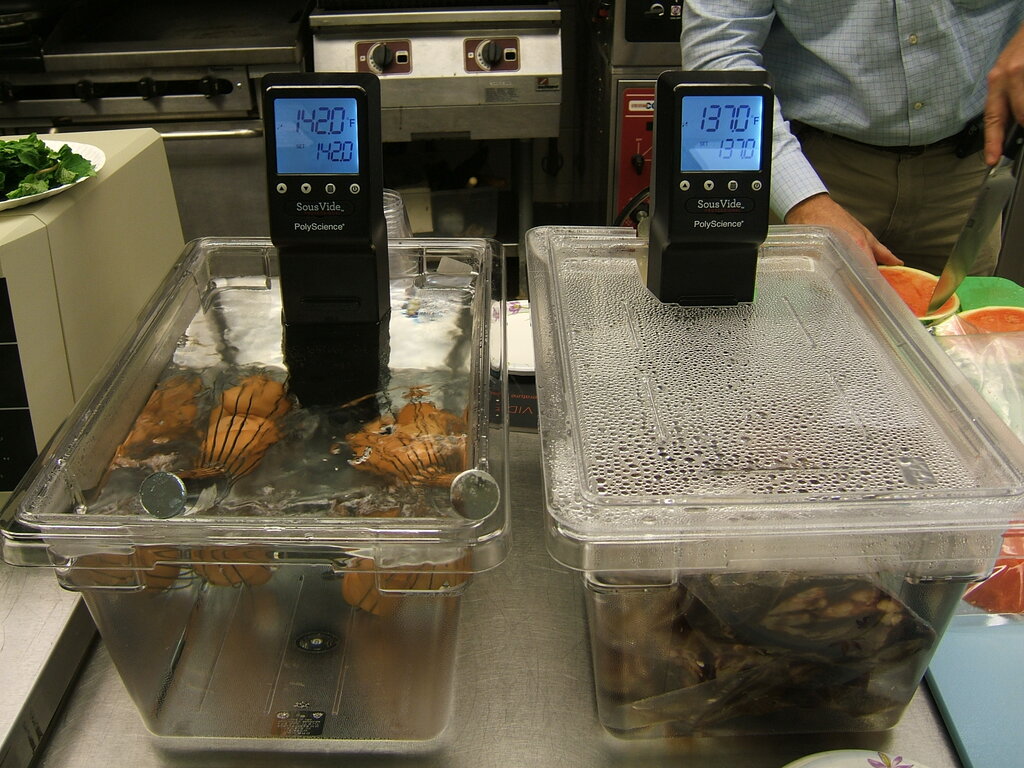
This means you can cook a steak to a perfect medium-rare from edge to edge, or hold dozens of chicken breasts at their ideal serving temperature for hours without them overcooking. It's a game-changer for consistency and workflow in a professional kitchen.
The Benefits of Precision
The primary advantage of sous vide cooking is unparalleled control. Traditional methods like pan-searing or roasting have a wide margin for error. A few seconds too long can turn a perfectly cooked piece of fish dry. With sous vide, the water temperature is the food's final temperature. It’s nearly impossible to overcook anything.
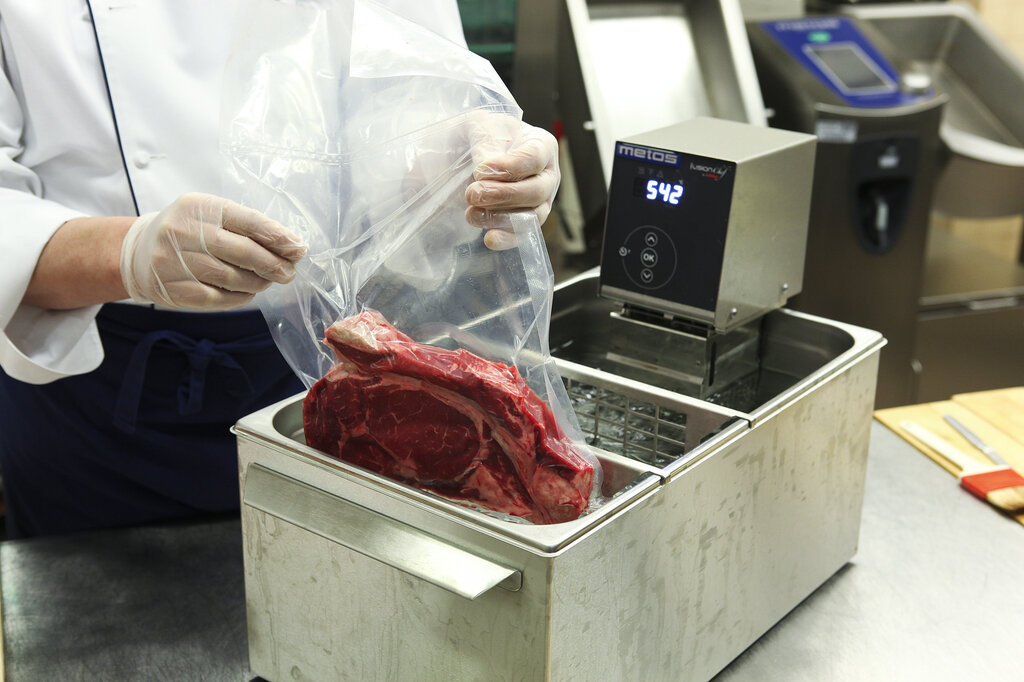
Sous vide, the technique where food sealed in a plastic bag is cooked in a temperature-controlled water bath, delivers stunning and consistent results.
This precision leads to several key benefits in a busy kitchen:
- Consistency: Every dish comes out exactly the same, every time. This is crucial for maintaining quality standards during a hectic service.
- Flavor and Moisture: Because the food is sealed, none of its juices, fats, or aromas can escape. Meats are more tender and flavorful, and vegetables retain more of their nutrients and vibrant color.
- Efficiency: Chefs can cook large batches of food in advance and hold them in the water bath until an order comes in. A quick sear is all that's needed to finish the dish, dramatically cutting down on pickup times. This also allows for better utilization of tougher, less expensive cuts of meat, as the long, slow cooking time breaks down connective tissue beautifully.
Sous Vide in Action
While sous vide is famous for producing perfectly cooked steaks, its applications extend across the entire menu. It's a versatile tool for any professional kitchen.
Think of sous vide not just as a way to cook, but as a way to prep. It streamlines service and expands your culinary possibilities.
Common uses include:
- Proteins: From steak and pork chops to delicate fish and chicken breasts, sous vide ensures a perfect internal temperature. It's also ideal for cooking eggs to any desired consistency, creating flawless custards.
- Tough Cuts: Meats like brisket or short ribs become exceptionally tender after long cooks (24-72 hours) at a low temperature.
- Vegetables: Cooking vegetables sous vide preserves their texture and color far better than boiling or steaming. Carrots remain crisp and bright, and asparagus stays snappy.
- Infusions: You can create intensely flavored oils, vinegars, and syrups by sealing aromatics with the liquid and gently heating them. The vacuum seal and gentle heat extract flavor efficiently without scorching the ingredients.
By mastering the basics of sous vide, you can improve the quality and consistency of your dishes while also making your kitchen workflow more manageable and efficient.
Ready to test your knowledge? Let's see what you've learned about the fundamentals of sous vide.
What is the primary advantage of the sous vide cooking technique?
A chef wants to make an exceptionally tender brisket. Which benefit of sous vide is most relevant for this goal?
Understanding these principles is the first step toward incorporating this powerful technique into your professional cooking.