Professional Security Assisted Terminations
Termination Risk Assessment
From Guarding to Intelligence
Security Assisted Terminations (SATs) demand a fundamental shift in mindset. It's not about walking a patrol route or monitoring a camera feed. It’s about focusing all your resources on understanding a single individual before a high-stakes interaction occurs. This is the move from general site security to specific protective intelligence.
The goal is to build a comprehensive risk profile of the employee being terminated. This isn't a last-minute task. It's a deliberate process of gathering and analyzing information to anticipate potential reactions. Your objective is to answer one key question: What is this person's potential for causing harm to themselves or others when they receive the news?
Building the Risk Profile
The foundation of any risk assessment is a thorough review of the employee's history. This requires close collaboration with Human Resources and Legal departments. You need access to the complete HR file, looking for patterns, not just isolated incidents.
Key documents to review include:
- Performance Reviews: Are there comments about aggression, insubordination, or difficulty with authority?
- Disciplinary Actions: Look for records of verbal altercations, threats, or property damage.
- Past Complaints: Has the employee filed numerous grievances? Have others filed complaints against them?
- Informal Reports: Check for notes or emails from supervisors about concerning behavior, even if it didn't trigger formal action.
This is a collaborative intelligence-gathering operation. You, HR, and even the IT department—which can provide information on inappropriate computer usage or threatening communications—form a team to assemble a complete picture.
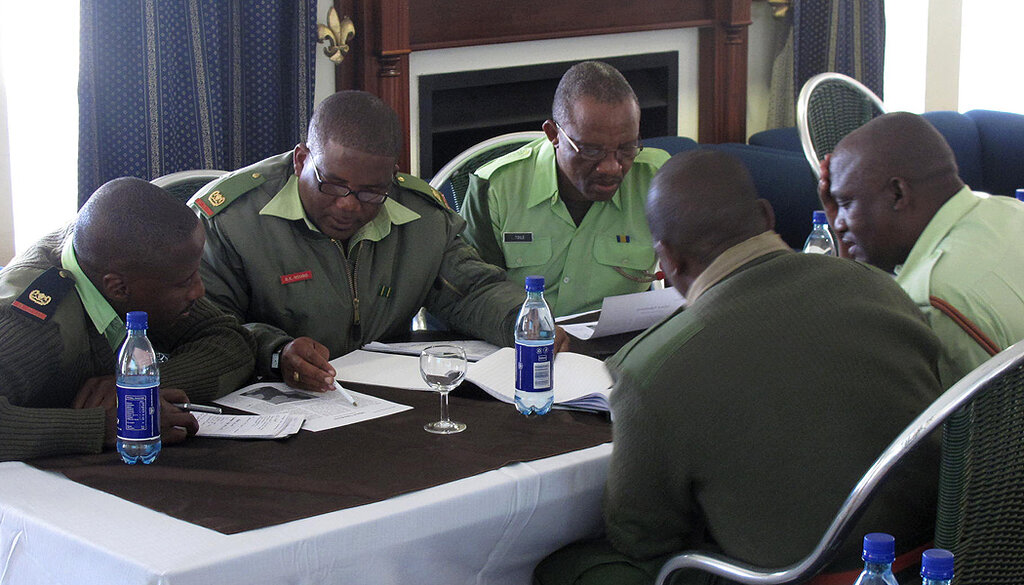
Once you have the historical data, you can apply behavioral threat assessment principles. These models provide a structured way to analyze the information and identify warning signs that suggest an increased risk of violence. The focus is on observable behaviors: what the person has said, done, and written. Has their behavior escalated over time? Are there indications of planning or preparation for a violent act?
Identifying High-Risk Indicators
Certain personality types and behavioral patterns are red flags in a termination context. One of the most critical to identify is the 'injustice collector.' This is an individual who feels they are a constant victim of mistreatment. They meticulously document every perceived slight, building a case in their mind that justifies their anger and potential actions. They often have a history of filing grievances, complaining about favoritism, and blaming others for their failures.
An injustice collector doesn't forget or forgive. Every perceived wrong is filed away, building a narrative of persecution that can be used to justify a future outburst.
Another high-risk profile is the person with 'nothing left to lose.' This individual may see their job as their last stable connection to society. It might be their primary source of income, social interaction, and identity. When that is threatened, their reaction can be extreme and unpredictable. During the assessment, you must consider external stressors: are they going through a divorce, facing financial ruin, or dealing with a serious health issue?
Crucially, the assessment must also cover the individual's known or suspected access to weapons. This isn't limited to registered firearms. Consider any past comments about owning weapons, a history of violence, or hobbies like hunting or sport shooting.
Deciding the Security Posture
The entire intelligence-gathering process leads to one critical decision: what level of security is appropriate for this specific termination? The risk profile dictates the posture. There is no one-size-fits-all solution.
The choice is a spectrum, and each option has trade-offs. A low-risk individual might only require a discreet, plainclothes officer on standby nearby. This 'discretionary' approach minimizes the chance of escalating the situation with an overt security presence. The employee may not even know security is involved.
| Risk Level | Security Presence | Rationale |
|---|---|---|
| Low | Plainclothes / Discretionary | Minimizes provocation. Presence is hidden but available if needed. |
| Medium | Uniformed (Soft Look) | Visible deterrent. The standard uniform shows authority without being overly aggressive. |
| High | Uniformed (Armed) / Multiple Officers | Clear show of force to deter and control a potentially violent situation. |
| Extreme | Coordinated with Law Enforcement | Used when there is credible intelligence of a severe, pre-planned threat. |
For a medium-risk situation, a uniformed officer might be positioned visibly but not intrusively, such as down the hall from the meeting room. Their presence serves as a clear, professional deterrent.
In a high-risk case—perhaps involving an injustice collector with a history of threats—an armed, uniformed officer present at the termination is necessary. The priority shifts from discretion to control. The decision to use an armed officer is based entirely on the threat assessment indicating a potential for lethal violence.
Ultimately, the assessment provides a defensible rationale for the chosen security level. Every decision, from plainclothes to armed presence, is an informed one based on careful analysis of the individual's profile.
What is the fundamental mindset shift required for Security Assisted Terminations (SATs)?
When building a risk profile, which of the following describes the 'injustice collector' personality type?
This intelligence-led approach ensures that the security measures for a termination are proportional to the actual risk, protecting everyone involved while avoiding unnecessary escalation.