Professional Screen Acting Career
Screen Script Analysis
Beyond the Words on the Page
In theater, your performance reaches the back row. On screen, your performance is for an audience of one: the camera. This intimacy changes everything. While stage acting relies on physical presence and vocal projection, screen acting is a craft of internal thought made visible. The camera doesn't just see you; it reads you. It captures the flicker of an idea, the subtle shift of doubt in your eyes. These are the moments that truly tell the story.
This is where we move beyond basic script analysis. It's not enough to know your character's objective. You must understand how to communicate that objective through tiny, revealing actions called micro-beats—often registered through nothing more than the eyes. An 'eye-line beat' is a moment where a character's thought process is shown by a shift in their gaze. Did they look away to remember something? Did their eyes dart to the door, revealing a desire to escape? These are not written in the script; they are discovered in your analysis.
On screen, a thought is an action.
Deconstructing Sides
In the fast-paced world of film and TV, you rarely get a full script for an audition. Instead, you'll receive 'sides'—a few select scenes, often with little context. Your job is to make strong, specific choices based on this limited information. The pressure is high, and the time is short. This is where a repeatable analytical process becomes your most valuable tool.
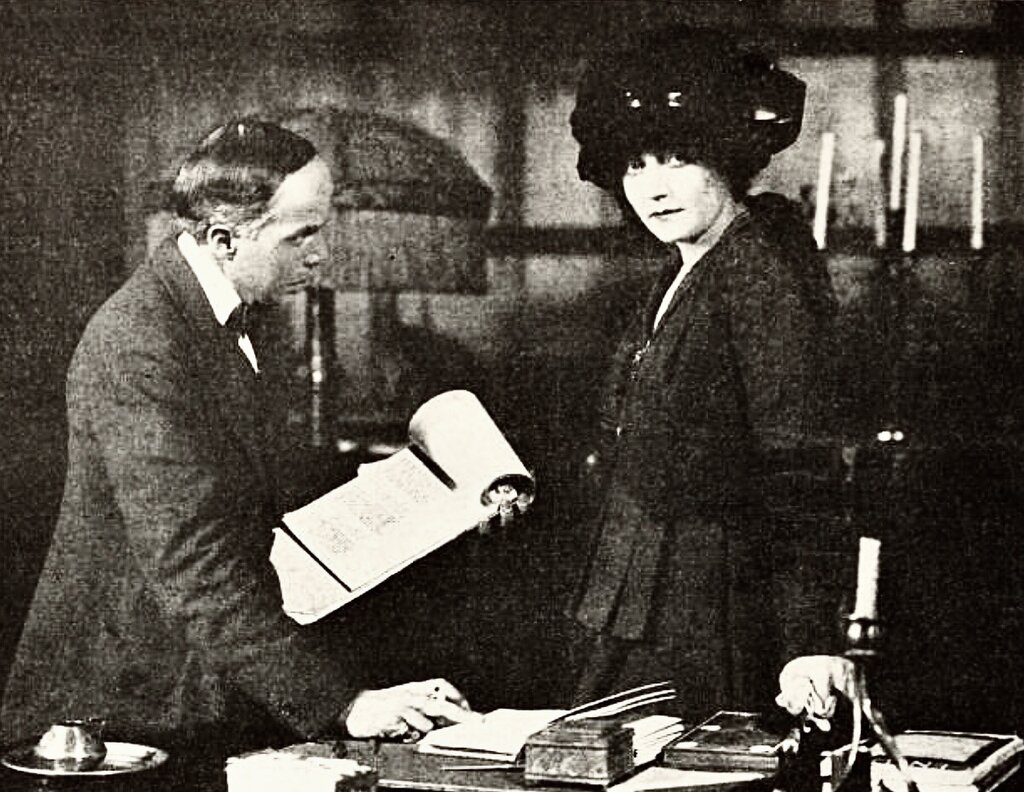
For every scene, even every line, break it down using the 'Rule of Three' for screen performance: think it, feel it, do it. Before your character speaks or acts, what thought triggers the impulse? What feeling arises from that thought? And finally, what action or line delivery results? This simple sequence connects your character's inner world to their external behavior, ensuring your choices are grounded and believable. This process helps you identify your character's objective (what they want), the obstacle (what's in their way), and the tactics they use to overcome it.
Mapping Your Emotional Arc
Movies are almost never shot in chronological order. You might film a character's triumphant victory in the morning and their lowest point of despair in the afternoon. This logistical necessity demands that you, the actor, understand your character's entire emotional journey before you even step on set. You can't rely on the momentum of the story to carry you from one scene to the next.
This is why you must create an emotional map. Chart your character's journey from the beginning of the script to the end. What is their emotional state in scene 1, scene 12, scene 45? For each scene, give their emotional level a number from 1 to 10. This map becomes your guide, allowing you to instantly access the correct emotional state for any scene, no matter the shooting order. It ensures your performance remains consistent and coherent, even when the production schedule is chaotic.
Giving the Editor Coverage
A great screen performance is also a generous one. It's not just about your best take; it's about giving the director and editor the material they need to build the scene. This is the concept of coverage—filming a scene from multiple angles and shot sizes (wide, medium, close-up). Your performance in a wide shot might be slightly bigger, while your close-up will be focused on subtlety and those crucial eye-line beats.
The key is consistency in your actions and emotional arc across all these takes. If you pick up your coffee cup on a specific line in the master shot, you must do it on the same line in your close-up. This continuity allows the editor to cut seamlessly between shots. At the same time, you can offer slight variations in the nuance of your performance in each take. This gives the editor options to shape the emotional rhythm of the scene. Understanding coverage means you're not just an actor; you're a collaborator in the filmmaking process.
Editing isn't just about technical skills—it’s about crafting emotions and rhythms that turn a script into a visual story, whether it's a cosy rom-com or a thrilling suspense.
By mastering these analytical techniques, you shift from simply reciting lines to actively constructing a performance for the camera. You learn to speak the visual language of film, making your work not just compelling, but professional.