Professional Python Developer Fast Track
Professional Environment Setup
Beyond the Basics
Writing Python code is one thing; writing it professionally is another. A professional setup isn't about fancy tools for their own sake. It's about creating a consistent, reproducible, and clean environment. This foundation saves you from future headaches, makes collaboration easier, and ensures your code works reliably, whether on your machine or a server.
The first step is managing Python itself. Different projects often require different versions of Python. One project might be built on Python 3.8 for a specific library, while another needs the new features in 3.11. Juggling these manually is a recipe for disaster. This is where a version manager like pyenv comes in.
# Install Python 3.10.4 and set it as the global default
pyenv install 3.10.4
pyenv global 3.10.4

# Install Python 3.9.12 for a specific project
pyenv install 3.9.12

# In your project folder, set the local version
# This creates a .python-version file
cd /path/to/my-project
pyenv local 3.9.12
With pyenv, you can install multiple Python versions side-by-side and switch between them with a simple command. It automatically selects the correct version based on your current directory, so you never have to think about it.
Isolating Your Workspace
Just as projects need different Python versions, they also need different sets of libraries, or dependencies. Imagine you have two projects. Project A needs version 1.0 of the requests library, but Project B requires version 2.0. If you install these libraries globally, one will overwrite the other, breaking a project.
The solution is a virtual environment. Think of it as a clean, isolated workspace for each project. It gets its own Python interpreter and its own set of installed packages, separate from all other projects. Python's built-in tool for this is venv.
# Create a virtual environment in a folder named 'venv'
python -m venv venv

# Activate the environment (macOS/Linux)
source venv/bin/activate

# Activate the environment (Windows)
.\venv\Scripts\activate

# Your terminal prompt will change to show the active environment
# (venv) your-user@machine:~

# Deactivate when you're done
deactivate
Once activated, any package you install with pip goes into this local environment, leaving your global Python installation untouched. This practice is crucial for reproducibility. To share your project's dependencies with others, you freeze them into a requirements.txt file.
# Create a list of all packages in the current environment
pip freeze > requirements.txt

# Another developer can install the exact same packages
pip install -r requirements.txt
Always use a virtual environment. It’s the single most important habit for professional Python development.
Automating Code Quality
Professional code is readable and consistent. The Python community has a style guide called that outlines conventions for everything from variable names to line length. While you can learn and apply these rules manually, it’s far more efficient to automate the process.
This is where Integrated Development Environments (IDEs) like VS Code and PyCharm shine. They move you from a simple text editor to a powerful workstation. An IDE understands your code, provides smart autocompletion, and integrates tools that enforce quality.
Two essential tools are linters and formatters. A linter, like Flake8, analyzes your code for errors and stylistic issues without running it. A formatter, like , automatically rewrites your code to conform to a strict style guide.
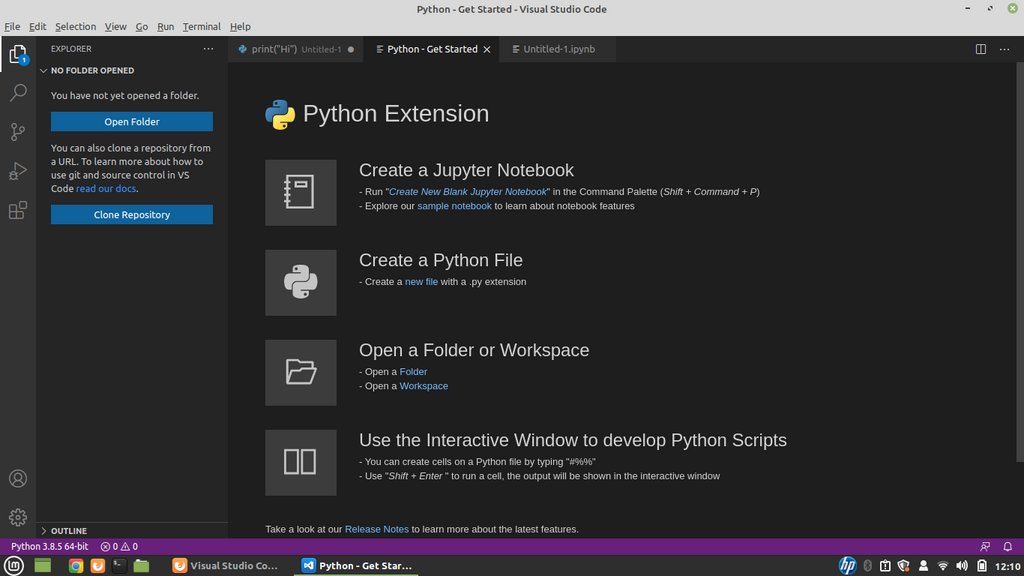
You can configure your IDE to run Black every time you save a file. This simple automation means you can write code without worrying about spacing or line breaks. The tool handles the tedious work, ensuring your code is always perfectly formatted according to professional standards.
# Install the tools into your virtual environment
pip install black flake8

# Run Black to format all .py files in the current directory
black .

# Run Flake8 to check for errors and style issues
flake8 .
Setting up this environment takes a few minutes upfront, but it pays off immediately. Your projects become isolated, your dependencies are clear, and your code quality is automatically enforced. This is the foundation upon which all professional Python development is built.
Time to check your understanding of these professional tools.
What is the primary purpose of a tool like pyenv in a professional Python setup?
Why is using a virtual environment (e.g., with venv) a crucial practice for Python projects?
With these tools in place, you are now equipped to build clean, maintainable, and professional Python applications.