Professional Project Management Dynamics
Methodology Selection Strategy
Choosing Your Approach
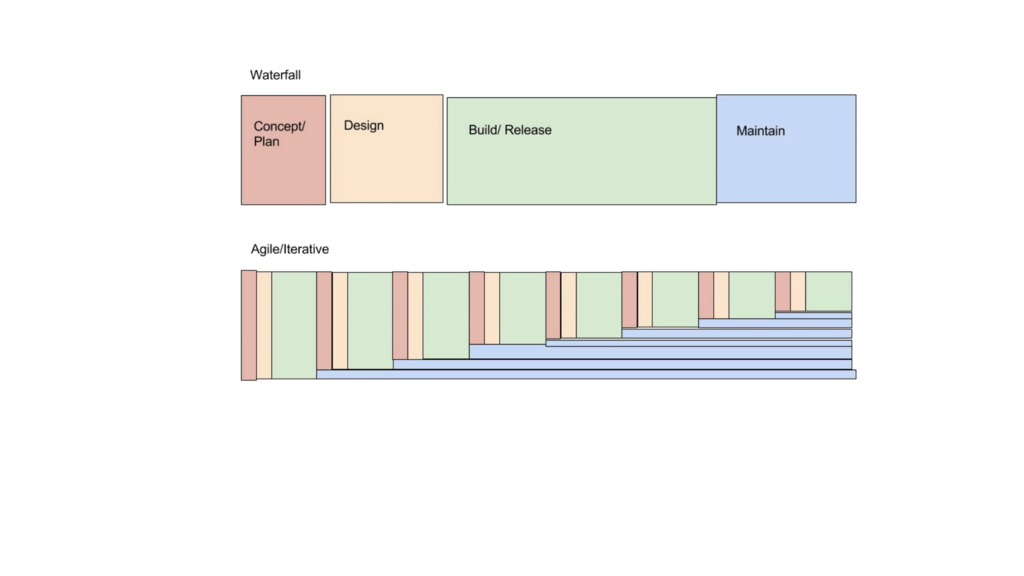
You wouldn't use a sledgehammer to hang a picture frame. The tool has to match the job. The same is true for project management. Choosing between a predictive (like Waterfall) or an adaptive (like Agile) framework isn't about which one is better—it's about which one is right for the specific project in front of you.
The core of the decision comes down to one question: How much do you know at the start? If the requirements are clear, stable, and well-understood, a predictive approach works beautifully. It provides a clear roadmap from start to finish. But if the requirements are likely to change, or if you're exploring a new solution, an adaptive approach gives you the flexibility to learn and adjust as you go.
Predictive models excel in stable environments with low uncertainty. Adaptive models thrive in dynamic environments where change is expected.
Consider building a house versus developing a new mobile app. For the house, the blueprints are finalized before construction begins. The sequence is fixed: foundation, framing, plumbing, electrical. This is a classic predictive project. For the app, you might have a core idea, but user feedback will shape the final features. You'll build, test, and iterate in cycles. This is an adaptive project.
Frameworks for Decision Making
Gut feeling isn't a strategy. To make an informed choice, project managers use established models that help map a project's characteristics to a suitable methodology. Two of the most effective are the Stacy Matrix and the Cynefin Framework.
The plots projects on two axes: certainty of requirements (the 'what') and certainty of technology (the 'how'). When both are clear, the project is simple and a predictive model is a safe bet. As uncertainty increases along either axis, the project moves from complicated to complex, making adaptive approaches more appropriate. When both 'what' and 'how' are highly uncertain, you're in a state of anarchy or chaos, where the immediate goal is just to establish stability.
The offers a different lens. It's not a 2x2 matrix but a sense-making model with five domains: Obvious, Complicated, Complex, Chaotic, and Disorder. It helps leaders identify the nature of their situation and respond appropriately.
- Obvious: Cause and effect are clear. The answer is known. Follow best practices. (Example: Processing an invoice).
- Complicated: There's a clear relationship between cause and effect, but it requires expertise to see it. Analyze and apply good practices. (Example: Diagnosing a car engine problem).
- Complex: Cause and effect can only be understood in hindsight. The path forward emerges through experimentation. Probe, sense, and respond. (Example: Launching a product in a new market).
- Chaotic: No clear relationship between cause and effect. The priority is to act decisively to create stability. (Example: A major server outage).
Predictive models work best in the Obvious and Complicated domains, while adaptive models are designed for the Complex domain.
The Hybrid Approach
Sometimes, no single methodology fits. A project might have phases with clear, fixed requirements and other phases that require exploration and adaptation. This is where a hybrid approach shines.
Hybrid project management isn't a formal methodology itself, but a strategy of blending elements from different frameworks. For example, a team might use a Waterfall approach for initial planning, requirements gathering, and high-level design. This provides stakeholders with a predictable roadmap and budget. Then, for the development and implementation phases, the team could switch to an Agile framework like Scrum, working in iterative sprints to build and test the product.
Hybrid project management—melding traditional predictive processes and Agile approaches—offers a powerful way to balance structure with adaptability.
This is common in large-scale hardware and software projects. The hardware development follows a predictive path because physical components are hard to change once manufactured. The software that runs on it, however, can be developed adaptively, with features evolving based on testing and user feedback.
Ready to test your understanding?
What is the primary factor that determines whether a predictive or an adaptive project management approach is more suitable for a project?
A construction company is tasked with building a standard, single-family home using a pre-approved architectural blueprint where all specifications are finalized. Which project management approach is most suitable?
Choosing the right framework is a critical leadership skill. By analyzing environmental factors like certainty and complexity, you can set your project up for success from day one.