Professional Production Kitchen Mastery
Industrial Safety Standards
From Kitchen to Factory Floor
Moving from a home kitchen to an industrial food production environment is a huge leap. The scale changes everything. Instead of cooking for a few people, you might be preparing thousands of meals. This increase in volume demands a far more rigorous and systematic approach to safety. The casual habits of a home cook won't work where public health is on the line. Professional food production relies on a structured system called to manage risks from farm to fork.
A methodical methodology known as HACCP is used to recognize, assess, and manage possible risks in the food manufacturing process.
The 7 Principles of HACCP
HACCP isn't a checklist of rules; it's a way of thinking. It's a proactive system designed to prevent problems before they happen. It works by identifying potential hazards and establishing control measures at specific points in the production process. Every federally inspected meat, poultry, and seafood plant is required to have a HACCP plan. The entire system is built on seven core principles.
Let's walk through these principles using a real-world example: cooling a 50-gallon batch of clam chowder.
1. Conduct a Hazard Analysis: Identify potential biological, chemical, or physical hazards. For the chowder, the main biological hazard is the growth of bacteria like Clostridium perfringens if it's cooled too slowly.
2. Identify Critical Control Points (CCPs): A CCP is a point in the process where you can apply a control to prevent or eliminate a hazard. The cooling step is a clear CCP. If we fail here, the hazard becomes a reality.
3. Establish Critical Limits: This means setting measurable boundaries for safety. For cooling, the FDA Food Code mandates cooling cooked food from 135°F to 70°F (57°C to 21°C) within two hours, and then from 70°F to 41°F (21°C to 5°C) within the next four hours. This is the critical limit.
4. Establish Monitoring Procedures: How will you check that you're meeting the critical limit? This requires regularly measuring the soup's temperature with a calibrated thermometer and logging the time.
5. Establish Corrective Actions: What do you do if you miss a critical limit? If the chowder doesn't cool fast enough, the corrective action might be to reheat it to 165°F (74°C) and start the cooling process again, or to discard the batch.
6. Establish Verification Procedures: This step confirms the system is working. It could involve a supervisor reviewing temperature logs weekly or periodically recalibrating thermometers.
7. Establish Record-Keeping: Keep detailed records of everything. This includes your hazard analysis, CCPs, monitoring logs, and any corrective actions taken. These records are proof of your due diligence and are invaluable for tracing problems if they occur.
Chemicals, Machines, and People
Industrial food production involves more than just food. It involves powerful cleaning chemicals, heavy machinery, and fast-paced human activity. Managing safety in this environment requires its own set of protocols.
Every chemical, from sanitizers to degreasers, comes with a (SDS). This document is your go-to guide for handling that substance. It's not just paperwork; it’s a critical safety tool.
| Section | Contents |
|---|---|
| 1. Identification | Product name and emergency contact info. |
| 2. Hazard(s) Identification | All hazards associated with the chemical. |
| 4. First-Aid Measures | Instructions for immediate medical care. |
| 7. Handling and Storage | How to store and handle the chemical safely. |
| 8. Exposure Controls/PPE | Required Personal Protective Equipment (PPE). |
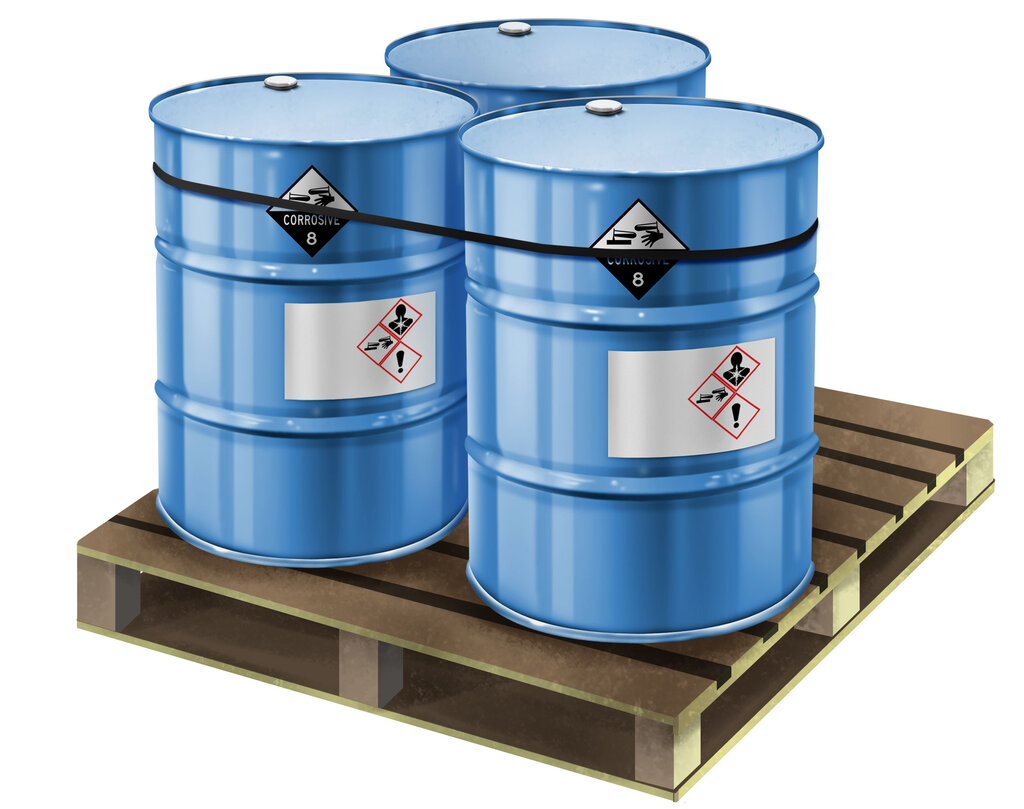
Beyond chemicals, physical safety is paramount. Commercial kitchens are filled with heavy mixers, industrial ovens, and slicers that can cause serious injury. Proper training, machine guarding, and situational awareness are essential.
Ergonomics also plays a huge role. Repetitive tasks, like lifting heavy stock pots or chopping vegetables for hours, can lead to musculoskeletal injuries. Workstation design, proper lifting techniques, and regular breaks are not luxuries—they are necessary to prevent long-term harm to employees.
What is the primary purpose of the HACCP system in a food production environment?
According to the HACCP principles, checking temperature logs from the previous week to ensure the cooling process for clam chowder was followed correctly is an example of which step?
Understanding these industrial standards is the key to ensuring both the safety of the food you produce and the well-being of the people who produce it.