Professional Podcast Production for Political Communication
Technical Audio Foundations
The Right Microphone for the Message
The foundation of clear, persuasive audio is the microphone. It’s the first point of contact between your voice and your audience. The two dominant types you’ll encounter are dynamic and condenser microphones, each with a distinct purpose.
| Feature | Dynamic Microphone | Condenser Microphone |
|---|---|---|
| How it works | A moving coil in a magnetic field | A vibrating diaphragm and a charged backplate |
| Sensitivity | Lower | Higher |
| Power needed | No (usually) | Yes (phantom power) |
| Durability | Very durable | More fragile |
| Best for | Loud sounds, live use, untreated rooms | Detailed audio, studio use, quiet rooms |
Dynamic mics are workhorses. Think of the classic handheld microphone a journalist uses in the field or a speaker at a rally. They are robust and less sensitive to background noise, making them ideal for uncontrolled environments where sound is coming from all directions. If you're recording in a bustling campaign office or conducting a street interview, a dynamic microphone will help isolate your subject's voice.
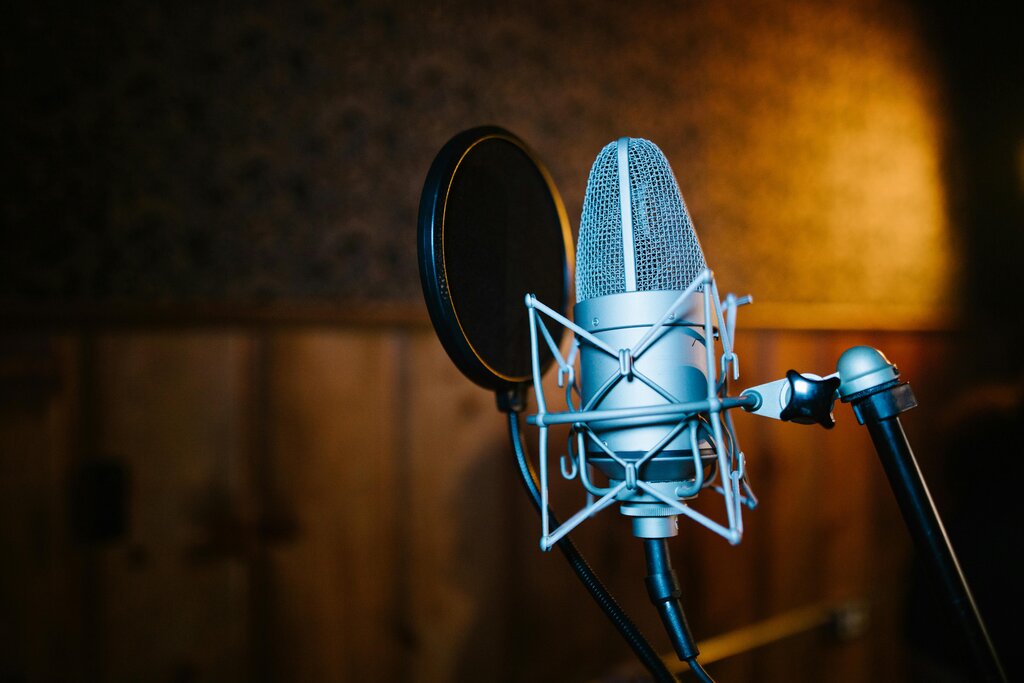
Condenser microphones are specialists. They are designed to capture nuance and detail, which is why they are the standard in recording studios. Their sensitivity makes them perfect for clean voiceovers, podcasting, or any recording in a quiet, acoustically treated space. This detail comes at a cost, however. They will pick up every echo, computer fan, and distant siren if your recording space isn't properly managed.
From Analogue to Digital
Capturing a clean sound is only half the battle. That signal must travel from the microphone to your recording device without picking up interference. This is where professional connections and equipment become non-negotiable.
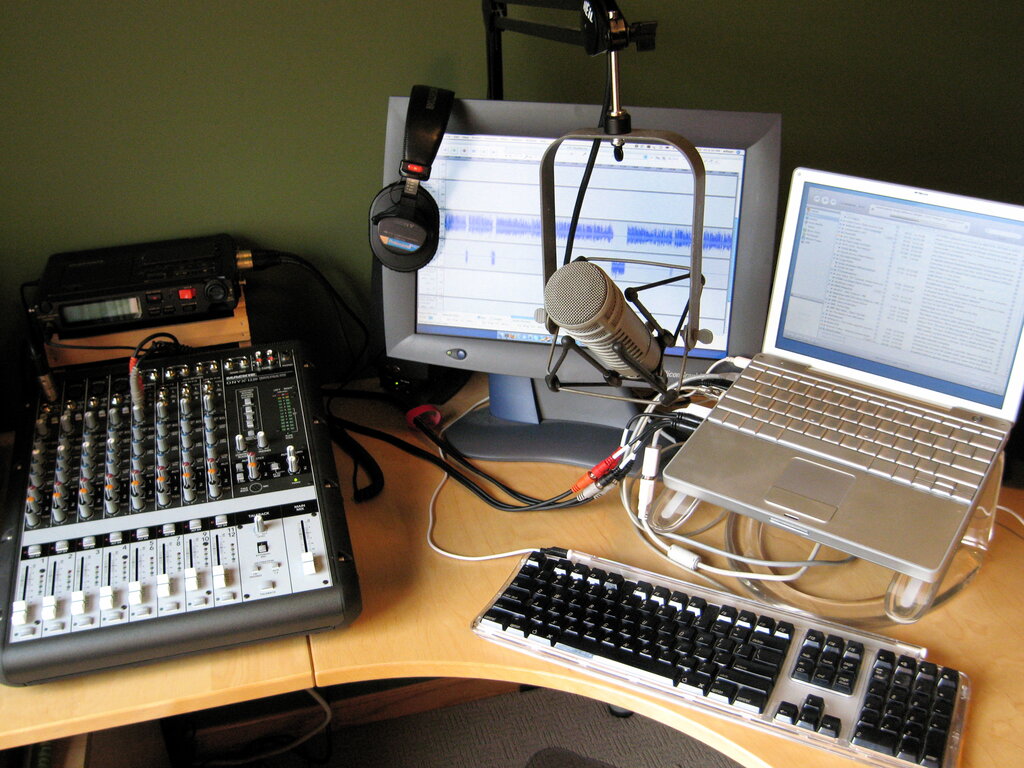
While USB microphones are convenient, the professional standard is an connected to an audio interface. An audio interface is a device that acts as a bridge between your microphone and your computer. It contains two crucial components: a and an analogue-to-digital converter (ADC).
The preamp boosts the quiet signal from the microphone to a usable level, a process called adding gain. A good preamp does this without introducing unwanted hiss. The ADC then converts the analogue electrical signal into a digital format that your computer can understand and store. A quality interface ensures this entire process is clean and accurate.
Taming the Room
Your recording environment is the third critical component. An expensive microphone in a bad room will produce a bad recording. The main enemy is reverberation, which is sound reflecting off hard, flat surfaces like bare walls, windows, and hardwood floors.
When you speak, sound waves travel in all directions. In an untreated room, they bounce around, creating a hollow, echoey sound that makes speech difficult to understand and sound unprofessional. The goal of acoustic treatment is to absorb these reflections.
You don't need a professional studio. You can significantly improve your space by adding soft materials to absorb sound. This includes heavy curtains, rugs, sofas, and even bookcases filled with books. Recording in a walk-in wardrobe full of clothes is a classic low-budget trick that works remarkably well.
The technical goal is to improve your (SNR). In this context, 'signal' is your voice, and 'noise' is everything else, including room reflections and background sounds. A high SNR means your voice is clear and prominent, which is essential for listener comprehension and engagement.
Finishing Touches at the Source
Finally, two simple accessories can solve common recording problems before they even reach the microphone: pop filters and shock mounts.
A pop filter is a screen, usually made of mesh or metal, placed between the speaker's mouth and the microphone. It disperses the blast of air from plosive sounds, like the 'p' and 'b' in 'political broadcasting'. Without a filter, these sounds can cause a distracting, low-frequency 'thump' in the recording.
A shock mount is a cradle that suspends the microphone using elastic bands. It isolates the mic from vibrations transmitted through the microphone stand. This prevents rumbles and bumps caused by tapping the desk, footfalls on the floor, or other physical movements from being picked up in your audio.
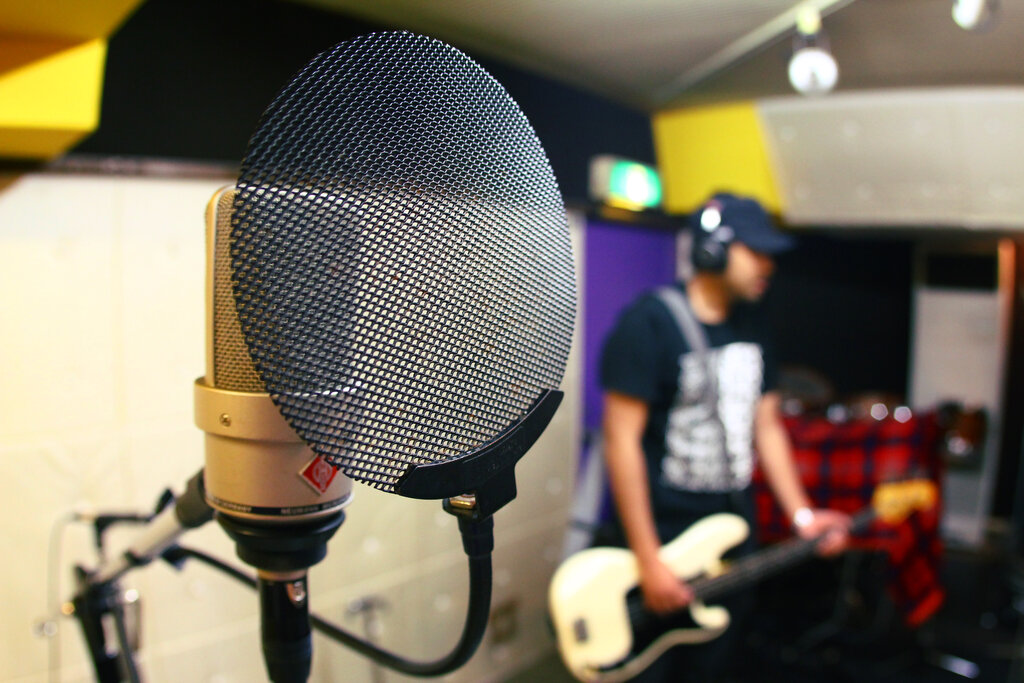
Using a pop filter and a shock mount are two of the easiest and cheapest ways to dramatically increase the professionalism of your audio.
Mastering these technical foundations ensures your message is heard exactly as you intend, free from the distractions of poor audio quality. It respects your audience's time and makes your communication more effective.