Professional Plastic Mold Engineering
Geometry and Texture Interaction
Texture Demands Draft
Surface texture does more than just make a part look and feel good. It introduces a complex landscape of microscopic peaks and valleys into the mold surface. During ejection, these tiny features can act like thousands of little hooks, gripping the steel and creating significant friction. Without enough draft, the part will scrape against the mold, resulting in drag marks, scuffs, and potentially a ruined part.
This is why the texture you choose directly dictates the minimum draft angle required. Industry standards, such as the German scale or various Mold-Tech grains, provide a catalog of finishes, each with a specific texture depth. A light bead blast will require less draft than a heavy, leather-like grain.
A solid rule of thumb is to add 1.5 degrees of draft for every 0.001 inch (or 0.0254 mm) of texture depth.
Calculating the Right Angle
Let's apply that rule. Suppose you've selected Mold-Tech's MT-11010 grain for an exterior surface. The datasheet indicates this texture has a depth of 0.0012 inches. Applying our rule:
So, you would need a minimum of 1.8 degrees of draft on all surfaces with that texture to ensure a clean release from the mold. This calculation is a critical step in a professional DFM review, preventing costly mold rework later.
Beyond the Surface
The interaction between geometry and manufacturability extends to internal features as well. Ribs, which are added to increase stiffness and strength, present their own challenges. Deep, thin ribs are particularly prone to breakage or warping during ejection if they don't have adequate draft.
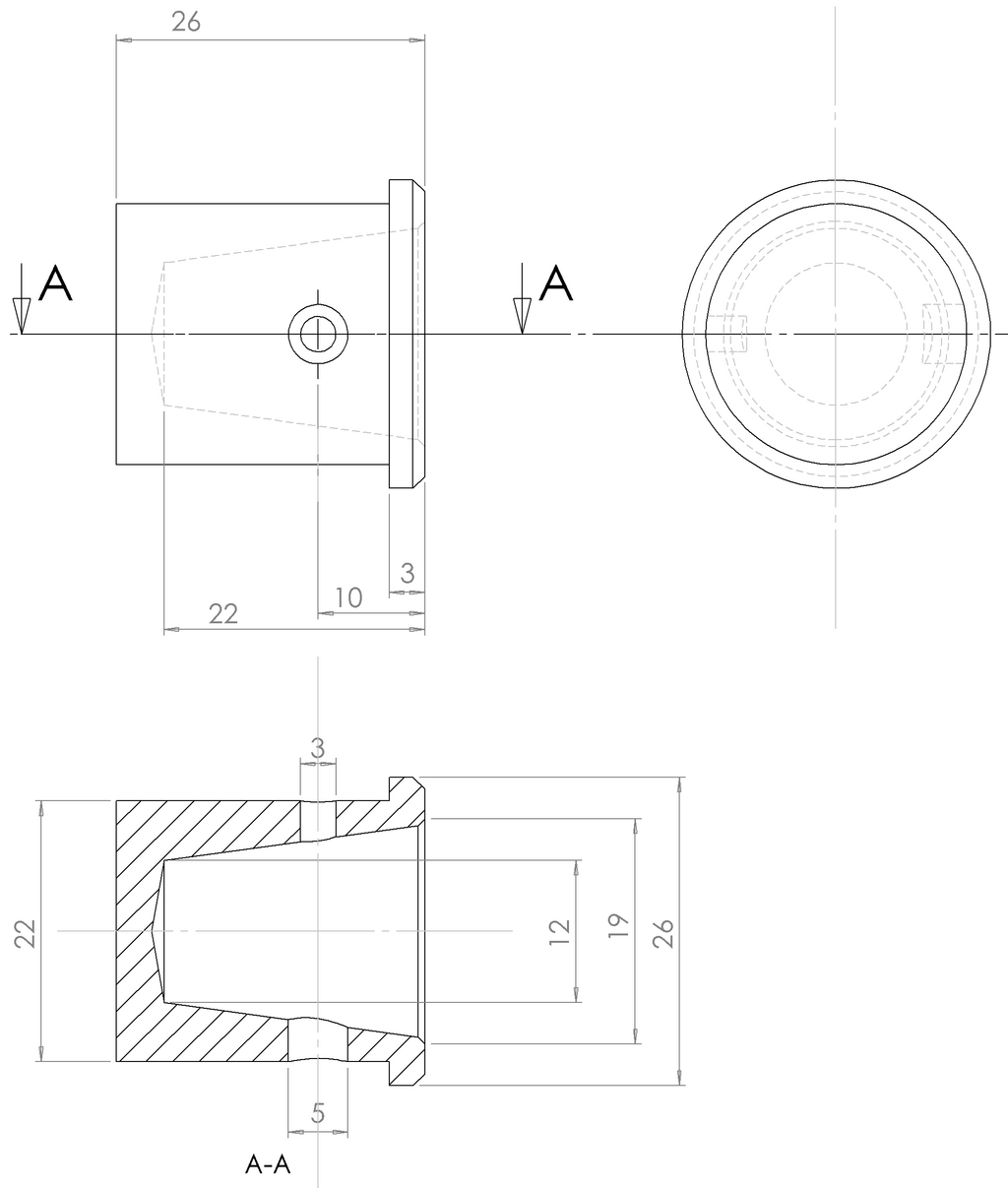
More importantly, the connection point between a rib and its supporting wall is a common site for cosmetic defects. If a rib is too thick relative to the wall, the larger mass of plastic will cool and shrink more slowly than the surrounding area. This differential shrinkage pulls the material inward, creating a visible depression on the opposite surface known as a a tell-tale sign of a poorly designed part.
To prevent sink marks, a rib's thickness at its base should be no more than 40-60% of the thickness of the wall it is attached to.
Performing a DFM Review
Our engineers leverage DFM, casting simulation, and Design of Experiments (DOE) to validate gating, cooling, and geometry decisions before tooling.
A thorough Design for Manufacturability (DFM) analysis goes beyond simple checklists. It requires you to think about how different design choices interact. The desired aesthetic texture drives the minimum draft angle. The structural need for ribs dictates wall thickness rules. The height of a feature influences the amount of draft it needs.
By analyzing the geometry holistically—considering texture, draft, rib ratios, and material properties together—you can identify potential manufacturing problems early. This proactive approach ensures the final part not only meets its functional and aesthetic requirements but can also be produced efficiently and consistently.
What is the primary reason that a textured mold surface requires a greater draft angle than a smooth, polished surface?
A cosmetic surface on a part uses a texture with a specified depth of 0.002 inches. Based on the common rule of thumb (1.5 degrees of draft for every 0.001" of texture depth), what is the minimum required draft angle for this surface?