Professional Medical Writing and Communication
Style Manual Mastery
The Standard for Medical Writing
In high-stakes medical communication, precision is everything. A misplaced decimal or ambiguous term can have serious consequences. This is why medical writing relies on a strict set of rules, and the most widely recognised authority is the AMA Manual of Style (11th edition). Following this guide ensures your work is clear, credible, and universally understood by clinicians, researchers, and regulatory bodies.
Most journals use an IMRD structure: An abstract followed by Introduction, Methods, Results, and Discussion.
The JAMA Network and many other leading medical journals mandate AMA style. It provides a common language that removes guesswork, allowing readers to focus on the scientific content without being distracted by inconsistent formatting. Mastering these conventions is a fundamental step for any serious medical writer.
Handling Numbers and Data
Medical writing is filled with data, and the AMA style has specific rules for presenting it. The core principle is clarity. For most uses, you'll use numerals (e.g., 5 patients, 12 trials). The main exception is when a number begins a sentence, where you must spell it out: "Fifteen millilitres were administered."
Units of measure follow a strict format. Always include a space between the number and the unit. For example, it is 10 mg, not 10mg. This applies to all units, from lengths (cm) to concentrations (mol/L). Consistency in these small details signals professionalism and attention to detail.
| Situation | Rule | Example |
|---|---|---|
| General Use | Use numerals for numbers 10 and above. | The study included 14 participants. |
| In a Series | Apply the rule consistently. | They tested 5, 9, and 12 samples. |
| Beginning a Sentence | Spell out the number. | Twenty-one subjects withdrew. |
| Units of Measure | Use numerals with a space. | A dose of 2.5 mL. |
| Percentages | Use the % symbol with a numeral. | A 25% reduction was observed. |
When dealing with drugs, capitalisation is key. Generic names should always be in lowercase (e.g., ibuprofen), while brand or trade names are capitalised (e.g., Advil). This distinction is crucial for avoiding ambiguity between a specific product and its active ingredient.
The Mechanics of Citation
Citing sources correctly is the backbone of credible scientific writing. The AMA style uses a numerical system that is efficient and unobtrusive. In the text, you cite sources using superscript Arabic numerals.¹ This method keeps the text clean and readable, avoiding the clutter of author names and dates inside parentheses.
These numbers are sequential, starting with ¹. The first source you cite is ¹, the second is ², and so on. If you cite the same source again later in the text, you reuse its original number. For example, if you cite a study by Smith et al as your first reference, it will always be ¹, no matter how many times you refer to it.
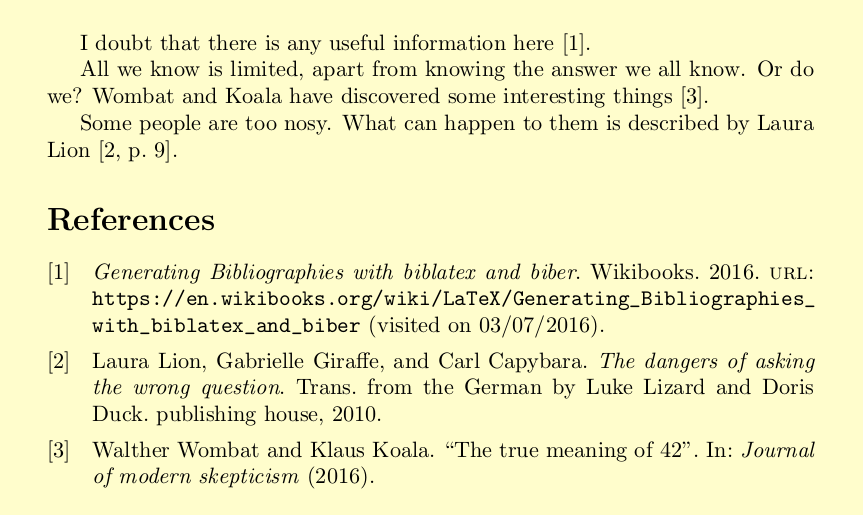
Each superscript number corresponds to a full citation in a numbered reference list at the end of the document. The list is ordered numerically, not alphabetically. This system is similar to the Vancouver style but has its own specific formatting rules for the reference list itself, particularly concerning journal names and author punctuation.
Crafting the Reference List
The reference list is where your readers can find the sources you've cited. Each entry must be formatted precisely. A key requirement is the use of official journal title abbreviations from the US (NLM). You don't just shorten a title however you see fit; you must use the NLM's standardised abbreviation. For example, The New England Journal of Medicine becomes N Engl J Med.
Incorrect: Smith, John and Jane Doe. "A Study of Drug X." Journal of Important Medical Research. Volume 15, Issue 2, pages 100-105. 2023.
Correct (AMA Style): Smith J, Doe J. A study of drug X. J Important Med Res. 2023;15(2):100-105.
Notice the details in the correct example: authors' last names are followed by initials without periods or commas. Only the first word of the article title (and proper nouns) is capitalised. The abbreviated journal title is italicised. The year is followed by a semicolon, the volume number, the issue number in parentheses, a colon, and then the page numbers. Adhering to this structure is non-negotiable for submission to top-tier journals.
Ready to test your knowledge? Let's see if you can spot the key concepts we've covered.
According to AMA style, which sentence is correctly formatted?
Which of the following dosages is formatted correctly according to the AMA Manual of Style?