Professional Market Research Fundamentals
Define Strategic Objectives
Start with the Why
Professional market research isn't a fishing expedition. It’s a guided hunt for specific answers that drive decisions. As a product or data professional, you operate on a web of assumptions: who your users are, what problems they have, and how your product solves them. The first step is to drag these implicit beliefs into the light and frame them as testable hypotheses.
Market research forms the foundation of any successful product strategy.
Your goal is to identify the in your strategy. These are the high-stakes assumptions that, if proven wrong, could sink your product. For example, you might assume that your power users will happily pay for a new analytics dashboard. But what if they won't? That's a critical unknown. The purpose of research is to de-risk your strategy by systematically resolving these uncertainties before you commit significant resources.
Questions That Demand Action
Every research question should be a loaded one. It must be directly linked to a tactical or strategic decision. Before you write a single survey question, ask yourself: “What will we do differently if the answer is A versus B?” If the answer is “nothing,” the question isn’t worth asking.
This framework forces a bias toward action and makes the value of research undeniable. It connects the research findings directly to roadmap priorities, pricing strategies, or go-to-market plans. The output isn't a report that gathers dust; it's a set of instructions for what to do next.
| Research Question | Potential Finding | Tactical Decision |
|---|---|---|
| Which of our three proposed features is most valuable to enterprise users? | Feature A (integration with Salesforce) is a 'must-have' for 80% of targets. | Deprioritize Features B and C. Allocate engineering resources to build out the Salesforce integration for the next release. |
| What is the primary barrier preventing free users from upgrading to a paid plan? | Users are unaware of the benefits of the paid features. | Launch a targeted in-app messaging campaign to educate free users on the value proposition of the premium plan. |
This link between inquiry and action is also your most powerful tool for achieving stakeholder alignment. When everyone agrees on the questions and the decisions they will inform, you eliminate debates based on opinion after the results are in. The research becomes the mutually-agreed-upon arbiter.
Sharpening Your Objectives
Vague objectives lead to vague results. “Understand the customer better” is a wish, not a plan. To ensure your research is focused and your results are conclusive, use the SMART framework to define your objectives.
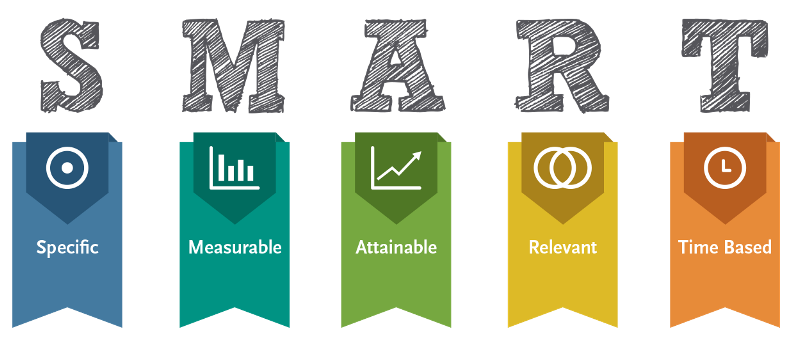
Let’s translate a generic goal into a SMART research objective.
Vague Goal: Figure out if we should target small businesses.
SMART Objective: By the end of Q3, determine if businesses with fewer than 50 employees are a viable market segment by conducting 20 qualitative interviews and a quantitative survey of 500 prospects to assess their willingness to pay at least $49/month for our core product. Success is defined as at least 15% of survey respondents indicating a high purchase intent at this price point.
Notice the difference. The SMART objective is a complete project plan in a single sentence. It defines the scope (businesses <50 employees), the methodology (interviews and a survey), the timeline (end of Q3), and the specific, measurable metric for success (15% purchase intent at $49/month). This level of clarity ensures that once the research is complete, the next step is obvious.
What is the primary purpose of professional market research, as described in the text?
What is the defining characteristic of a 'critical unknown'?