Professional Interior Lighting Strategies
Layering and Fixture Selection
The Art of Integrated Lighting
You already know the three basic layers of lighting: ambient, task, and accent. The real skill lies not in defining them, but in weaving them together. A masterfully lit space isn't just bright; it has a clear visual hierarchy. It guides your attention, creates mood, and reveals the texture and form of the architecture. Think of it like a musical composition. Ambient light is the underlying rhythm, the steady beat. Task lighting is the melody, the part that carries the main action. Accent lighting provides the flourishes and solos, adding drama and interest.
Effective layering means each light source has a purpose and works in concert with the others. A common mistake is to flood a room with uniform, shadow-less ambient light from a grid of downlights. This creates a flat, uninviting space. Instead, think about creating pools of light and areas of relative darkness. This contrast is what gives a room depth and character. The goal is to make the lighting feel like a natural, integrated part of the building itself, not a clumsy afterthought.
Layering lighting in interiors consist of three aspects: ambient, task and accent lighting to create a functional and visually appealing space.
Choosing Your Tools
With the strategy clear, the next step is selecting the right hardware. The fixtures you choose are the instruments in your orchestra. Each has a different voice and purpose, and their physical form directly impacts the architectural aesthetic. Recessed fixtures disappear into the ceiling for a clean, minimalist look, while surface-mounted or suspended fixtures make a statement of their own.
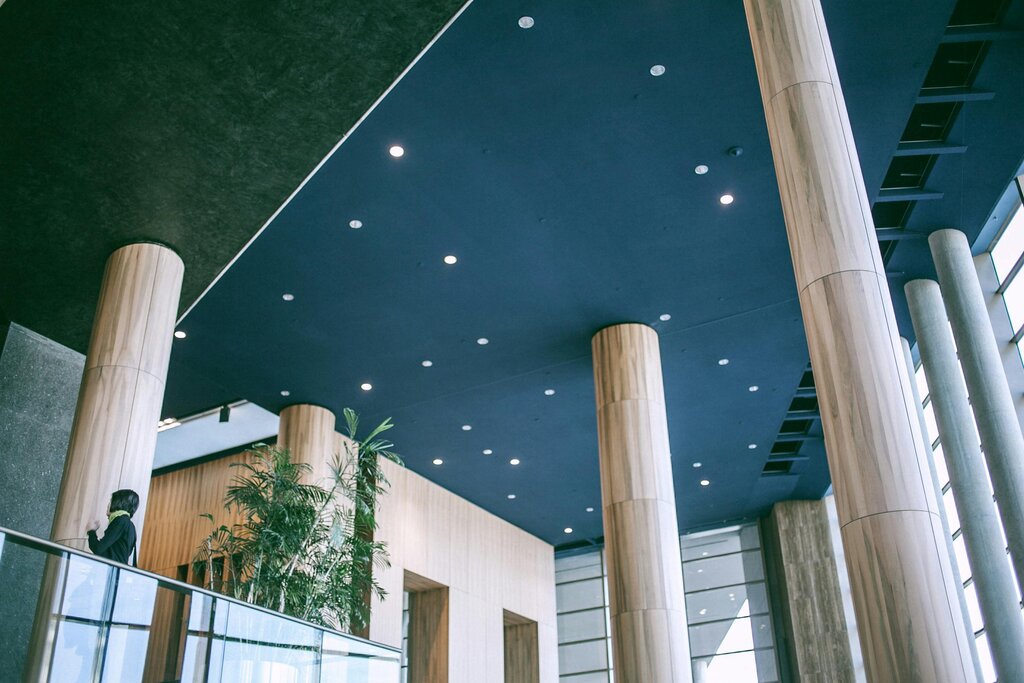
The decision between recessed and surface-mounted often comes down to ceiling height, structural constraints, and desired style. Recessed lighting requires plenum space above the ceiling, which isn't always available in renovations. Surface-mounted options, like track lighting, offer immense flexibility, allowing you to re-aim and reposition heads as the use of the space changes. More specialized fixtures, like wall washers, are designed for a single, specific effect.
| Fixture Type | Best For | Flexibility | Visual Impact |
|---|---|---|---|
| Recessed Downlight | General ambient lighting | Low (fixed position) | Minimal, clean |
| Track Head | Accent and task lighting | High (repositionable) | Varies, can be industrial |
| Wall Washer | Evenly lit vertical surfaces | Low (fixed purpose) | Subtle, highlights texture |
The Technical Details
Selecting a fixture type is just the first step. To achieve a professional result, you need to specify its optical properties. is one of the most critical. Measured in degrees, it determines the size of the light pool a fixture will cast. A narrow spot (10-15 degrees) is perfect for accenting a small object, while a wide flood (40+ degrees) is better for ambient illumination. Using the wrong beam spread can ruin an effect; a narrow beam on a dining table creates a harsh spotlight, while a wide beam aimed at a sculpture will wash out the details and spill light everywhere.
Aperture size—the diameter of the opening—and trim style also play a huge role. Smaller apertures (2-3 inches) offer a quieter, more refined look, while larger ones (4-6 inches) are more traditional. A "trimless" or "mud-in" fixture is installed flush with the ceiling drywall, making the light source appear as a clean hole with no visible flange. This is a favorite in high-end residential and commercial projects, but it requires more precise installation.
Finally, don't forget light quality. measures how accurately a light source reveals the true colors of objects. For most spaces, a CRI of 90 or higher is recommended. But for applications where color is critical, like retail stores or art galleries, you also need to check the . This is a specific score for how well the light renders deep, saturated reds. Many LEDs have a high overall CRI but a poor R9, which can make skin tones, wood grains, and certain foods look flat and unnatural.
In the musical composition analogy for lighting, what does ambient light represent?
According to the provided text, what is a common lighting mistake that results in a flat, uninviting space?
By moving beyond the basics and considering how layers, fixtures, and technical specifications interact, you can create lighting that doesn't just illuminate a space, but defines it.