Professional Ice Breakers for Adult Learners
Strategic Alignment
From Filler to Foundation
In professional development, time is the most valuable currency. That's why the traditional view of icebreakers as frivolous, time-filling games needs a strategic overhaul. For experienced professionals, engagement isn't about forced fun; it's about relevance and purpose. A well-chosen opening activity isn't just a warm-up—it's the first step in aligning the group with the day's objectives.
This shift begins with the 'Purpose-First' framework. Before selecting an activity, you must clearly define its primary goal. Are you trying to build new network connections between participants from different departments? Do you need to prime the group for a complex topic by activating their prior knowledge? Or perhaps you need to surface the existing expertise and expectations within the room to tailor the session in real-time. Each of these goals requires a different tool.
An effective opening activity acts as a 'painkiller' for a specific problem—like social anxiety or a knowledge gap—not as a 'filler' to kill time. The goal is to bridge the gap between arrival and engagement, making the transition seamless and productive.
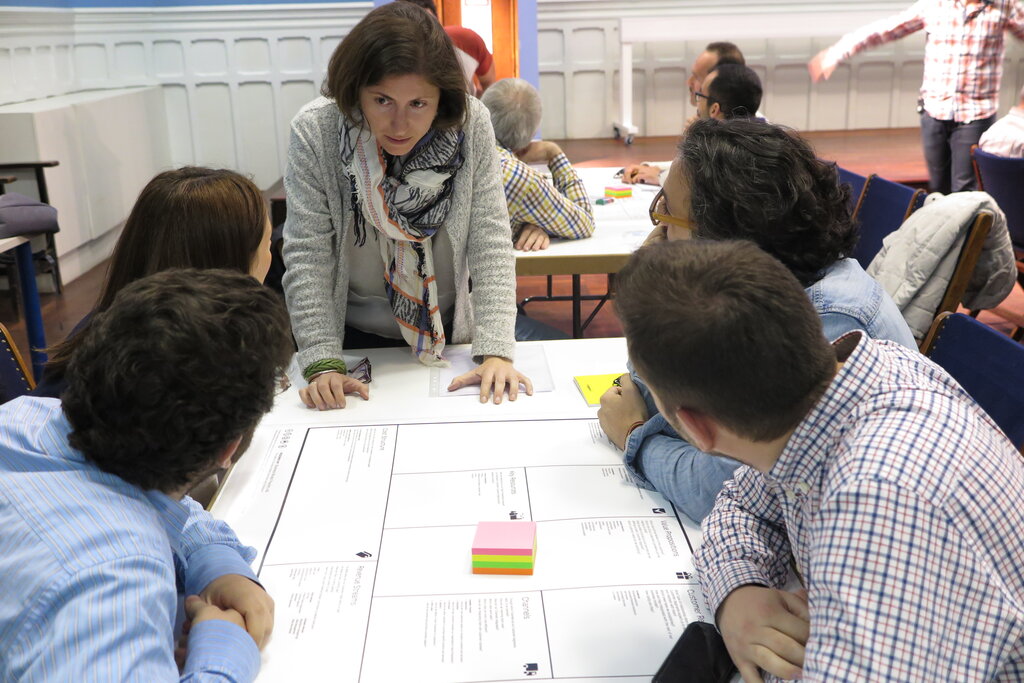
This approach has a clear return on investment. When participants see that even the first ten minutes are strategically linked to the learning outcomes, it builds trust and signals that their time will be respected. It establishes a professional, focused tone from the outset.
Aligning Activities with Objectives
One powerful method for immediate alignment is 'Gifts and Hooks.' It's a structured sharing exercise that quickly maps the landscape of the room.
Gifts and Hooks
noun
A facilitation technique where participants share a 'gift' (a skill, piece of knowledge, or resource they bring) and a 'hook' (something they need or want to learn to stay engaged).
The facilitator gathers this information and can directly reference it throughout the session. If someone's 'gift' is expertise in data analysis, they can be called upon during a relevant discussion. If a participant's 'hook' is understanding practical application, the facilitator knows to emphasize case studies for that person. It turns a simple introduction into a valuable data-gathering exercise that informs the entire workshop.
We can add another layer of strategic depth by aligning activities with Bloom's Taxonomy, the classic framework for categorizing educational goals. Instead of choosing an activity at random, you can select one that targets a specific cognitive level required for the upcoming content.
| Bloom's Level | Activity Goal | Example Activity |
|---|---|---|
| Remembering | Recall facts and basic concepts | A quick poll or single-word association related to the topic. |
| Understanding | Explain ideas or concepts | In pairs, participants explain the session topic to each other in 30 seconds. |
| Applying | Use information in new situations | A short case study where small groups apply a known principle to a new problem. |
| Analyzing | Draw connections among ideas | Participants are given three key concepts and must find the relationship between them. |
| Evaluating | Justify a stand or decision | A brief debate on a provocative statement related to the session's theme. |
| Creating | Produce new or original work | Groups brainstorm and sketch a new solution to a common industry problem. |
By matching your activity to the appropriate cognitive level, you are not just breaking the ice; you are priming the brain for the type of thinking that will be required. An activity that asks participants to evaluate a statement prepares them for a session focused on critical decision-making far better than a simple name game.
Time to check your understanding of these strategic concepts.
What is the primary shift in perspective on icebreakers advocated for in the context of professional development?
According to the 'Purpose-First' framework, what is the initial step a facilitator must take before selecting an opening activity?
Choosing the right opening is the first step in designing a purposeful and respectful learning experience.