Professional Graphic Design Practice
Strategic Design Workflow
From Brief to Blueprint
Professional design isn't about waiting for a lightning bolt of inspiration. It's a structured process that transforms a client's problem into a strategic solution. This journey from ambiguity to clarity begins with the creative brief. While you already know what a brief is, a professional treats it not as a simple to-do list, but as a puzzle to be deconstructed. The goal is to uncover the core business objectives hidden within the client's requests.
A brief isn't a set of instructions; it's a problem statement waiting for a design solution.
Your first step is to mine the brief for critical information. What does the client really want to achieve? Increase sales by 15%? Break into a new demographic? Reposition themselves as an industry leader? These objectives are your north star. Next, identify the target audience, the brand's personality or voice, and any non-negotiable constraints, like budget or technical limitations. Often, the most crucial details are found by reading between the lines and asking clarifying questions. A vague request like "make it look more modern" needs to be translated into concrete goals. Does "modern" mean minimalist, tech-focused, or something else entirely?
Know Your Audience, Know Your Market
Once you have the client's goals, you need to understand who you're designing for. This is where target audience personas come in. A persona is a detailed, semi-fictional profile of a key user segment, based on research and data from the brief. It's not just "males, 18-24"; it's "Alex, a 22-year-old college student who values sustainability, shops on his phone, and feels overwhelmed by cluttered apps."
Personas breathe life into data, making the end-user tangible. This helps you make empathetic design choices, from the overall layout to the smallest interaction. Creating 2-3 distinct personas ensures your design addresses the needs of the most important user groups. A good persona is also informed by exploring the brand's desired identity through concepts like to ensure the visual language resonates on a psychological level.
With your personas defined, you can perform a market and competitor audit. This isn't about stealing ideas. It's about understanding the visual conversation already happening in the client's space. Analyze the logos, color palettes, typography, and website layouts of 3-5 direct competitors. What are the common patterns? More importantly, where are the gaps? If every competitor uses a blue, corporate-style logo, a vibrant, warm color palette could make your client stand out instantly. This research provides a strategic rationale for your design choices, moving decisions from "I like this" to "This works because...".
Aligning Vision
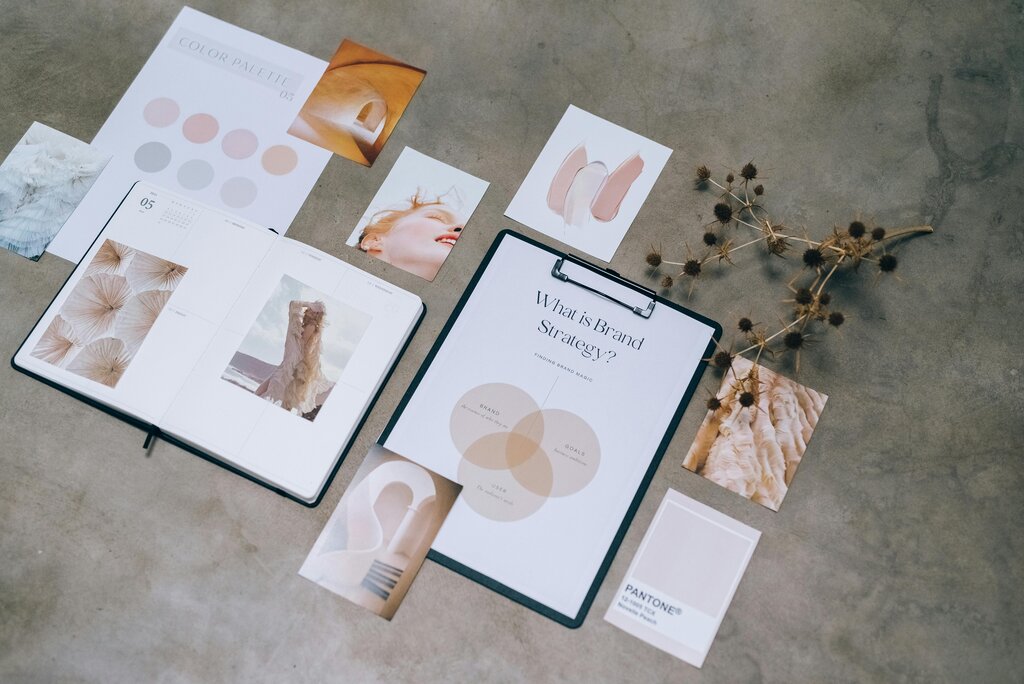
You've analyzed the brief, defined the audience, and researched the market. Now it's time to translate that strategy into a visual direction. The most effective tool for this is the mood board. A mood board is a collage of images, textures, typography, and colors that captures the intended feeling of the brand. It's a visual pitch that establishes a shared understanding with the client before you invest hours into specific designs.
Your mood board should be focused. Instead of a random collection of pretty pictures, every element should have a purpose. Include examples of logo styles, photography that reflects the brand's voice, potential color palettes, and typographic pairings. Present 2-3 distinct mood boards to the client. One might be bold and modern, another more traditional and elegant. This gives the client a meaningful choice and makes them a partner in the creative process. Getting sign-off at this stage is crucial—it ensures everyone is aligned and dramatically reduces the risk of major revisions later.
Finally, a professional workflow relies on strong organizational habits. Before you even open a design tool, establish your (SOPs) for file management. A logical folder structure and a consistent file naming convention are not glamorous, but they are essential for efficiency and collaboration. A typical system might look like this:
Project_Name/ ├── 01_Brief_and_Research ├── 02_Moodboards ├── 03_Design_Assets │ ├── Logos │ └── Photos ├── 04_Working_Files ├── 05_Exports_and_Deliverables
File names should be just as predictable: ProjectName_AssetName_Version_Date.ai (e.g., EcoFresh_Logo_v3_2024-07-21.ai). This simple discipline saves countless hours searching for files and prevents confusion, especially when handing off projects to developers or other team members.
This strategic front-loading—deconstructing the brief, building personas, auditing the market, aligning with mood boards, and organizing your files—is what separates amateur design from professional practice. It ensures every creative choice is deliberate, defensible, and directly tied to achieving the client's goals.
According to the professional design process, what is the primary goal when first analyzing a creative brief?
What is the main purpose of creating target audience personas?