Professional Garment Pattern Making
Sloper Manipulation Basics
The Sloper's Anatomy
A sloper, or block, is a foundational pattern without seam allowance or design elements. It's the two-dimensional blueprint of a three-dimensional body, capturing its unique curves and proportions. Think of it as a perfectly fitting shell. Any garment, from a simple blouse to a tailored jacket, can be developed from this basic template.
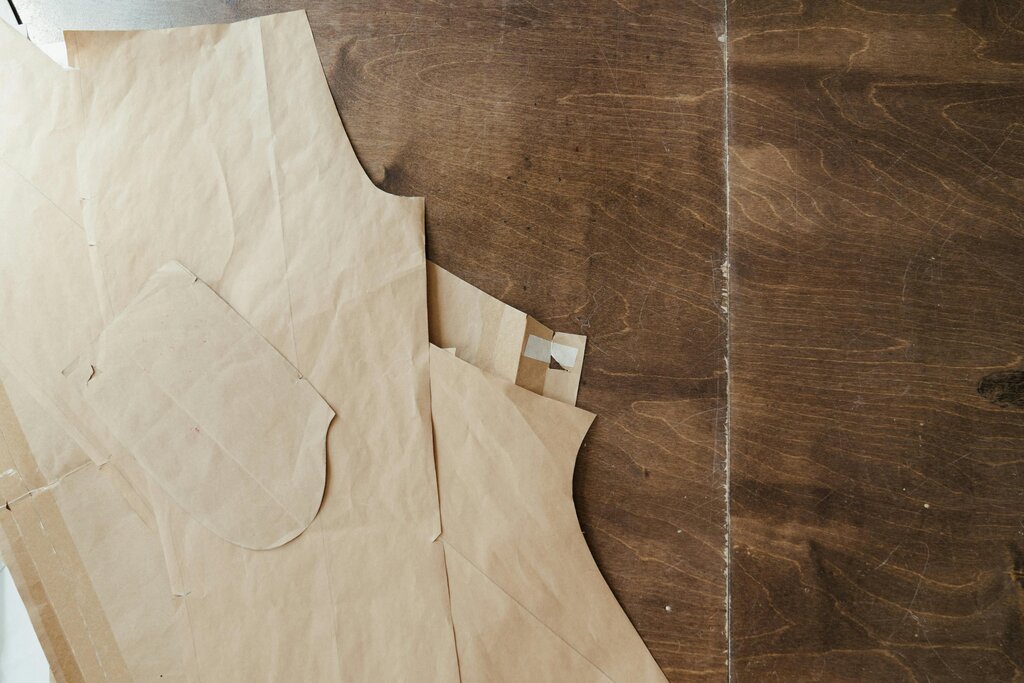
The three core slopers are the bodice, the skirt, and the sleeve. Each is marked with essential landmarks that guide both fitting and manipulation. These aren't just random lines; they correspond to key points on the body and ensure the final garment hangs correctly.
| Landmark | Bodice | Skirt | Sleeve |
|---|---|---|---|
| Center Front/Back | ✔ | ✔ | ✖ |
| Bust Point (Apex) | ✔ | ✖ | ✖ |
| Waistline | ✔ | ✔ | ✖ |
| Hipline | ✔ | ✔ | ✖ |
| Bicep Line | ✖ | ✖ | ✔ |
| Elbow Line | ✖ | ✖ | ✔ |
| Darts | ✔ | ✔ | ✔ (Elbow Dart) |
The most crucial landmarks are the darts. Darts are the magic that turns a flat piece of fabric into a shape that can accommodate curves. On a bodice block, waist and bust darts give shape around the torso. On a skirt, they contour the fabric from the waist over the hips. Even a sleeve has an elbow dart to allow for the arm's natural bend.
Pivots, Apexes, and Geometry
All flat pattern manipulation is an exercise in geometry. The goal is to move the shaping created by a dart somewhere else without altering the sloper's fit. This is done by rotating a section of the pattern around a fixed point, known as the pivot point. The most important pivot point on a bodice is the bust apex, the fullest point of the bust.
The dart point itself never quite reaches the apex. Instead, it ends about an inch away. This prevents a pointy, unflattering look in the final garment. However, for manipulation purposes, all slash lines radiate from the true apex. By slashing the pattern from the apex to another edge and closing an existing dart, you transfer its volume. The shape doesn't disappear; it just moves. A waist dart can become a shoulder dart, a side seam dart, or even gathers at the neckline.
The key principle is this: the volume of the dart remains constant, only its location changes. The overall fit of the sloper is preserved.
From 2D to 3D
Before you start designing, you must confirm your basic block fits perfectly. A standard sloper from a pattern company is designed for a hypothetical 'average' person. It will almost certainly need adjustments. This is where you create a , or toile.
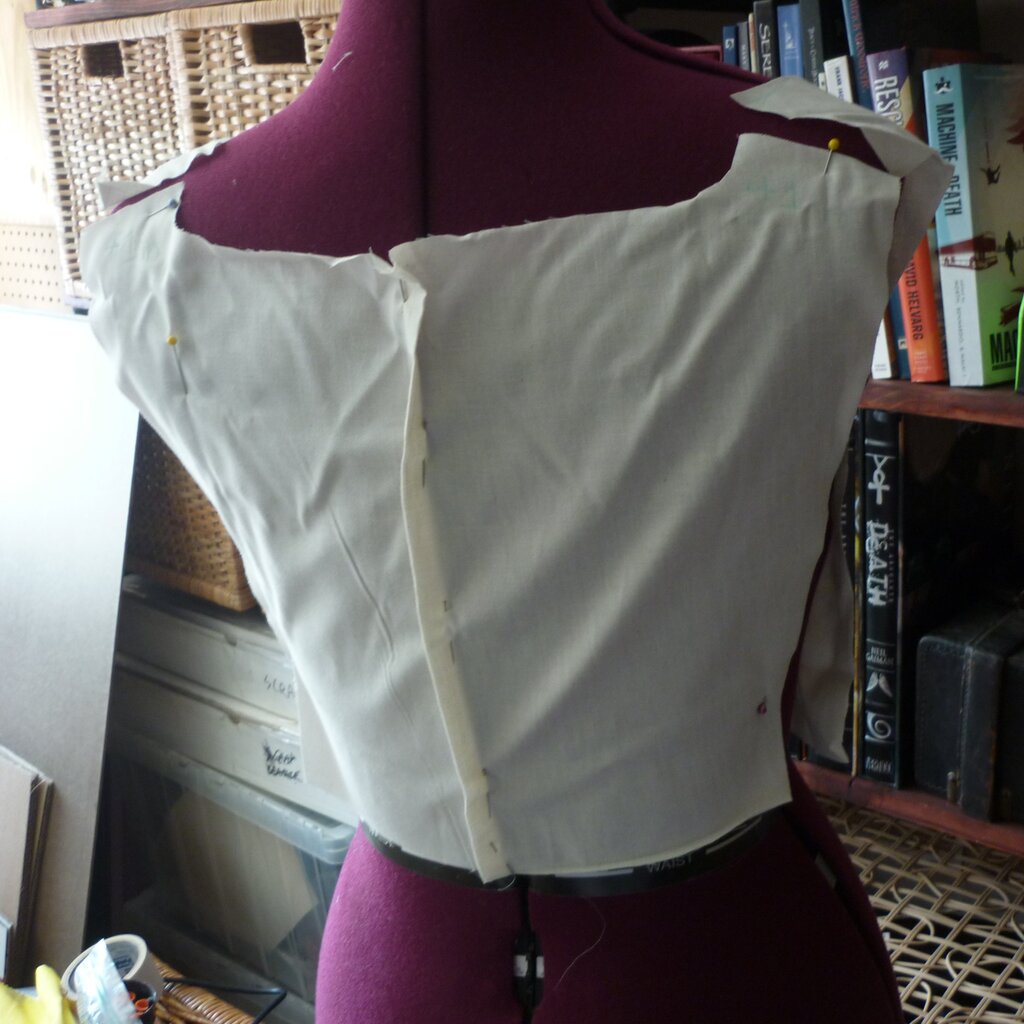
When you sew your muslin, you're evaluating the block's balance. Do the vertical seams hang perpendicular to the floor? Are there any pulling lines or wrinkles? These are clues. Horizontal wrinkles suggest the pattern is too short in that area, while vertical wrinkles mean it's too long. A diagonal pull points to the source of the strain; the fabric is being pulled taut between two points that are too far apart on the pattern.
The trick to a test garment is to sew or baste or even pin just the main pieces of the garment together so you can try it on and see any areas that need adjusting before you sew any details.
Once your muslin hangs cleanly with no pulling, you transfer any changes back to your paper pattern. This corrected sloper is now your personal block, a reliable foundation customized to a specific set of measurements. It is the starting point for unlocking endless design possibilities, all based on the simple geometry of rotating darts.
Ready to check your understanding?
What is a sloper, or block, in pattern making?
What is the primary function of darts in a pattern?
With a well-fitted sloper, you're no longer just following instructions. You're engineering a garment from its most fundamental principles.