Professional Cosmetology and Advanced Artistry
Cosmetic Chemical Analysis
The Science of a Good Hair Day
When a client sits in your chair, they trust you to choose the right products. That choice goes deeper than brand names and marketing claims. It comes down to chemistry. Understanding the ingredients on the label allows you to diagnose a hair issue and prescribe the perfect chemical solution.
Let's start with the most basic function: cleaning. Shampoos rely on surfactants to remove dirt and oil. A surfactant molecule has two ends: a hydrophilic (water-loving) head and a hydrophobic (water-fearing) tail. The tail grabs onto the oils and product buildup on the hair, while the head anchors itself in the water, allowing the grime to be rinsed away.
The charge of the surfactant's head is critical. Most shampoos use anionic surfactants, like sodium lauryl sulfate, which have a negative charge. They are excellent cleaners but can leave the hair with a net negative charge, causing cuticle scales to lift and creating frizz and tangles.
This is where conditioners come in. They use cationic surfactants, such as quaternary ammonium compounds (or "quats"). These have a positive charge. They are attracted to the negative charges on damaged hair, neutralizing them. This allows the cuticle to lie flat, resulting in smoother, less tangled, and shinier hair. A common example you'll see on labels is cetrimonium chloride.
surfactant
noun
A substance that reduces the surface tension between two liquids, or between a liquid and a solid. In cosmetics, they act as detergents, wetting agents, emulsifiers, and foaming agents.
The pH Balancing Act
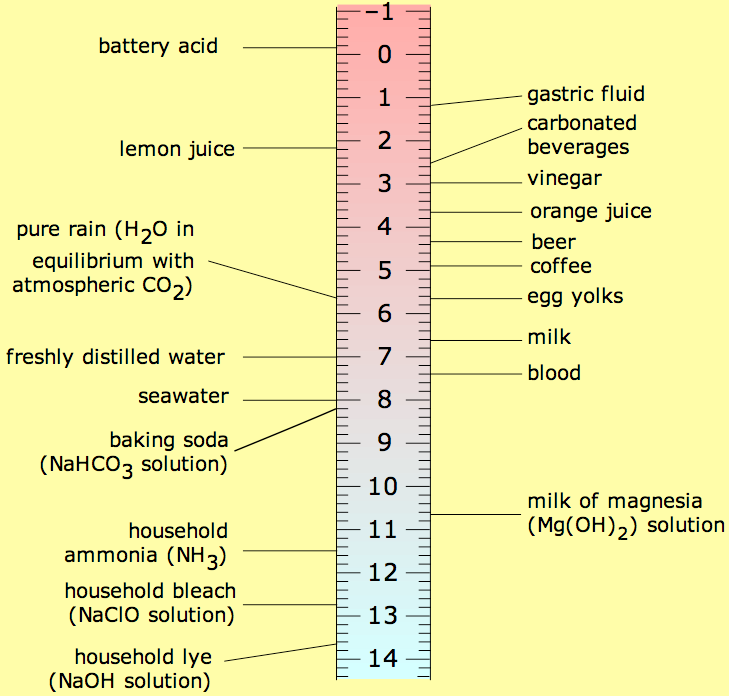
You're likely familiar with the pH scale, but its role in hair care is crucial for managing the hair's structure. Hair and its natural oil, sebum, have an acidic pH, typically between 4.5 and 5.5. This acidic state keeps the hair cuticle—the outermost layer of overlapping scales—compact and closed.
Chemical services like coloring or relaxing are highly alkaline. An alkaline substance forces the cuticle scales to swell and open, which is necessary for the chemicals to penetrate the hair shaft. However, if the cuticle remains open, the hair becomes porous, dry, and prone to damage.
This is why so many conditioners and treatments contain acids, like citric acid. These ingredients help lower the pH back to its natural acidic state, closing the cuticle. A closed cuticle reflects light better (hello, shine!) and seals in moisture, improving the hair's overall health and feel.
Special Agents and Finishers
Beyond cleaning and conditioning, products use specialized ingredients to solve specific problems. If a client has hard water at home, their hair can become dull and discolored due to mineral buildup. Products with chelating agents can fix this. These ingredients, like Tetrasodium EDTA, essentially grab onto mineral ions like calcium and magnesium, allowing them to be washed away.
For styling, we turn to polymers and silicones. Film-forming polymers like PVP/VA copolymers are the workhorses of hairsprays. They create a clear, stiff film that locks hair strands together, providing hold. Silicones, such as dimethicone and cyclomethicone, are used for shine and smoothness. They coat the hair shaft, reducing friction between strands and sealing the cuticle to prevent moisture loss. This is what gives serums their characteristic silky, slippery feel.
Finally, let's talk repair. Since hair is primarily made of the protein keratin, adding proteins to products can help temporarily patch damage. The key is molecular weight. Small, hydrolyzed proteins (like silk or wheat protein) have a low molecular weight, allowing them to penetrate the hair shaft and strengthen it from within. Larger proteins can't get inside, so they coat the exterior of the hair to add smoothness and protection.
Ready to test your knowledge of cosmetic chemistry?
What is the primary function of the two distinct ends of a surfactant molecule in shampoo?
A client complains of frizzy, tangled hair after washing. This is likely due to the net negative charge left by anionic surfactants in their shampoo. What type of ingredient in a conditioner is designed to counteract this effect?
By understanding these core chemical components, you can move beyond marketing and make truly informed decisions that will give your clients the best possible results.