Professional Coding Techniques
Introduction to Programming
What Is Programming?
Think of a computer as an incredibly powerful but very literal assistant. It can perform millions of calculations in the blink of an eye, but it won't do anything until you give it precise instructions. It doesn't understand hints, suggestions, or vague requests. You have to tell it exactly what to do, step by step.
Programming is simply the art of writing those instructions.
Programming
noun
The process of designing and writing a set of instructions that a computer can follow to perform a specific task.
These instructions, collectively called a program or software, can do almost anything you can imagine. The app that wakes you up in the morning is a program. The web browser you're using to read this is a program. Even the system that manages traffic lights is running on a program.
The core purpose of programming is to solve problems and automate tasks. Instead of manually calculating a budget each month, you can write a program to do it for you. Instead of sorting a thousand names by hand, a program can do it instantly.
Languages for Computers
We can't write instructions for a computer in English or Spanish. At its most basic level, a computer only understands one thing: electricity being on or off. We represent this with two numbers, 1 (on) and 0 (off). This is called binary code, the native language of computers.
Writing instructions in long strings of 1s and 0s would be incredibly difficult for humans. That's where programming languages come in. They act as a bridge, allowing us to write commands in a way that's much closer to human language.
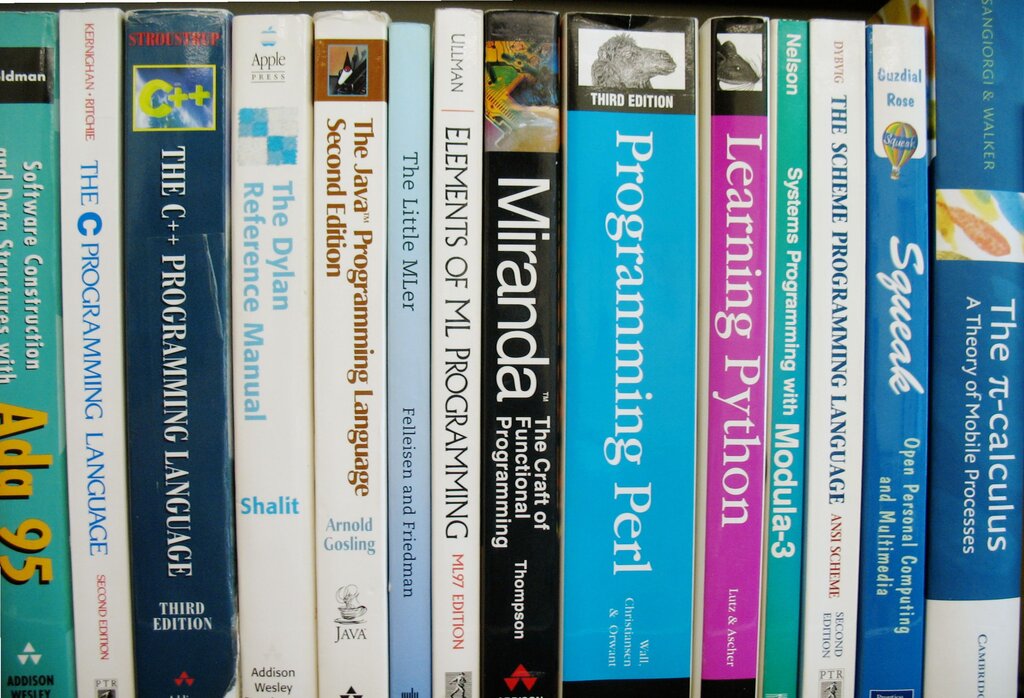
Just as there are many human languages, there are thousands of programming languages. Each was designed for different purposes. Some, like Python, are praised for being easy to learn and are great for data analysis. Others, like JavaScript, are the backbone of interactive websites. C++ is often used for high-performance applications like video games.
From Idea to Action
So how does a programmer actually create a program? It starts with writing the instructions in a chosen programming language. This text is called source code and it's saved in a plain text file.
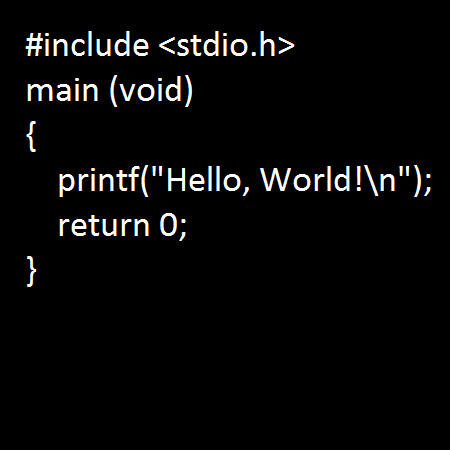
But a computer can't run source code directly. The code must first be translated into the machine code of 1s and 0s that the computer's processor can understand. This translation is done by a special program called a compiler or an interpreter.
- A compiler reads your entire program at once and translates it into a separate, executable file. You then run that file to make the program work.
- An interpreter reads and runs your code line by line, translating and executing as it goes.
Either way, the result is the same: the computer follows your instructions. If your instructions are correct, the program works as intended. If you made a mistake, like a typo or a logical error (called a bug), the program might crash or behave unexpectedly. Finding and fixing these bugs is a normal and essential part of programming.
The process is simple: Write code, translate it, and run it. The challenge and creativity lie in figuring out what instructions to write.
Now that you understand the basic concepts, let's test your knowledge.
What is the primary role of a programming language?
The set of instructions a programmer writes in a high-level language is known as __________.
This is just the first step. The journey of learning to program involves understanding how to structure your instructions logically to solve complex problems.