Professional Book Publishing Strategy
Evaluate Publishing Models
Choosing Your Path
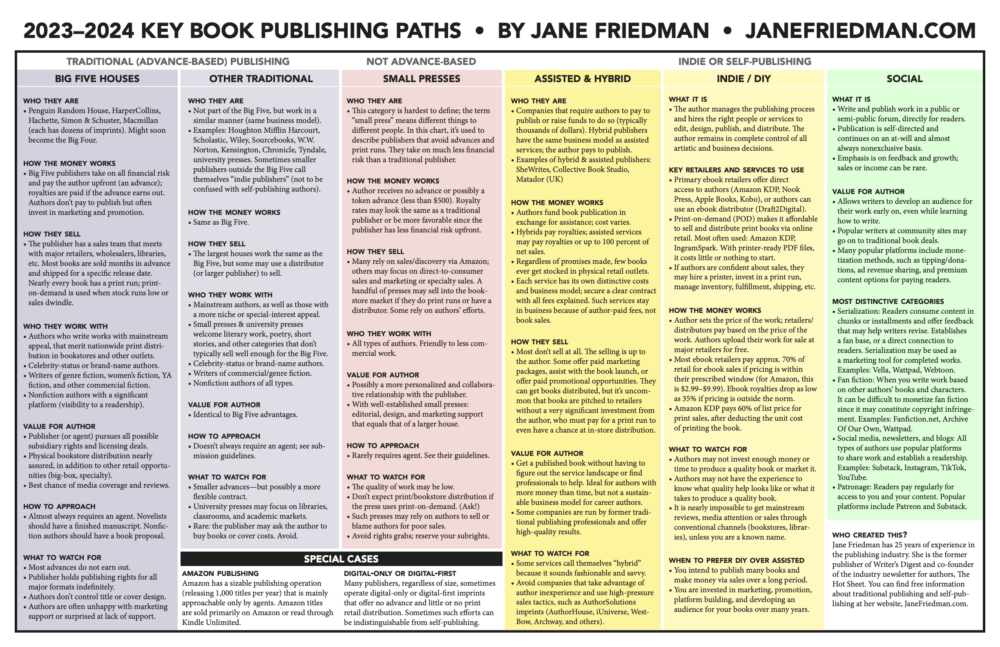
Picking a publishing model is a business decision, not just a creative one. The three main paths—traditional, self-publishing, and hybrid—each offer different trade-offs in terms of money, control, and speed. The right choice depends entirely on your personal goals. Are you aiming for the prestige of a major publishing house, the entrepreneurial freedom of being an indie author, or something in between?
The Traditional Route
The traditional path is what most people picture when they think of publishing. It's a long and competitive road that begins with securing a literary agent. You'll write a query letter and a book proposal to attract an agent, who then acts as your business partner, pitching your manuscript to acquisition editors at publishing houses.
If an editor is interested, they may offer a book deal, which typically includes an advance. An advance is a sum of money paid upfront against your future royalties. You won't see any further payment until your book has sold enough copies to "earn out" that advance.
The entire process is slow. It can take months or even years to find an agent, and another year or more for the publisher to get the book on shelves. In exchange for your patience, you get the publisher's resources: professional editing, cover design, marketing, and distribution into physical bookstores. This path carries a certain prestige and validation.
However, this comes at a cost. You give up significant creative control over your title, cover, and even parts of the content. And the financial split reflects the publisher's investment.
| Book Format | Typical Royalties (of net receipts) |
|---|---|
| Hardcover | 10-15% |
| Trade Paperback | 8-12% |
| Mass-Market Paperback | 5-8% |
| Ebook | 25% |
Notice that ebook royalties are significantly lower than what's available through self-publishing. The publisher takes a larger share to cover its overhead and investment in the book's production and marketing.
The Indie Author Revolution
Self-publishing, often called indie publishing, puts you in the driver's seat. Using platforms like Amazon's Kindle Direct Publishing (KDP), you can upload your manuscript and have it for sale as an ebook and print-on-demand paperback worldwide in as little as 24 hours. You are the publisher.
This means you have total creative control. You decide on the final edit, the cover design, the pricing, and the marketing strategy. You also get a much larger piece of the pie.
KDP offers higher royalty options compared to traditional publishing, with up to 70% royalties on ebook sales.
That 70% figure is a huge draw for many authors. However, all expenses come out of your pocket. Professional editing, cover design, formatting, and marketing are all your financial responsibility. A great book can fail without a professional cover or if it's riddled with typos. Success rests entirely on your shoulders and your ability to run a small business.
This model is ideal for authors who are entrepreneurial, want to publish quickly, and prefer to retain full control over their work and earnings.
The Hybrid Middle Ground
Hybrid publishing sits between the traditional and indie models. It's a 'pay-to-play' system where you, the author, pay a company for publishing services. These services are often bundled into packages that can include editing, cover design, formatting, and distribution.
Unlike pure self-publishing, a hybrid publisher often has a more robust distribution network, potentially getting your book into physical bookstores and libraries—a feat that's difficult for most indie authors. In return for your upfront investment, you receive higher royalty rates than a traditional deal, often in the 25-50% range.
The key difference from a 'vanity press' (which will publish anything for a fee) is that reputable hybrid publishers are curated. They won't accept every manuscript, maintaining a certain quality standard for their catalog.
This model can be a good fit if you have the capital to invest and want professional support and better distribution, but don't want to cede as much control or potential income as a traditional deal requires. However, it requires careful vetting to ensure the publisher is legitimate and provides real value for the cost.
Now that you've seen the options, let's test your understanding of these different publishing strategies.
An author wants to publish their book as quickly as possible and maintain complete creative control over the cover and pricing. Which publishing path best suits their goals?
In the traditional publishing model, what is an "advance"?
Ultimately, the best publishing path aligns with your career goals. Whether you prioritize the validation of a legacy publisher or the control and higher royalties of the indie route, understanding the business model behind each option is the first step toward a successful author career.