Productivity Unleashed Expert Time Management and Hobby Skills
Time Management Fundamentals
Taking Control of Your Time
Time management isn't about squeezing more tasks into your day. It’s about making conscious choices to spend your time on what truly matters. When you manage your time effectively, you reduce stress, make steady progress on your goals, and free up space for rest and play. The goal is not to become a productivity machine, but to create a more intentional and less chaotic life.
Think of it as the difference between being busy and being effective. Running in place is busy, but it doesn't get you anywhere. Taking deliberate steps toward a destination is effective. Good time management helps you take those deliberate steps.
Start with Clear Goals
You can’t manage your time well if you don’t know what you’re aiming for. Without clear goals, you might spend your day reacting to whatever comes up, rather than proactively working on your priorities. A goal gives your efforts direction.
Instead of a vague goal like "get in shape," be specific: "run a 5k race in three months." This gives you a clear target and a timeline. Now you can break it down into smaller, actionable steps, like running three times a week and gradually increasing your distance. Each small step is a productive use of your time because it moves you closer to your specific goal.
Prioritize Your Tasks
Once you have goals, you'll have a list of tasks to complete. But not all tasks are created equal. Some have a much bigger impact than others. Prioritization is the skill of identifying and focusing on the most important work first.
A simple way to think about this is to ask yourself two questions for each task: Is it urgent? Is it important? Urgent tasks demand immediate attention, like a ringing phone. Important tasks contribute directly to your long-term goals.
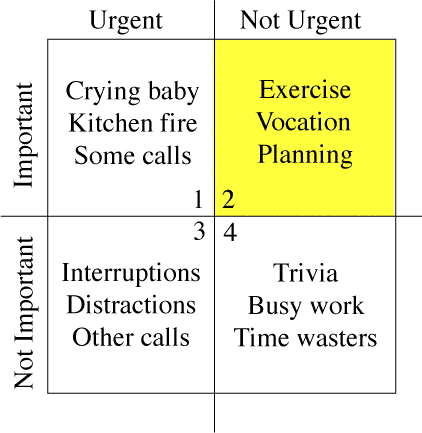
Many of us get stuck handling tasks that are urgent but not important, like responding to every notification right away. The key is to spend more time on tasks that are important but not urgent. These are the activities that lead to real progress: planning, learning new skills, and working on major projects. By scheduling time for them, you prevent them from becoming last-minute emergencies.
Two Simple Techniques
Knowing your priorities is one thing; staying focused is another. Distractions are everywhere. Here are two popular and effective techniques for managing your attention and structuring your day.
The Pomodoro Technique: This method uses a timer to break down work into focused intervals, traditionally 25 minutes in length, separated by short breaks.
The idea is simple. You set a timer for 25 minutes and give one task your undivided attention. When the timer rings, you take a 5-minute break. Stretch, get some water, or look out the window. After four of these work sessions, you take a longer break of 15-30 minutes.
This technique works because it creates a sense of urgency and makes large tasks feel less daunting. It also trains your brain to focus for short periods and helps prevent burnout by building in regular breaks.
Time Blocking: This involves scheduling specific blocks of time for specific tasks in your calendar.
Instead of working from a simple to-do list, you assign each task a home on your calendar. For example, you might block out 9:00 AM to 10:30 AM for "Write project report" and 2:00 PM to 2:30 PM for "Reply to important emails."
By doing this, you're not just deciding what to do, but also when to do it. This protects your time from distractions and helps ensure that your priorities get the attention they deserve. It turns your vague intentions into a concrete plan for the day.
These fundamentals—setting goals, prioritizing, and using simple techniques like Pomodoro or time blocking—form the foundation of effective time management. Mastering them will help you take control of your schedule and focus on what matters most.
Ready to test your understanding?
What is the primary goal of effective time management?
To make real progress on long-term goals, you should focus most of your energy on tasks that are: