Product Manager Interview Prep AI Giants
Understanding AI Fundamentals
What Is AI?
Artificial intelligence is about making computers smart. The goal is to create systems that can perform tasks that typically require human intelligence, like learning from experience, understanding language, recognizing objects, and solving problems.
At its core, AI is the science of teaching machines to think and learn like humans.
Think about how you recommend a movie to a friend. You consider what they've liked before, the genres they enjoy, and maybe even their current mood. AI systems do something similar, but on a massive scale, analyzing huge amounts of data to find patterns and make predictions. This ability to learn from data is what makes AI so powerful.
A Brief History
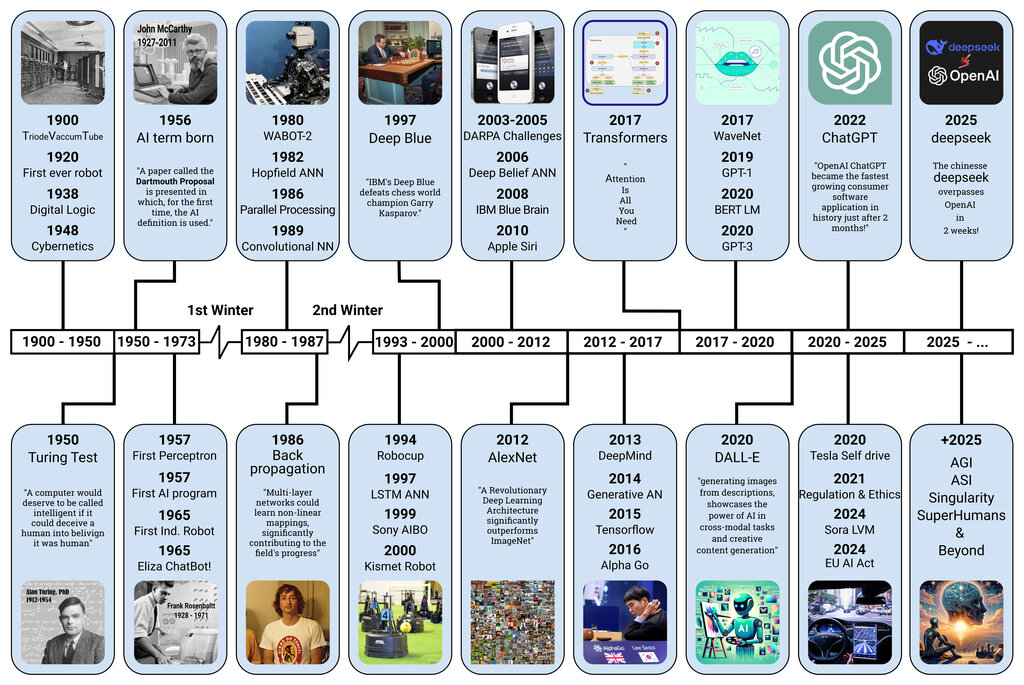
The idea of artificial minds isn't new. It has roots in ancient myths and philosophy. But the scientific journey of AI began in the mid-20th century. A 1956 workshop at Dartmouth College is widely considered the birthplace of AI as a field. Early researchers were incredibly optimistic, believing that a machine as intelligent as a human was just a few decades away.
Progress was slower than expected, leading to periods known as "AI winters," when funding and interest dried up. But breakthroughs in the 2000s, driven by faster computers and the explosion of digital data, sparked a revival. Today, AI is advancing faster than ever.
The Building Blocks of AI
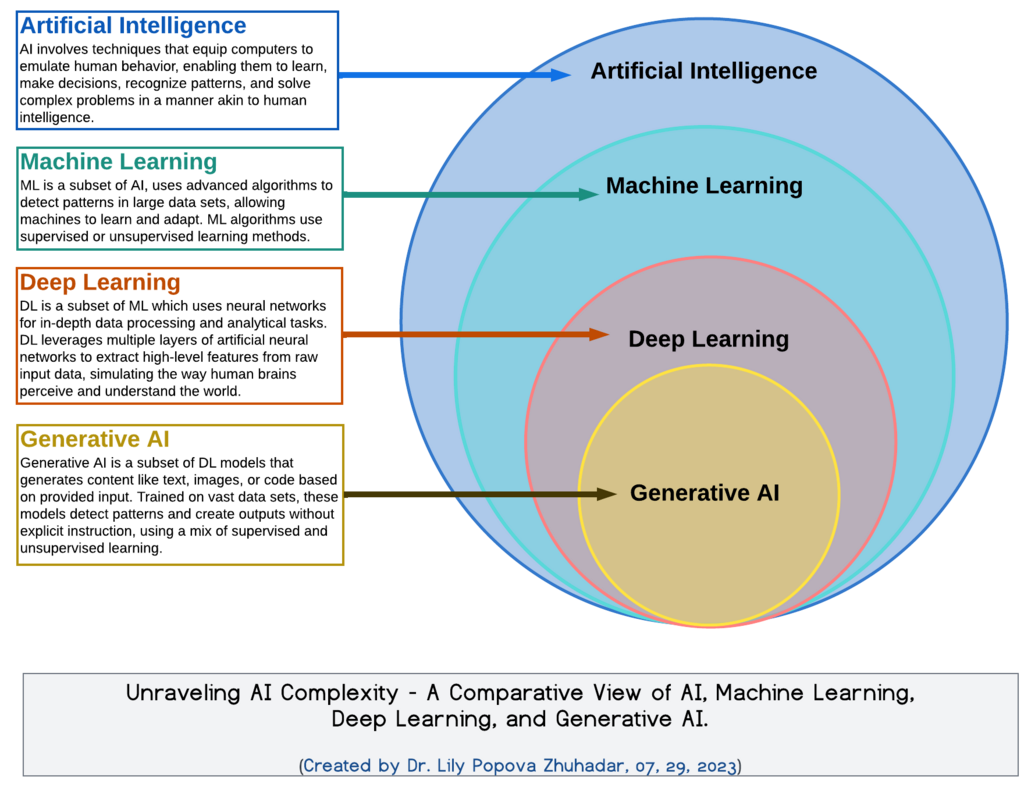
AI isn't a single technology; it's a broad field with many specialized areas. Understanding these subfields helps clarify what AI can do. Think of AI as the main category, with several important subsets nested within it.
Let's break down some of the most important branches.
Machine Learning (ML) is the most common form of AI. Instead of writing explicit instructions for a task, developers build models that learn directly from data. It's like teaching a child to recognize a cat by showing them pictures of cats, not by describing a cat's features in detail. The model learns the patterns on its own.
Deep Learning (DL) is a more advanced type of machine learning. It uses complex structures called neural networks, which are inspired by the human brain. These networks have many layers, allowing them to learn very intricate patterns from massive datasets. Deep learning is the engine behind many of today's most impressive AI feats, from language translation to medical image analysis.
If machine learning is about learning from data, deep learning is about learning from data on a much deeper, more complex level.
Natural Language Processing (NLP) focuses on the interaction between computers and human language. It's the technology that allows you to talk to your phone's assistant, powers chatbot conversations, and translates text from one language to another in real time. The goal is to enable computers to understand, interpret, and generate human language in a way that is both meaningful and useful.
Computer Vision gives machines the ability to "see." It's a field of AI that trains computers to interpret and understand the visual world. Using digital images from cameras and videos, computer vision models can identify and classify objects—and then react to what they "see." This is the technology behind facial recognition, self-driving cars navigating their surroundings, and automated quality control in factories.
How an AI Model Is Built
Creating an AI model is a systematic process, often described as a lifecycle. It's not a one-time event but a continuous cycle of improvement.
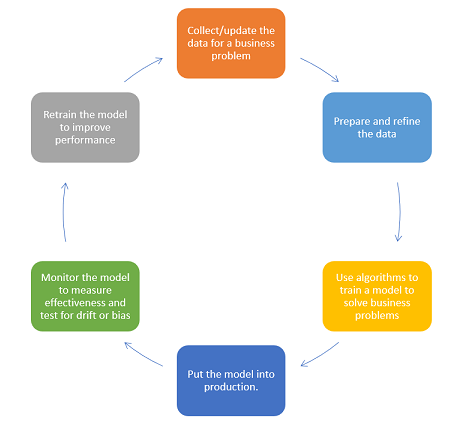
The journey begins with training. This is the learning phase. A model is fed vast amounts of data, called a training dataset. For an image recognition model, this might be millions of labeled pictures. The model analyzes this data and adjusts its internal parameters to find patterns. It's like a student studying textbooks and practice problems before an exam.
Next comes evaluation. Once the model is trained, it needs to be tested to see how well it performs on new, unseen data. This is crucial to ensure the model can generalize its knowledge and isn't just memorizing the training examples. Using a separate testing dataset, we measure its performance with metrics like accuracy. This is the student taking the final exam.
Finally, if the model performs well, it's ready for deployment. This means integrating the model into a real-world application where it can start making decisions or predictions. For example, a trained spam detection model is deployed into an email service to filter incoming messages. The work doesn't stop here; models in deployment are continuously monitored and often retrained with new data to keep them accurate and relevant.
Now that you have a grasp of these fundamental concepts, let's test your knowledge.
What is the primary goal of Artificial Intelligence?
The 1956 workshop at which of the following institutions is considered the birthplace of AI as a formal field?