Product Management for Your Own Ventures
Product Management Fundamentals
What is Product Management?
Product management is the process of guiding a product through its entire journey, from the initial idea to its launch and ongoing improvement. Think of a product manager (PM) as the conductor of an orchestra. The conductor doesn't play every instrument, but they ensure all the musicians are playing in harmony to create a beautiful piece of music. Similarly, a PM doesn't write the code, design the graphics, or run the marketing campaigns, but they unite the team to build a successful product.
Product management is the process of guiding a product from concept to market success.
At its core, product management sits at the intersection of business, technology, and user experience. It’s about figuring out what to build, why to build it, and how to get it built. A PM must understand the company's business goals, the technical constraints of building the product, and most importantly, the needs and desires of the customer.
The Product Manager's Role
The day-to-day responsibilities of a product manager are diverse, but they generally fall into a few key areas.
Defining the Vision: A PM is responsible for setting the product strategy. This means answering the big questions: What problem are we solving? Who are we solving it for? What does success look like? They create a clear vision that guides the entire team.
Prioritizing What to Build: There are always more ideas for features than there is time to build them. A crucial part of a PM's job is to prioritize what the team works on next. This involves making tough decisions based on customer needs, business value, and the effort required to build each feature.
Leading a Cross-Functional Team: Product managers are leaders who rely on influence rather than authority. They work closely with engineers, designers, marketers, sales, and customer support to bring the product to life. Clear communication and collaboration are essential to keep everyone aligned and moving in the same direction.
Stakeholder
noun
Any person, group, or organization that can affect or is affected by a product or project. This includes customers, team members, and company executives.
A great product manager ensures that every stakeholder, from the engineers building the product to the executives funding it, understands the vision and their role in achieving it.
The Product Lifecycle
Products, like most things, have a natural lifecycle. They are introduced, they grow, they mature, and eventually, they decline. A product manager's focus and strategy will change depending on which stage the product is in.
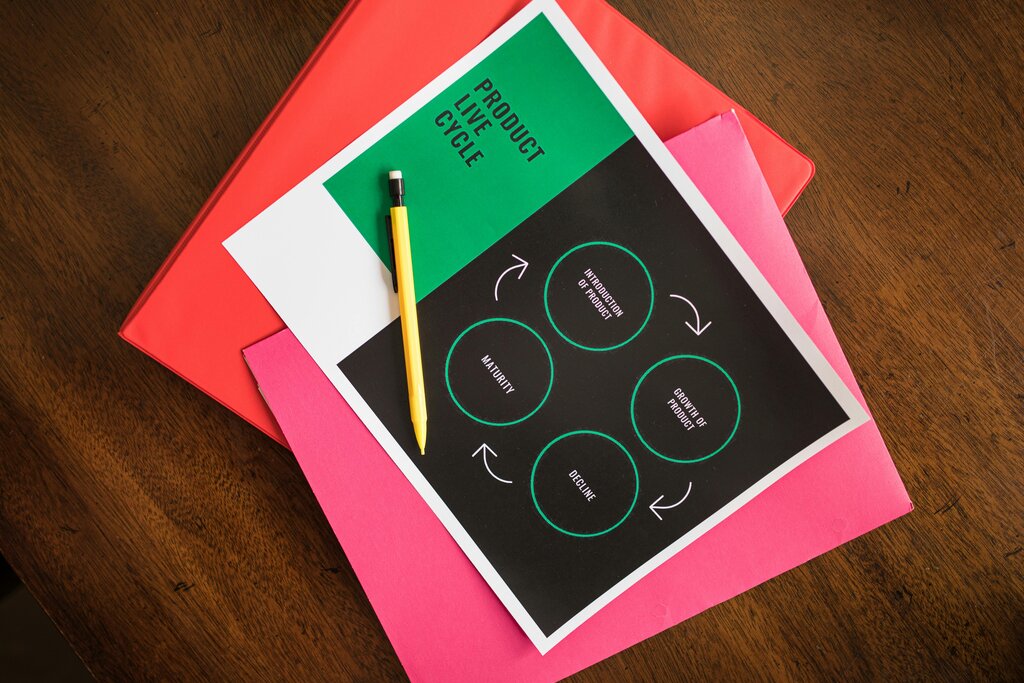
Here are the four main stages:
-
Introduction: This is the product launch. The goal is to build awareness and get the first users. The PM is focused on gathering initial feedback and fixing any critical issues.
-
Growth: The product starts to gain traction in the market. More users are signing up, and revenue is increasing. Here, the PM focuses on adding new features to expand the product's appeal and scaling the infrastructure to handle more users.
-
Maturity: The product is now well-established, and growth begins to slow down. The market may be saturated, and competitors have likely emerged. The PM's focus shifts to retaining existing customers, optimizing performance, and finding new ways to innovate.
-
Decline: The product is losing market share, perhaps because of new technology or changing customer preferences. At this stage, the PM must make a strategic decision: either reinvent the product, find a new use for it, or retire it completely.
A Customer-Centric Approach
Underpinning all of these responsibilities is one guiding principle: focus on the customer. Successful products are built by teams that have a deep understanding of their users' problems, needs, and desires. This is known as a customer-centric approach.
A product manager’s primary responsibility is to align the product’s features and functionality with customer needs.
Product managers are the voice of the customer within the company. They spend time talking to users, analyzing feedback, and using data to understand user behavior. This deep customer empathy allows them to make informed decisions and guide the team to build products that people truly love and find valuable.
What is the primary role of a product manager often compared to?
Product management is described as sitting at the intersection of which three core areas?
By understanding these fundamentals, you can see how product management plays a vital role in creating technology that solves real problems for people and drives business growth.