Product Management Essentials
Introduction to Product Management
What is Product Management?
Think of a product manager as the conductor of an orchestra. The conductor doesn't play every instrument, but they ensure every musician plays in harmony to create a beautiful piece of music. Similarly, a product manager guides a team to build a product that solves a real problem for people.
Product management is the practice of strategically guiding the development, launch, and continuous improvement of a product. It's a critical role that sits at the intersection of business, technology, and user experience. The goal is to create something valuable for customers and viable for the business.
At its core, product management is about identifying and defining a problem, then leading a team to solve it.
The Product Manager's Role
So, what does a product manager actually do day-to-day? Their main job is to answer two big questions: what should we build, and why? They are responsible for setting the product's vision and strategy.
This involves several key activities:
- Understanding User Needs: They spend a lot of time talking to customers, analyzing data, and researching the market to uncover pain points and opportunities.
- Defining the Vision: They craft a clear, compelling story about what the product will achieve and for whom. This vision acts as a North Star for the entire team.
- Prioritizing Work: There are always more ideas than time and resources. A product manager decides which features and improvements are most important to work on next.
- Aligning the Team: They ensure everyone, from engineers to marketers, is on the same page and working toward the same goals.
The role of a product manager is to bring together stakeholders, to align and focus the team, and to collaborate for the best possible outcome for the customer and the business.
A Product's Journey
Products, like people, go through a lifecycle. A product manager shepherds the product through each stage of this journey. While it can look different for every product, the lifecycle generally follows a continuous loop.
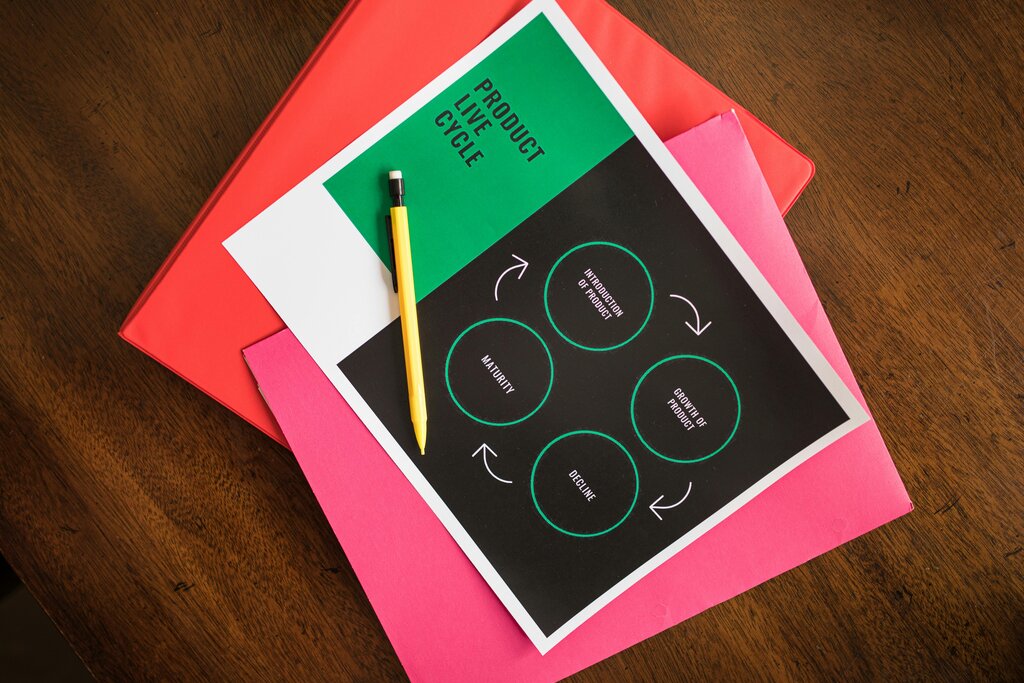
Here’s a simple look at the key phases:
- Discovery & Ideation: This is the beginning, where the team explores problems and brainstorms potential solutions. It's all about research and understanding the landscape.
- Planning & Design: Once an idea shows promise, the product manager works with the team to define the requirements, create a roadmap, and design the user experience.
- Development & Testing: Engineers write the code to bring the product to life. The product is tested thoroughly to find and fix bugs before it reaches customers.
- Launch & Iteration: The product is released to the market. The work doesn't stop here. The product manager gathers feedback, analyzes performance, and plans for the next set of improvements. This feeds right back into the discovery phase for the next version.
A Team Sport
No product is built in a vacuum. A product manager's success depends on their ability to collaborate with a wide range of people across the company. They are the central hub of communication, connecting different teams and ensuring everyone is aligned.

They work closely with:
- Engineers to build the product.
- Designers to create a user-friendly experience.
- Marketers to tell the world about the product.
- Sales teams to understand customer needs and sell the product.
- Leadership to ensure the product aligns with the company's strategic goals.
Note: It's important to keep in mind that creating a product is a team sport and so it is NOT the product manager's job to do all of these activities on their own.
Ready to check your understanding? Let's dive into a few questions.
The provided text uses the analogy of an orchestra conductor to describe a product manager. What does this analogy primarily emphasize?
According to the product lifecycle described, the work on a product concludes after the 'Launch & Iteration' phase.
Product management is about leading a team to build great things that solve real problems. By setting a clear vision and fostering collaboration, product managers turn ideas into reality.