Product Management Essentials
Introduction to Product Management
The Why, What, and For Whom
Every product you use, from the app on your phone to the chair you’re sitting on, started as an idea. But an idea alone isn't enough. Someone has to figure out if it's a good idea, who it's for, and how it helps the business that builds it. That someone is a product manager (PM).
Product managers focus on the "what" and "why" behind building products, while project managers concentrate on the "how" and "when" of getting things done.
Think of a product manager as the director of a movie. The director doesn't operate the camera, write the score, or act in the scenes. Instead, they hold the overall vision, ensuring that the screenwriters, actors, and cinematographers are all working together to tell the same cohesive story. Similarly, a PM doesn't write code or design screens. Their job is to unite the efforts of engineers, designers, marketers, and sales teams around a single, clear vision.
Their core responsibilities include:
- Understanding Users: They dive deep into the problems and needs of their customers through interviews, surveys, and data analysis.
- Defining the Vision: They answer the big questions. What problem does this product solve? Who is it for? What does success look like?
- Creating a Roadmap: They create a high-level plan that shows how the product will evolve over time.
- Prioritizing Work: They decide what the team should build next, balancing user needs, technical effort, and business goals.
A Product's Journey
Products aren't static. They evolve over time, much like a living organism. This journey is called the product lifecycle, which typically moves through four distinct stages.
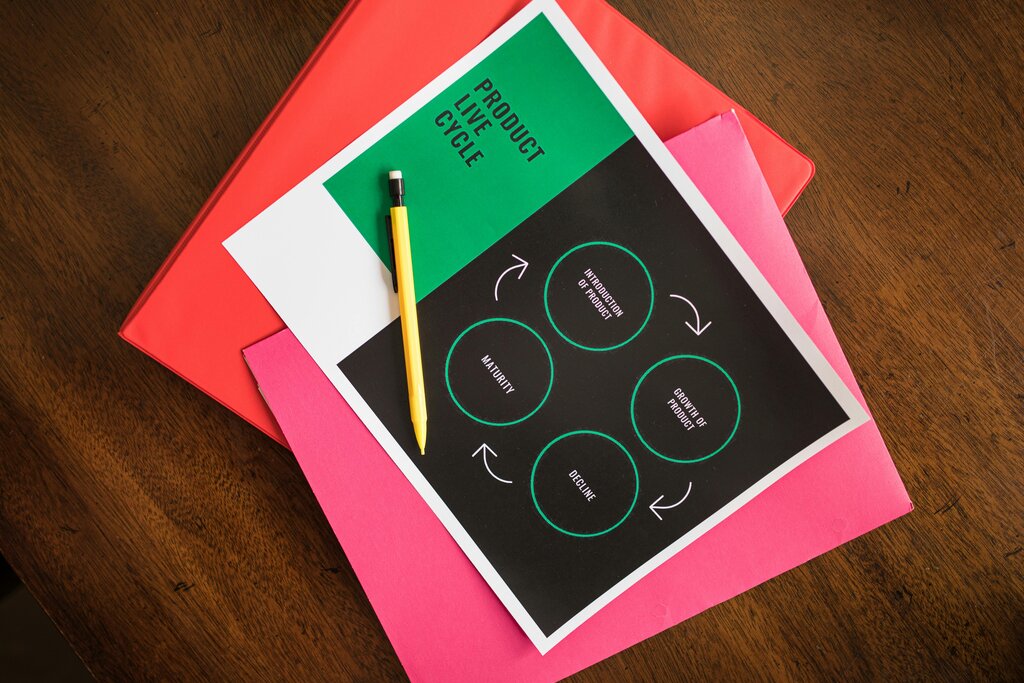
1. Introduction: This is the launch phase. The product is new to the market, and the main goal is to build awareness and encourage initial adoption. The team is focused on learning from early users and fixing any immediate issues.
2. Growth: Word is spreading, and more people are starting to use the product. The focus shifts to scaling, adding new features to serve a growing audience, and staying ahead of competitors who may be entering the market.
3. Maturity: The product is now well-established. Growth slows as the market becomes saturated. At this stage, the goal is often to defend market share, optimize existing features, and maximize profitability.
4. Decline: Over time, the product may become less relevant due to new technology, changing customer preferences, or better alternatives. The company must decide whether to reinvent the product, phase it out, or replace it with something new.
A product manager guides the product through each of these stages, adjusting the strategy as the product and the market evolve.
Aligning Product and Business
A product that users love but that doesn't help the business is a hobby, not a sustainable venture. A key part of a product manager's role is ensuring the product's goals are directly connected to the company's broader objectives.
Imagine a company's main business objective is to increase annual revenue by 20%. The product manager must translate this high-level goal into a concrete product plan. They can't just tell the engineering team to "increase revenue." Instead, they might identify opportunities within the product to drive that growth.
For example, they might propose a new premium subscription tier with exclusive features, or a feature that helps existing users invite their friends, driving new sign-ups.
This alignment is critical. It ensures that the product team isn't just building features for the sake of it, but that their work contributes directly to the health and success of the entire organization. By connecting every feature and decision back to a business objective, a PM provides purpose and focus for the entire team.
Time to check your understanding of these core concepts.
A product manager's primary role is most similar to that of a...
During the 'Maturity' stage of the product lifecycle, the primary focus is typically on:
In essence, product management is about steering the ship. It involves deeply understanding the customer, setting a clear destination (the vision), and ensuring the product's journey successfully supports the entire fleet (the business).