Product Management and Leadership in the Moving Industry
Introduction to Product Management
What Is Product Management?
Product management is the process of guiding a product's journey from a rough idea to a successful launch and beyond. Think of a product manager as the conductor of an orchestra. The conductor doesn't play every instrument, but they ensure all the musicians—the engineers, designers, marketers, and sales teams—are playing in harmony to create something beautiful.
This role is responsible for the 'what' and the 'why' behind a product. Why are we building this? Who are we building it for? What will make it successful? The product manager's job is to answer these questions and unite the entire team around a shared vision.
Essentially, product management bridges the gap between customer needs and the company's business goals, ensuring that what gets built is both valuable and viable.
A Balancing Act
A product manager’s responsibilities are broad and require balancing different priorities. They operate at the intersection of several key areas.
Key responsibilities include:
- Market Research: Deeply understanding the customer's problems, needs, and desires. This involves talking to users, analyzing competitors, and studying market trends.
- Defining the Vision: Crafting a clear, compelling vision for the product. This acts as a North Star, guiding all decisions.
- Creating the Roadmap: Building a high-level plan that outlines how the product will evolve over time. This helps align stakeholders and the development team.
- Prioritizing Features: Deciding what to build next. Since resources are always limited, this is a critical task of making trade-offs to maximize impact.
- Overseeing Development: Working closely with engineering and design teams to ensure the product is built to spec and meets quality standards.
Note: It's important to keep in mind that creating a product is a team sport and so it is NOT the product manager's job to do all of these activities on their own.
The Product Lifecycle
Products, like living things, go through a lifecycle. A product manager's focus and strategy shift depending on which stage the product is in.
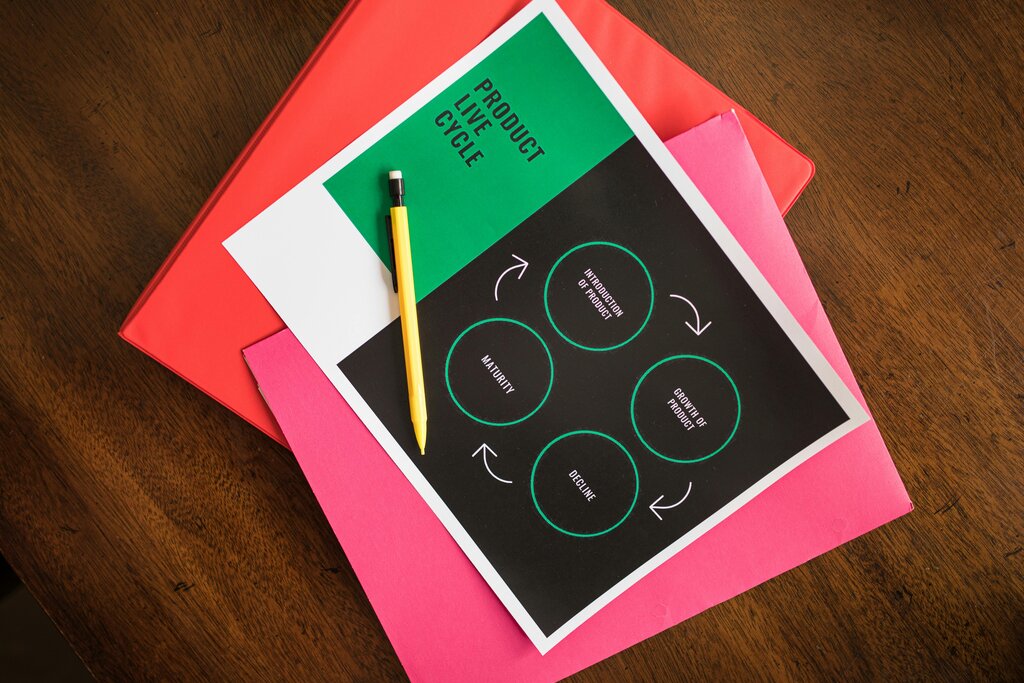
The four main stages are:
- Introduction: The product is launched into the market. The focus is on building awareness and getting early adopters to try it.
- Growth: The product starts to gain traction. Sales and user numbers increase rapidly. The focus shifts to scaling, adding features, and capturing more of the market.
- Maturity: The product is well-established. Growth slows down as the market becomes saturated. The focus is on defending market share, optimizing for efficiency, and retaining existing customers.
- Decline: The product's sales and relevance begin to fade, often due to new technology or changing customer tastes. The company must decide whether to reinvent the product, phase it out, or simply maintain it for a small group of loyal users.
Putting the Customer First
A core principle of modern product management is being customer-centric. This means making decisions with the customer's needs and perspective at the forefront. It's about solving a real problem for a real person.
Instead of building something and hoping people will buy it, customer-centric product managers start with the customer. They use interviews, surveys, and data analysis to understand pain points. This empathy ensures the team builds a product that people will actually find valuable.
The foundation of effective product management lies in a comprehensive understanding of the market and users.
This approach reduces the risk of building the wrong thing. By continuously listening to user feedback, product managers can guide their teams to iterate and improve, creating products that customers love and are willing to pay for.
Now that you have a grasp of the fundamentals, let's test your knowledge.
What is the primary responsibility of a product manager?
In which stage of the product lifecycle is the main focus on defending market share and optimizing for efficiency?
Understanding these core concepts is the first step. Product management is a dynamic field that combines strategy, empathy, and execution to bring valuable products to life.